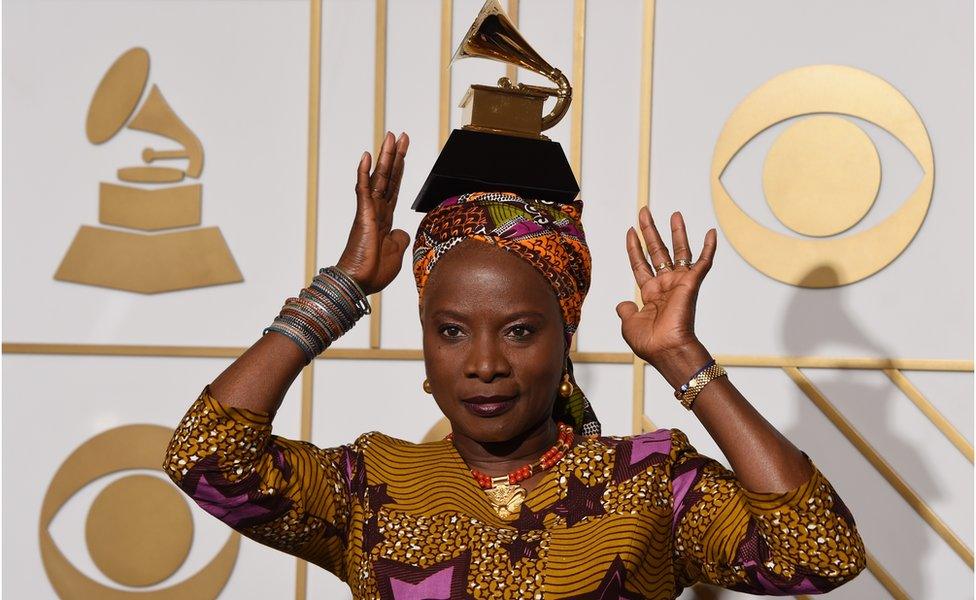
Five-time Grammy winner, Angélique Kidjo, has never been one to mince words, and her latest commentary on the status of women in Africa is a powerful, unvarnished call to action. Speaking with a fierce urgency, the Beninese icon delivered a sharp critique of a society that routinely praises its mothers and sisters while simultaneously limiting their economic power and formal status. For Kidjo, the disconnect between cultural reverence and tangible opportunity is a systemic failure that the continent can no longer afford.
Kidjo cut straight to the heart of the issue in an exclusive interview with Netng, asking, “We praise our women in Africa. We celebrate our mothers in Africa, but do we respect them?” She argues that African women are, in fact, the “backbone of the African continent,” often serving as the primary breadwinners and economic stabilizers. “You like it or not, they are the ones that bring bread to the table,” she asserts. Yet, this vital contribution is rarely translated into formal status, leading to systemic barriers like limited access to credit, land, and formal employment, as detailed in various World Bank reports.
Angélique Kidjo insists that society must move beyond mere tributes and translate respect into actual status and opportunity. She criticizes the expectation that women should perform all domestic and economic chores “without being paid or without you being acknowledged for your participation in the economy of the country.” She frames the issue not just as a moral failing, but as a severe economic handicap for the entire continent. “The more women we leave behind, the poorer we get,” she warns. “That money is not in any banking system. That money is not doing anything to create any job or nothing at all. We’re shooting ourselves in the foot all the time.”
Her advocacy, rooted in her work with the BATONGA Foundation and the Affirmative Finance Action for Women in Africa (AFAWA) initiative, is a testament to her belief that empowering women is the single most effective way to unlock Africa’s potential and redefine its future.