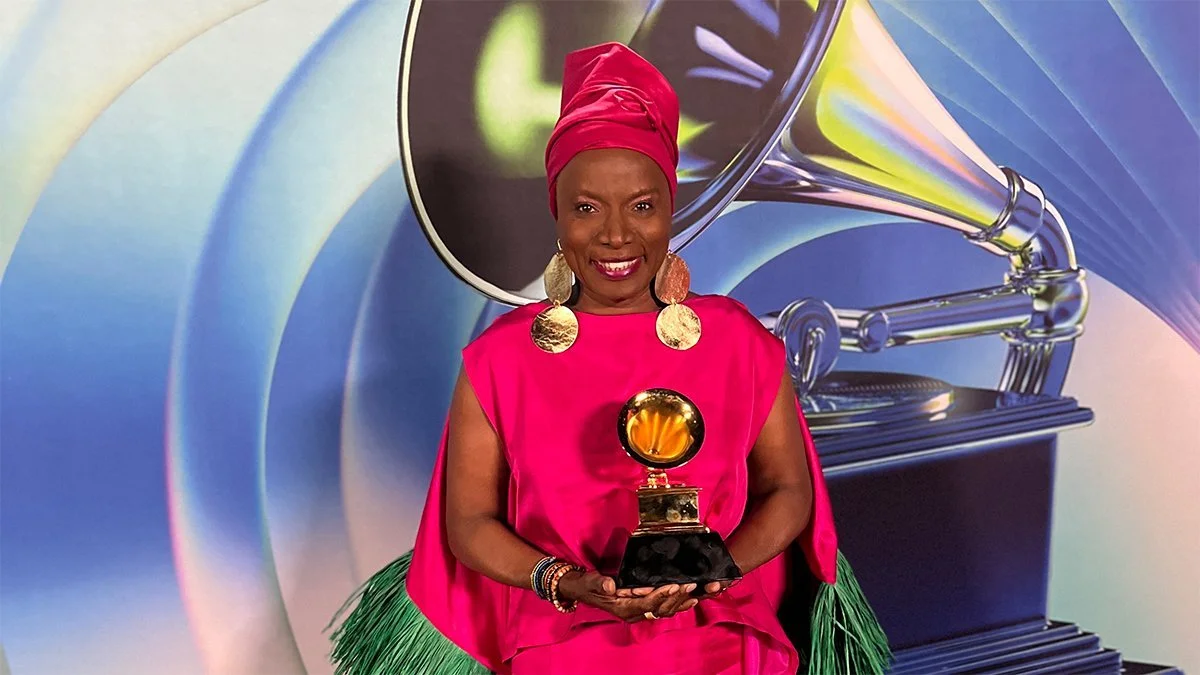
It’s raining in Lagos when Angélique Kidjo picks up the call from her home, fresh off a flight from New York and still jet-lagged. Yet, the Beninese singer, five-time Grammy winner, TIME 100 honoree, and one of Africa’s most influential cultural ambassadors, doesn’t skip a beat in this exclusive conversation with Netng’s Tomiwo Ojo.
Over the next 30 minutes, she delivers a masterclass on music, feminism, Pan-African collaboration, and the hard truths young African artistes and quite literally all Africans need to hear.
The conversation starts around her latest collaboration “Chica de Favela,” released as part of the Beyond Music Vol. 4: Social Change album, a project co-founded by Tina Turner that brings together artists from 108 countries to create music addressing social issues. The song tells the story of an independent woman from a Brazilian favela who shapes her own destiny without relying on anyone else.
For Angélique Kidjo, the song’s message resonates deeply with the realities facing African women today. “I don’t know what inspired the story of the song, but what I like is actually that idea of an independent woman,” Kidjo begins. “And I think African women are very independent. You like it or not, they are the one that bring bread to the table, and they are the one that—I mean, I always say African women are the backbone of the African continent.”
A World Bank report details the importance of women to African economies. Yet, the gender face systemic barriers like limited access to credit, land, and formal employment. Angélique Kidjo understands that while Africa praises and celebrates women, more should be done to recognise their contribution to the economy. Her voice grows more animated as she says:
“They give us birth, they carry us on the back while they’re doing many chores. And I don’t think that we appreciate women’s work around the world pretty much. Society just expects that because you are a woman, it’s normal for you to do all of those things without being paid or without you being acknowledged for your participation in the economy of the country.”
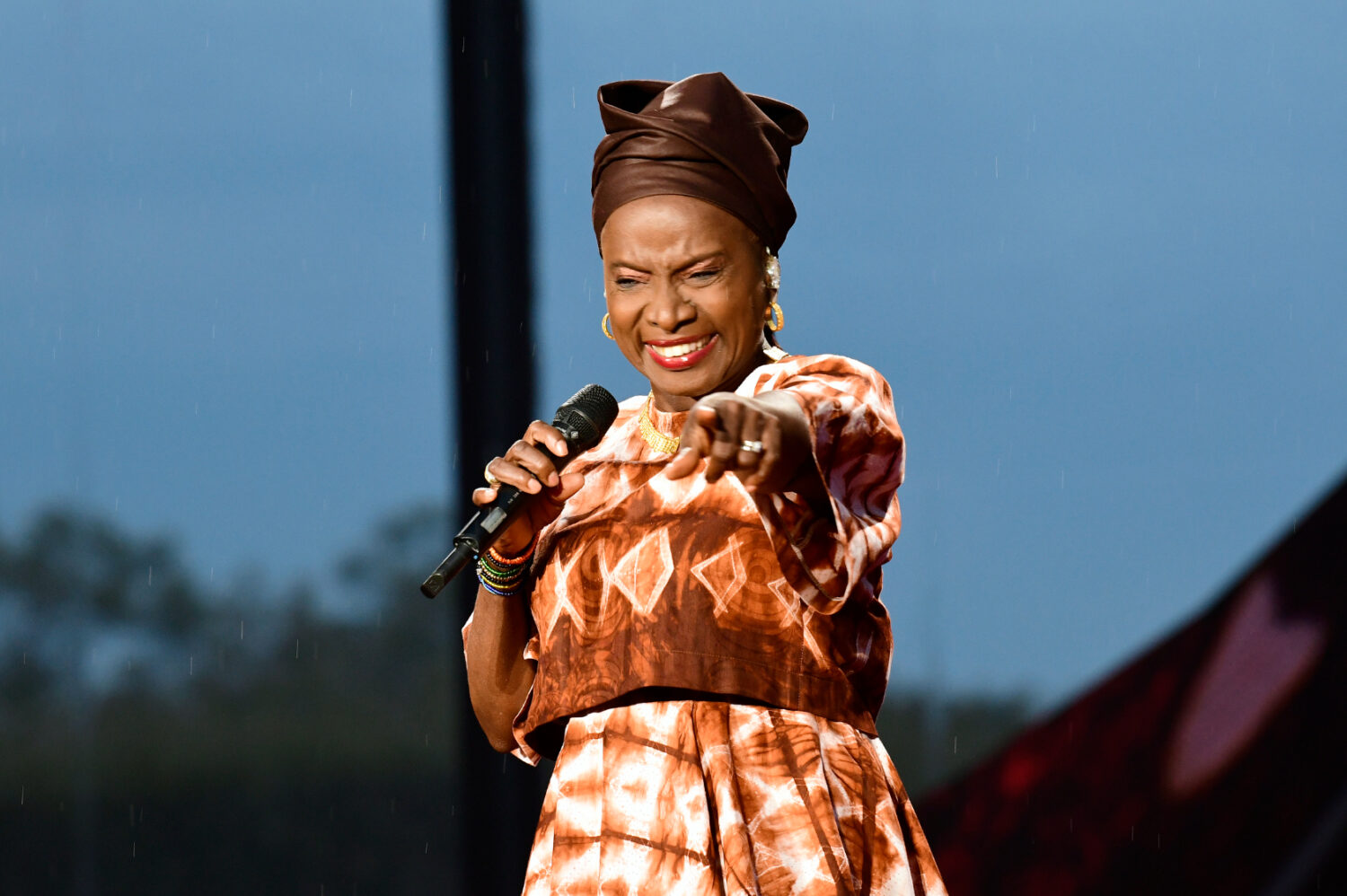
It’s a frustration that runs deep. Despite the celebrations of mothers and International Women’s Day tributes, Kidjo argues that African societies have failed to translate respect into actual status and opportunity. “We praise our women in Africa. We celebrate our mothers in Africa, but do we respect them?” she asks. “What is the status that we give them? What is the place in society? Are they gonna be always mothers having kids and being on the backdrop of men and doing the chores of the house all the time?”
“If that’s what a woman is, then I don’t know what the men could be. Because if your woman, your mother, your sisters, your aunties, your cousins are your servant, so what does it make of you? That’s the question we should ask ourselves.”
Angélique Kidjo has embodied African feminism through her music and advocacy over the 40+ years of her career. Outside of music, she advocates for empowering women by championing their rights, education, and economic participation with campaigns for UNICEF, her BATONGA Foundation and the Affirmative Finance Action for Women in Africa (AFAWA) initiative.
Her feminism is not theoretical; it’s rooted in her lived experience. Born to a Beninese father and Yoruba mother, she grew up in a household with seven brothers, and she describes her father as “the most feminist man I’ve ever met. He never told my mom, you can’t do this, you can’t do that,” she recalls. “If he was not home, any decision my mom made is his decision. It is a partnership. It’s not because I’m living outside of Africa that I’m talking like that. It’s the example of the household where I was born and raised that informed all the things that I do.”
Her mother’s approach to raising her sons was equally radical: teaching them to cook, taking them to the market so they’d understand the cost of food, preparing them to be partners in their homes and marriages rather than dependents. “My mom would take them to the market and my mom say, ‘when you leave food on the plate, you have to know how much you’re leaving on the plate,” Kidjo explains.
“They are tomatoes in that meal that you’re eating, you’re gonna know how much it costs, and you have to learn to cook it because God forbid something happen to your wife. How are you gonna feed your kids? You get your wife gets sick. How are you going to take care of your children?”
She went on to emphasise that it takes two to make a child, to bring a child into this world. So the bulk of the chores should not always rest on the shoulders of women. Her own marriage embodies these principles. She and her husband have been partners for 38 years, supporting each other’s careers equally.
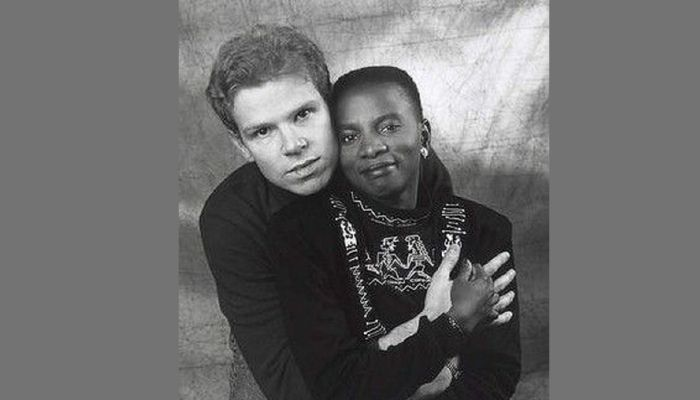
“I’m a living example of what I’m talking about,” she says. “I’m not just talking because it’s a talking point. Because if you empower a woman, the benefit goes both ways and it trickles down to your children and you raise your boys and your girls differently.”
“The More women we leave behind, the poorer we get. That money is not in any banking system. That money is not doing anything to create any job or nothing at all. We’re shooting ourselves in the foot all the time.”
Angélique Kidjo on Music for Activism
When asked how she balances artistic excellence with activism, a hallmark of her four-decade career and how she ensures that the message is not overshadowed by the music, she delved into the impact and essence of music as medicine.
“Music has a way of getting under your skin without you even noticing. That’s the power of music. You’re singing it, it’s engraved in your brain and sometimes you’re doing a chore and you’re listening to music, even the lyrics, if you’re not paying attention to it, it’s doing its job.,” Angélique Kidjo says.
Angelique Kidjo is a multi-linguist who speaks and sings in English, French, Yoruba, Fon, and Gen. She explains that one of the beauties of music is that it transcends language and speaks directly to emotion. “Even if it’s not a language that you understand, it speaks to your soul. Our emotions are broader. Emotion has no color. Emotion has no language. I mean, it doesn’t have any other agenda than to allow you to be human, to feel.”
“It’s your choice. Music is not dictatorship. Music is freedom. Music is what makes us say, oh, I like this music today. What am I gonna wear? How am I gonna be? How does that music empower me to be in good mood to do what I have to do, even if you don’t like your job?”
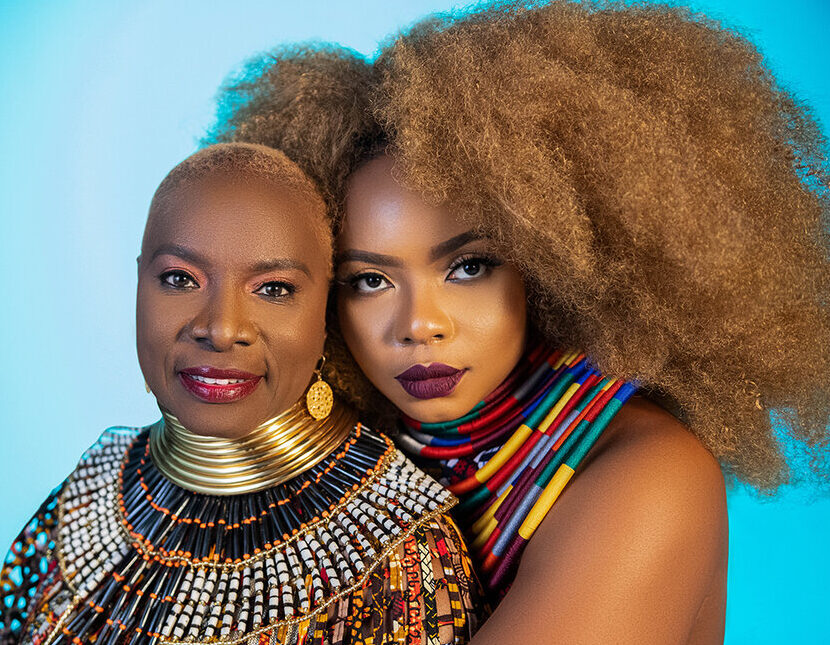
When the conversation turns to younger African female artists like Tiwa Savage, Tems, and Ayra Starr, who are now commanding international stages, Angélique Kidjo is both encouraging and cautionary. “I’m not somebody that advises because advice is one thing and the reality of the life of the person is different,” she begins diplomatically. “My reality, my career, the way I got where I am, it could always be different from anybody else.”
But some principles transcend individual circumstances, and she has this to say to all artistes who have built a platform through music: “You have to understand and you have to know why you’re doing what you’re doing. What is the purpose of what you’re doing? You want to be a singer to be famous, or you want to be a singer to have a long career and be relevant and be able to be fluid, to be flexible, to be agile?” Angélique Kidjo asks.
“The ego has to be at the service of the music. And if your ego overpowers your service of music, then you will fail. Because nobody has time for that.”
Angélique Kidjo is equally blunt about the double standards Black artists face and the extra efforts they have to put in: “What I say all the time is that you gotta be on time. Especially when you’re a Black person in the music business, there are so many preconceived ideas out there that are waiting, people are willing to just put that label on you. Unfortunately, we have to outperform everybody to be respected.“
“Every time you stand on stage to sing, you know that you are not singing for yourself. You’re singing out there for people to get it, to take something out of your concert. You wanna sing for yourself, you can sing in your shower, it’s OK.”
On the question of what finally shifted to allow African music—particularly Afrobeats—to achieve global mainstream success, Kidjo identifies technology as the game-changer.
“The first thing I would say that changed the game is the internet,” she states. “Today you can put your song out and tomorrow you can become a big artist because your song is touching people in their homes. You don’t go through the record store anymore. It goes directly to people.”
Yet, she admits that this democratisation of music comes with significant dangers. “In that comes the danger of how much you own. When they are playing your music, not everybody pays when they play you. The radios in America don’t pay any residual to any song that they play.”
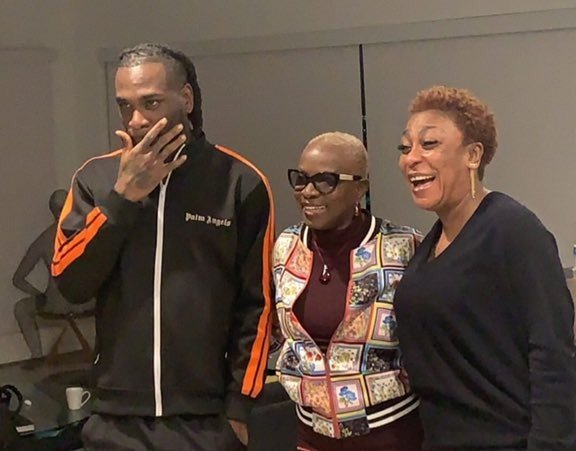
Her concern about Afrobeats’ current moment is palpable: “It’s a trend now, Afrobeats. Everybody likes it. But how we renew it every time around? The thing that is dangerous is repetitive things and doing the same thing over and over again. We need to keep people’s ears challenged to hear what is new, and what is new is coming from Africa.”
Success, she warns, cannot breed complacency. “Because you’re such and such in your country doesn’t mean you’re such and such everywhere else. So if you wanna have a career, your respect starts with yourself and the respect you have for the public. The public cannot wait for you 2 hours before you go on stage. That is disrespectful.”
The Afrobeats boom has taken the world by storm with African artistes selling out iconic venues at home and abroad. Angelique is pleased about this, but she warns that for African music to remain relevant for generations to come, it requires “seriousness, commitment, quality of work, and unquestionable attitude of professionalism. You come, you deliver, and you go. And you leave them wanting more. That’s what I want from all the young artists.”
Perhaps the most urgent part of Kidjo’s message concerns the need for genuine Pan-African collaboration in music—not just within Anglophone West Africa, but across the entire continent.
“We owe ourselves to cross the whole continent through music,” she declares. “What the politicians cannot do, we should do. We should work with artistes that come from everywhere on the continent, not the ones that speak English only. Whichever language we speak, we owe ourselves to open that door of Afrobeats to the whole continent.”
When asked if the industry is ready for this, Angélique Kidjo’s answer is sobering: “I don’t know. I’m waiting to see.” But she offers “Chica de Favela” as a blueprint. The song features Congolese language, Yoruba, Spanish, and French—four languages in one track. “And people are dancing on it, and everybody understands it. That is an example we can draw from to work around the whole continent.”
Language, Angélique Kidjo insists, should never be a barrier. “Our different languages are the vast wealth that we have. And that cannot be a prerequisite before you work with somebody. The person can speak Arabic, Spanish, Portuguese, French, whatever language is out there, Hausa, Swahili, whatever language we have on the continent of Africa. All of them should be present and be featured in many different ways.”
But achieving this vision requires humility—something she worries may be in short supply. “We have to be humble in what we do. We cannot be satisfied because we’re making a lot of money. Music is not just about fame. It’s about digging into the dirt and finding the gold that we need.”
The stakes couldn’t be higher: “We have the power that the politicians don’t have, which is music. The power of music can show a different face of Africa. But we have to be prepared for it. We have to put our ego aside because as soon as you start convincing yourself you’re the biggest star in the world, then you have lost the battle before even starting.”
For young Africans facing economic challenges and political disillusionment, Kidjo sees music as offering pathways beyond just performance. “Not everybody can sing. But when I’m saying we have to open our music, it’s not just to singers—producers too, beat makers, songwriters, dancers. There’s so many ways of doing music today that can be open to so many different people.”
But opportunity alone isn’t enough. Structure matters. “What system is in place that people can trust when they want to share their talent with you? Financially it has to be healthy. It has to be strong. It has to be transparent. Everybody that participates in something, this is before we start. This is how much this is paying. And it’s clear that there’s no fight among us.”
Angélique Kidjo is particularly passionate about gender equity in the music business: “Right now, the balance is not equal between men and women in Africa in the music business. So we have to start bridging that gap. Women in Africa deserve the same place as men.”
And she’s emphatic about eliminating exploitation: “If a man is producing something for a young woman, it has to be clear, there’s no retribution, physical retribution whatsoever. It has to be about business from the beginning to the end.”
“We need to put our house in order to do music the way we do music in the Western world. There are rules and there are laws that protect artists. Where are they? Where are they in Africa? That’s what we have to create, first and foremost.”
On her collaborations with Nigerian artists like Asa, Burna Boy, Davido, and Yemi Alade, Angélique Kidjo returns to her core philosophy: service to the song but it must be meaningful. “Collaboration is always about the songs,” she explains. “I’m always at the service of the song. And any artist that wants to be at the service of the song we’re about to do, I’m open to that.”
“Collaboration is not just collaboration for the sake of collaboration. It has to have meaning. It has to mean something for both parts. We have to learn from each other. We have to take something out of it, professionally and personally, that we can be proud of. If you’re not able to sing a song throughout your career, don’t do it.”
As the conversation winds down, Angélique Kidjo reveals she’s already working on her next album. Despite jet lag, despite a packed schedule, despite decades at the top of her field, she’s never stopped.
“Music is always exciting to me. Otherwise, I won’t do it. I’m still a musician. I’m still writing music. I’m preparing my next album. I never stop. I’m always around the clock.
Music is my passion, it’s my backbone, it’s everything that I live for. So that’s why I was telling you before you start saying you wanna do music, what are you willing to give? How do you see it? How long do you wanna do it? Are you ready to do the sacrifices that it demands?”
Angélique Kidjo
As Africa stands at a demographic crossroads—with projections suggesting one in three people globally will be African within a few decades—Kidjo’s message to the continent’s creative community is both empowering and demanding.
African artists have the talent, the cultural wealth, and now the global attention. What they need is the discipline, the infrastructure, the Pan-African solidarity, and the long-term vision to transform this moment into lasting institutional power.
“Joy is an act of resistance,” she says at one point. “You have to choose to be joyful in the face of adversity. Otherwise, how do you find any solution that’s gonna keep you alive from your guts all the way to your brain?”
It’s a philosophy that has sustained her through 38 years of marriage, five Grammy wins, countless collaborations, and four decades of championing African music globally.
And it’s the philosophy Angélique Kidjo is now passing on to the next generation—with love, with urgency, and with unflinching honesty about the work still ahead.