The Performing Musicians Association of Nigeria (PMAN) has moved to purge the faction that tried to unseat its leadership on Christmas Day, handing 12-month suspensions to its National Treasurer and eight chapter executives in the latest chapter of a governance crisis that has consumed the union for nearly two years.

PMAN’s National Executive Council formally adopted the Final Report of the National Disciplinary Committee on April 27, 2026, setting in motion a round of disciplinary sanctions that effectively reversed the most audacious power play in the association’s recent history.
Those suspended include Baba Ojonugwa, popularly known as JFO, who was removed from the office of National Treasurer for a period of twelve months, alongside Sydney Sparrow, Abdulsalami Abdulhakeem, Olumide Aduloju, Joshua Offiong, Njiribeako Alexander, Oliver Omaniode, Williams Eje, Eric Kussiy, and at least one other chapter executive.
The Disciplinary Committee had been constituted following a motion moved by Comrade Orok Duke to investigate events connected to what PMAN leadership described as a rogue meeting.
The referral covered matters connected with the alleged WhatsApp group call of December 25, 2025, and related acts considered by the Executive Council to be inconsistent with the constitutional discipline, order and institutional integrity of PMAN.
Two interrogative sessions were subsequently held via Zoom on April 22 and 23, 2026. The Committee reported that the affected persons were duly notified and allowed to appear, respond and defend themselves, but failed, neglected or refused to participate in the proceedings despite additional opportunity granted in the interest of fair hearing.
The council accepted the committee’s findings in full. Affected chapters are to be placed under interim administrative arrangements, while elections in those chapters are to be conducted within constitutionally guided periods as directed by the NEC.
Speaking after the sanctions were announced, PMAN President Pretty Okafor said the association would continue to welcome dissent, criticism, and internal dialogue within the boundaries of its constitution, but that no member, officer, chapter executive, or group of persons would be permitted to undermine the union’s lawful organs, misrepresent its authority, or exploit informal platforms to destabilise the collective interest of Nigerian musicians.
What happened on Christmas Day
The suspensions are the formal conclusion of a drama that erupted on the night of December 25, 2025. An emergency NEC meeting was convened that night to address what those behind it described as serious governance and constitutional concerns affecting the association. The gathering, held controversially via a WhatsApp call, produced a communiqué announcing the immediate suspension of Okafor and the appointment of FCT Governor Sydney Sparrow as Acting National President.
The council cited persistent violations of the association’s constitution, abuse of office, disregard for due process, and conduct deemed harmful to the welfare, credibility, and integrity of the association.
Among the key allegations was a questionable joint venture agreement involving PMAN property in Abuja, in which the deal allegedly allocates 60 per cent to a developer, 30 per cent to PMAN, and an unexplained 10 per cent to an unknown company, raising flags over transparency and financial propriety.
Okafor’s camp moved immediately to dismiss the entire exercise. Acting General Secretary Barrister Elizabeth Gabriel described the purported suspension as “theatrical absurdity” and “a Christmas Day comedy skit disguised as a NEC meeting,” insisting that no legitimate NEC meeting took place on December 25 — that what occurred was, in her words, “WhatsApp cosplay by a group of actors, hell-bent on creating chaos.”
Gabriel invoked Article 11(G) of the PMAN constitution, which mandates that a NEC meeting must be convened by the General Secretary in consultation with the President, with an agenda circulated at least three weeks in advance, conditions she said were not met. She also pointed to a subsisting interlocutory order of the National Industrial Court, delivered on October 30, 2025, expressly restraining the defendants from interfering with PMAN’s assets or altering its leadership structure.
The NEC’s subsequent disciplinary process was built on the premise that the December 25 call was, at a minimum, an act of institutional misconduct — regardless of the governance frustrations behind it.
PMAN in Chronic Crisis
The Christmas Day incident did not happen in a vacuum. PMAN has been burning through crises since August 2024, when the first serious challenge to Okafor’s authority was launched.
PMAN’s National Working Committee suspended Okafor in August 2024 over alleged multiple violations of the organisation’s constitution, financial misappropriation, and other offences, and appointed Sunny Neji as acting president. Okafor, who had been away on official PMAN business in Spain, rejected the suspension as unconstitutional and procedurally flawed.
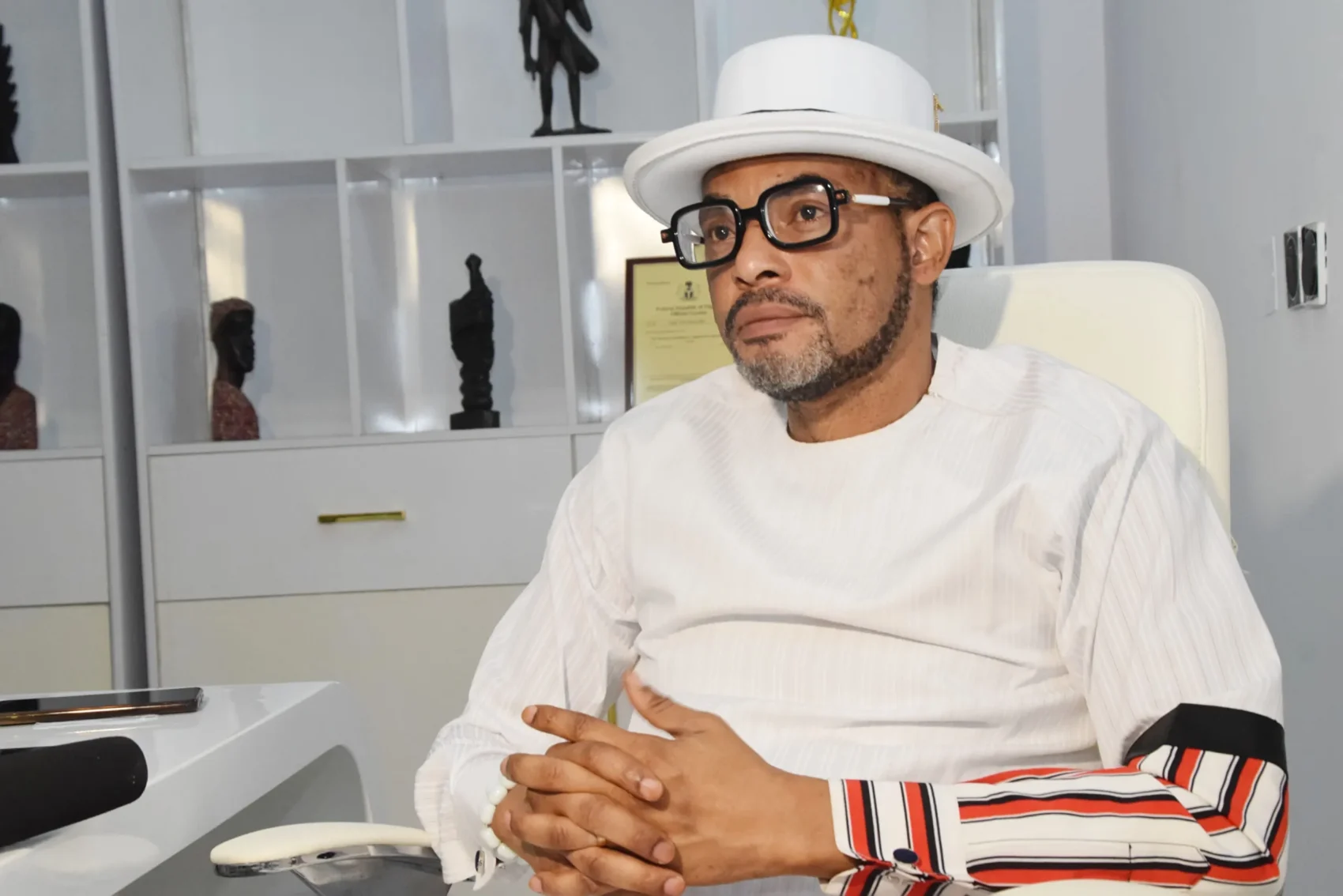
The Executive Council came down on his side. The National Executive Council announced the suspension of some of its key members on the grounds of misconduct and intentional efforts to undermine the integrity of the association, including Sunny Neji, Zaaki Azzay, Ruggedman, and others. The NEC’s NDC report had determined that the NWC members had attempted the suspension without following due process under Articles 18(D) and 13(C)(ii) of the PMAN constitution.
The crisis then metastasised beyond internal disputes. Ruggedman and other defendants were arrested in May 2025 following a petition filed by PMAN’s legal representatives on behalf of Okafor, accusing them of forcefully breaking into PMAN’s secretariat at 4B Hameed Kasumu Street, Chevy View Estate, Lekki, and stealing $130,000 in cash alongside two Apple MacBook Pro laptops.
The petition alleged that the accused had exploited Okafor’s official trip to Spain to unlawfully suspend him, then convened an “illegitimate” National Delegates Conference where a parallel leadership structure was fraudulently established, reportedly backed by a consent judgment obtained under what PMAN lawyers described as “deceitful and clandestine” conditions — a judgment secured, they alleged, at an address not recognised as PMAN’s official headquarters and without the knowledge of Okafor’s camp.
Ruggedman, Fruitful Mekwunye, Boniface Itodo, and Faga Bem-Paul were subsequently arraigned at Yaba Magistrate Court on charges of conspiracy, breaking and entry, and cybercrimes. Sunny Neji and Zaaki Azzay were reported to be at large.
Meanwhile, a police probe into the original financial misconduct allegations against Okafor yielded no evidence. The allegations were investigated, and the findings cleared him of any financial misconduct. Okafor maintained that the plot was to topple a legitimate leadership without just cause while he was in Spain on official PMAN duty.
The Okafor faction further traced the wider destabilisation of PMAN to a property developer, Mr Olusco, alleging he had been behind the crisis from the outset — that it was he who sponsored the illegal suspension in August 2024 and had been unlawfully selling units of PMAN’s Monaco property in Abuja, with the matter referred to the EFCC.
An institution that keeps fracturing
PMAN’s structural dysfunction is not a recent development. The union, which has existed since the early 1980s as the principal representative body of professional musicians in Nigeria, has spent much of its existence navigating parallel leadership claims, contested elections, court injunctions and factional warfare.
It is an organisation with enormous potential influence — a union representing the profession that has arguably done more for Nigeria’s global image than any other industry in the country — and yet it has rarely been able to get out of its own way long enough to exercise that influence.
The current crisis is notable for the degree to which it has spilt into criminal court and involved the machinery of law enforcement. What began as a union governance dispute has produced arrests, arraignments, allegations of police manipulation, property seizures and EFCC investigations — a cautionary tale about what happens when institutional accountability mechanisms are so weak that every internal disagreement escalates into a war.
For now, the NEC has reasserted control and closed ranks around Okafor. The suspended executives have the right to appeal to the National Delegates Conference. Whether they do — and what PMAN looks like on the other side of this particular storm — remains to be seen.