



Politics. Religion. The only other subject that riles Nigerians up more is ‘Afrobeats’. At the mention of that name, our blood starts to boil with furious nationalistic fervour.
The term offends us. It sounds like an abomination. It sounds to us like a slight on the legacy of the inventor of Afrobeat, Fela Anikulapo Kuti. It offends us more that, like Flora Shaw had done 120 years earlier, a foreigner had the effrontery to lump all of our things together without so much as asking us for suggestions, let alone approval. All our patriotic protestations seem to reside in the alphabet ‘S’ that has somehow found its way onto Afrobeat.
Our collective angst is fucking ridiculous. I daresay it’s exacerbated by the fact that we didn’t do the naming ourselves.
As an adolescent in the city of Ibadan who had access to entertainment programming on television only once a week, it confused me to no end that the emerging urban Nigerian music had no clear definition.
Whenever we got the good fortune of having Plantashun Boiz or Tony Tetuila on Galaxy TV, they described their music as a mixture of many things – afro, pop, reggae and so on. As an entertainment journalist almost a decade later, I have asked a fair number of artistes to place their music in specific genres and the answer always resembled the description I heard on my mother’s President television set many years ago: the music is a combination of many things.
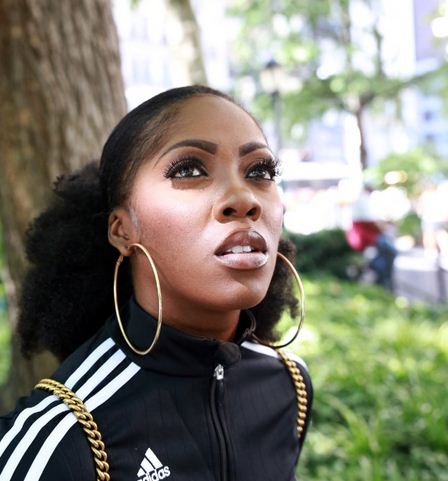
Only this week, Vibe Magazine profiled Tiwa Savage – arguably the biggest female artiste Nigeria has right now – and she was asked to described her sound. Guess what her answer was? ‘My sound is African, pop, soul. When I say soul, I don’t necessarily mean soul music. I mean it has some grit.’
So why do we vehemently oppose the term ‘Afrobeats’ that was bequeathed to our nameless but catchy sound by British-Ghanaian DJ Abrantee Boateng only as recently as 2011?
The reason is misplaced annoyance, a type that is now typical of Nigerians that would ignore the fact that we have no parks, no football playgrounds for our children to develop their skills, but are quick to castigate Jordan Ibe – a young British man who has no connection to Nigeria apart from the fact that his parents were born here. That’s the type of delusion that made many of us believe that Nas was Nigerian because his father went by the name Olu Dara.
There’s no denying that our urban music was heavily influenced by popular music from Europe and America. Our music is a mishmash of various sounds from other places. However, the catch is, for it to be successful at home and be accepted abroad, it had to have infusions of our local sounds and the result is what we have now.
READ: How Chris Brown, Drake are helping Wizkid go global
Much as we try to convince ourselves that our stars do pop music that should ideally be comparable to be pop music all over the world. But that’s in theory: Wizkid is never going to be pop the way Justin Bieber is. And he knows that. So does Drake. That’s why he brought a flavour hitherto unknown to Drake and that earned him the biggest collaboration we’ve seen in a generation. Same for Davido, Runtown, Ayo Jay and the dozens of Nigerian artistes that are crossing over successfully to international audiences.
It is foolhardy to keep assuming we can compete with the West by attempting to sound like them. People have tried it and they have failed. What we need is to bring something different to what they already have. That is the #MajorKey.
It is laughable that we’re offended that anybody else can give our music a name – something we have failed to do ourselves.
We have spent the last 20 years trying to create a new genre out of Nigerian music. We have spent the last 10 trying to export that sound. Now that the international audience has tuned in to us, we’re wasting time and emotion by disagreeing with the name that they are referring to us as.
Perhaps it is naiveté or hubris that makes us think Afrobeats is a slight on Fela’s legacy. On the contrary, we should be proud that our generation is being seen in the same light as the late great Afrobeat legend. And lest we think the ‘S’ in it is a threat to Fela’s music, then we must think again.
Afrobeats is not Afrobeat. We know that. The world knows it too. Fela has been celebrated over there than we have ever done here. His story has been on Broadway and across the world. Jay Z and Will Smith were a part of that. Fela’s documentaries air in places we have never heard of.
READ: 19 Years After: Remembering the legacy of Fela Anikulapo Kuti
The Antibalas channels Fela every time they take to stage. Femi Kuti is doing a good job whenever he blows his sax. Fela’s legacy is intact. Untainted. And Nigerians have very little to do with preserving that legacy.

Giving urban Nigerian music a name is out of our hands now. Afrobeats is what the world sees contemporary urban Nigerian music as. Other cultures have identities for their music. Kwaito is as to South Africa as Grime is to the UK. Nigerian music is not Arya Stark; it cannot not have a name.
It could be erroneously regarded as a UK genre and there would not have been anything we would have been able to do about it. That’s why our most successful artistes do not have any problem with the nomenclature. Davido has no problems with Fader calling him an Afrobeats practitioner.
Tiwa Savage has no issues with Vibe calling her an Afrobeats artiste. Wizkid most certainly has no beef with the whole pop scene in America referring to his Afrobeats sound as what helped Drake land the longest number one spot on the 2016 Billboard Chart and the unofficial title ‘Song of the Summer’. It makes no sense for the rest of us to keep demanding that their music not be called what it is and be called Something-Else-That-We-Have-Yet-To-Decide.
Instead of fighting it at this very late hour, now is the time to embrace and own it; and then introduce the world to our countless other melodies. Like Reminisce rightly said, they’re coming for the rest of us. The world is coming for Nigerian music.
No Fields Found.