


By Toni Kan
I must have been nine or ten, the first time I heard the music of William Onyeabor.
My father had returned from a trip, I think to Enugu, where he went every year to mark WAEC scripts.
After having his bath and a meal, he sat in the living room, cigarette in hand and listened to the LP he had just put on the turntable.
The music was familiar in the sense that it was a Nigerian singing, the Igbo accent was unmistakable but the sound was something else; fresh, eclectic, completely different.
I grew up in a house filled with music and books and in many ways, the songs my parents played at every point in time was like a barometer of their mood.
When my mother was sad, she played Bob Marley’s ‘No Woman No Cry’ and when she was in a good mood, she played ABBA’s music.
My father was a bit different. When he had friends over he played upbeat music by Manu Dibango or Osibisa or Sunny Okosuns or Eddie Grant or Bob Marley or Fela as they drank and smoked and discussed literature.
When he was working, he listened to Jazz and on Saturdays while he washed his car or lazed, he would listen to music by the Everly Brothers or Fleetwood Mac.
You could tell what was going on by what music was played and because of their eclectic tastes, we, the children, developed a discerning musical taste too.
But William Onyeabor was different. His sound made my ears prick up like they did the first time I heard Sunny Ade’s music. My father brought it along as he returned from the University of Ife where he had been invited by the Skalla Club as judge of a beauty pageant.
He had wiped the LP clean of fluff and then placed it on the turn table. As the music filtered out, I looked up wondering where the music was coming from. My father spoke Hausa and even though he took his first degree in Ibadan I wasn’t sure he spoke Yoruba.
But by the second track, the language didn’t matter anymore as I was taken in by Sunny Ade’s mellifluous voice and guitar riffs.
William Onyeabor was different in a different way. He was speaking English as he sang “Tomorrow, no one knows tomorrow” but the language of his beats and sounds was pure esoteric.
To describe it now would be to borrow from contemporaneity; the sounds of Timbaland and Pharrel Williams, garage and house beats of David Guetta. That kind of stuff! The music was synth heavy and percussive and very layered.
It did not sound like Sonnie Okosun or Osibisa. The nearest comparison would have been Manu Dibango but Onyeabor blew Dibango out of the sky.
And so I listened and was enthralled by the music of this man with rosy cheeks and an afro who was dressed up like a dandy and had, like, a million microphones in front of him.
I would later listen to the full album and it was all the same. His lyrics weren’t particularly sublime, but they were preachy without being sentimental but what got you was the sound. William Onyeabor set out to be different and he achieved it.
That was 30 odd years ago and a few years later he released “When the going is good and smooth, many many people will be your friend.” That was what we would call a monster hit. It went as viral as music could go in the 80s.
And then the music died and William Onyeabor disappeared.
And I forgot about him until two years ago when I bought Waje’s debut album and discovered that the musical wizard, Cobhams Asuquo had remixed ‘Tomorrow’. It was still fresh and different and the vocoder effect had been heightened thanks to technology but the song did not travel; maybe the reference and history and provenance was lost on a generation left blasé by too much easy and formulaic music.
Then in a conversation with the medical doctor and poet, Dami Ajayi, he mentioned the fact that the cover of our Jimmy Jatt biography project; ‘Avant Garde: The Cool DJ Jimmy Jatt Story’ looked similar to the cover of ‘Who is William Onyeabor?’ the compilation cd released by Luaka Bop in the US.
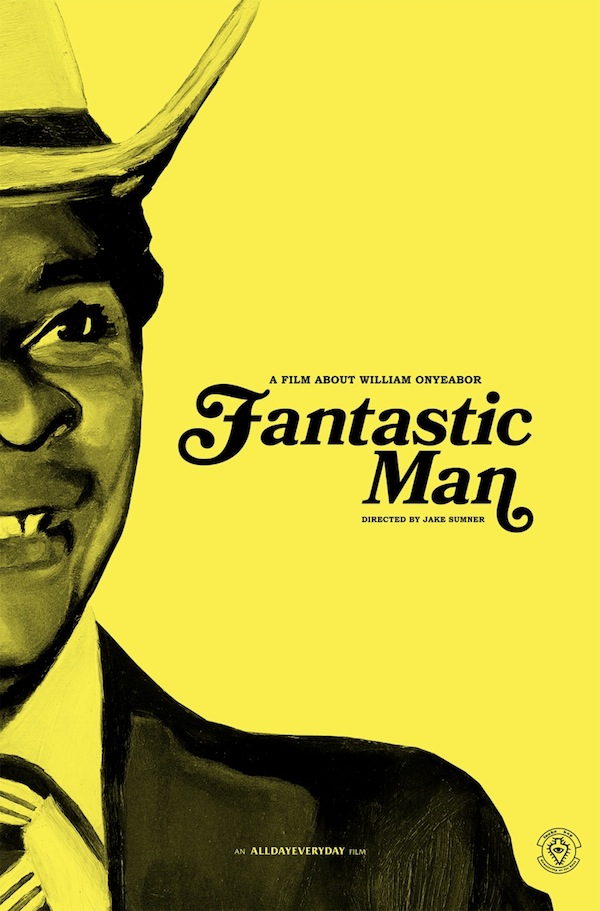
And then two weeks later I received a press release from Lights Camera Africa!!! about a movie, ‘Fantastic Man’ revolving around two Americans search for William Onyeabor in Enugu.
The press release describes Onyeabor as ‘the remarkably elusive musician who, in the 1970s and ‘80s made ground-breaking, futuristic, synth-heavy electronic music that was far ahead of its time. Suddenly, in 1985, Onyeabor turned his back on music to become a born-again Christian. For the past 30 years, the artist has refused to speak about himself or his music.’
Yet, the release continues, ‘Despite not having released any new tracks in 30 years, Onyeabor has taken on a mythical status in music. Luaka Bop, the record label founded by David Byrne, issued Who Is William Onyeabor?, an album of Onyeabor’s greatest work, in fall 2013. The release, which took five years for Onyeabor to agree to, made TIME’s ‘Top 10 Albums of 2013’ and NPR’s ‘Top 50 Albums of the Year,’ and featured in The New York Times, The Guardian, The Sunday Times UK and Rolling Stone, among many others.’
How did Onyeabor get into the American charts? Well, the easy answer is that when the Americans discover you, you become a star but the truth is Onyeabor’s music presaged and anticipated what we have now and musicians like Goddy Oku (The Hygrades), and Loalu Akins (BLO) all testify to Onyeabor’s genius and the unique flavor of his music in the film.
The film ‘Fantastic Man’ which will be screened during the Lights Camera Africa!!! Film festival, which runs from September 26 to October 1, provides unique perspective on the man, as much as his legend will allow: was he a lawyer who became a musician? How did he make enough money to set up a studio and a record manufacturing plant? Did he have Soviet backers? Did he really send a young man to jail for falsely accusing him? Did he eat only once a day? Was he a giant? Did he threaten people with guns?
The film makers Jake Sumner and Eric Welles-Nystrom attempt to answer all these questions but it is a tough call because with Onyeabor (who is now born again and also a traditional ruler) refusing to speak to them, no one will ever have a definitive answer to the question; Who Is William Onyeabor?


2 comments
Hi there it’s me, I am also visiting this web page on a regular basis, this web page is really pleasant and the people
are in fact sharing fastidious thoughts.
AND TO IMAGINE THAT I DON'T EVEN PUT HIM UP THERE ….SMALL WORLD LIKE THE BIBLE SAID A PROPHET IS NOT REGARD IN HIS HOME STEAD …WILL AM ONYABOR IS MY UNCLE #NOTBOOSTING ….WHEN I TOOK UP ENTERTAINMENT LIFE MY DAD USE HIM TO MAKE JEST OF ME