It was in late 2013 I first heard Erigga drop two hard-hitting verses on the rap song “You Go Wound.”

It was a track that was memorable for the vulgar lyrics with which he described how he slept with another man’s girlfriend, but which featured hilarious references to Pope Benedict’s resignation from the papacy. I felt he had potential, but didn’t pay much attention. In May 2014, however, hearing him rap about cult wars on the Pfizzy-produced track “No Be Lie” piqued my interest, and by the time he sampled Nina Simone’s “Don’t Let Me Be Misunderstood” on his “Death Bed” freestyle later that year, I had become a fan.
Erigga, real name Erhiga Agarivbie, is known among music enthusiasts in Nigeria’s South-South region for his deft punchlines, explicit lyrics, storytelling ability, and use of anecdotes. The 34-year-old, who raps entirely in pidgin English, has been around since 2008 when he used to engage in rap battles in the University of Benin and Benson Idahosa University, and his 2012 single “Mo Street Gan” earned him a Headies nomination in the Lyricist On The Roll category. His numbers are not the largest, but his musicianship has earned him respect in core rap circles. His first three projects, Erigma (2012), A Trip To The South (2017), and Okorowanta (2018) failed to make any real commercial impression, but his 2019 album, Erigma II, which featured appearances from M.I Abaga, Ice Prince, Zlatan Ibile and Vector, earned critical acclaim for its originality, and earned him a nomination for Best Rap Album at the 2021 edition of the Headies Awards.
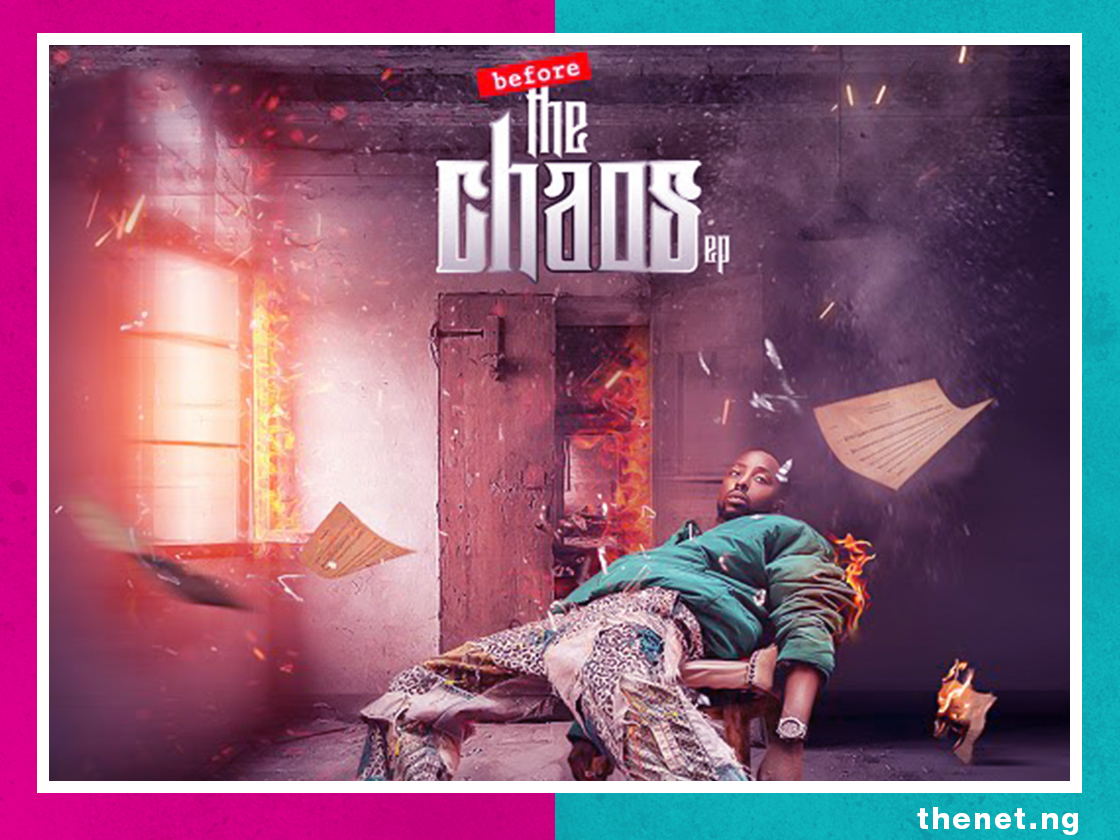
Before The Chaos, Erigga’s latest body of work which premiered on May 14, 2021, is a six-track EP with a runtime of 15 minutes. The record, released by Emirate Empire, is purely hip-hop, and is wholly produced by No Limits.
The album starts with “Many Nights”, where he teams up with Jay Teazer to ruminate on the burden of fame and financial demands from acquaintances. In many ways, it is similar to Fireboy DML’s “Airplane Mode” (off the Apollo album) and Omah Lay’s 2019 song “Do Not Disturb.” Black Tax is a common phenomenon in Nigeria, and this song is as relatable as it gets.
On “The End”, Erigga dwells on loyalty and industry drama with hilarious lyrics like “we no be blood na/this guy na ribena/the loyalty of a broke man fit full four cup…” It’s the one song on this record where Erigga flows freely with his anecdotes. With references to video game controllers, and with storytelling as captivating as what is found on “Welcome To Warri” (off Erigma II), it is one of the better songs on the EP.
Jay Teazer contributes another decent hook on “D*** Appointment”, a track full of sexual innuendos where Erigga compares his organ to pipes and shovels. It is vulgar from start to finish, but it bears a lot of rhythm. On “I No Wear Pant”, the shortest track on the EP, he tells a story of a man who takes up internet fraud after being jilted by his lover, a narrative reminiscent of his 2018 single “Kettle.”
“Wahala Dey” (featuring Oga Network) is a socially conscious song that dwells on police brutality and employment. Amidst synth drums and a saxophone, it’s the closest thing to a pop song, and should feature at nightclubs in Warri. The project closes out with “DDA (Don’t Die Alive)”, a song whose production draws influence from an 80s Slick Rick tune, but whose lyrics don’t do enough justice to the bass drums.
The EP sounds a tad disjointed on its first run, but it gets more coherent after multiple listens: you finally get a sense of what Erigga is talking about, and what he is trying to do. The record centres around hustle, loyalty, lofty dreams, and the frustration that comes with living in Nigeria. It’s relevant, but he has talked about these things before on three previous albums. The punchlines are there, and the wit is abundant, but there is nothing new, nothing memorable.
Erigga is at his storytelling best in “I No Dey Wear Pant”, his delivery is brought to bear in “The End”, and his trademark hilarity is on display in “D*** Appointment”, but “DDA” is a song that could have been done without. He clearly hasn’t lost his touch – he can rap well and he is funny – but he needs to find new ways to present his material.
Before The Chaos, to sum things up, is Erigga doing more of the same. It is definitely more vulgar than Blaqbonez’s Sex Over Love, and more coherent than Laycon’s Shall We Begin, but when compared to Erigma II, it is tempting to assume that he has taken a step back. The streets will probably love this, but Erigga should think of exploring new themes with his music.
Rating: 6/10.