


By Adedayo Odulaja
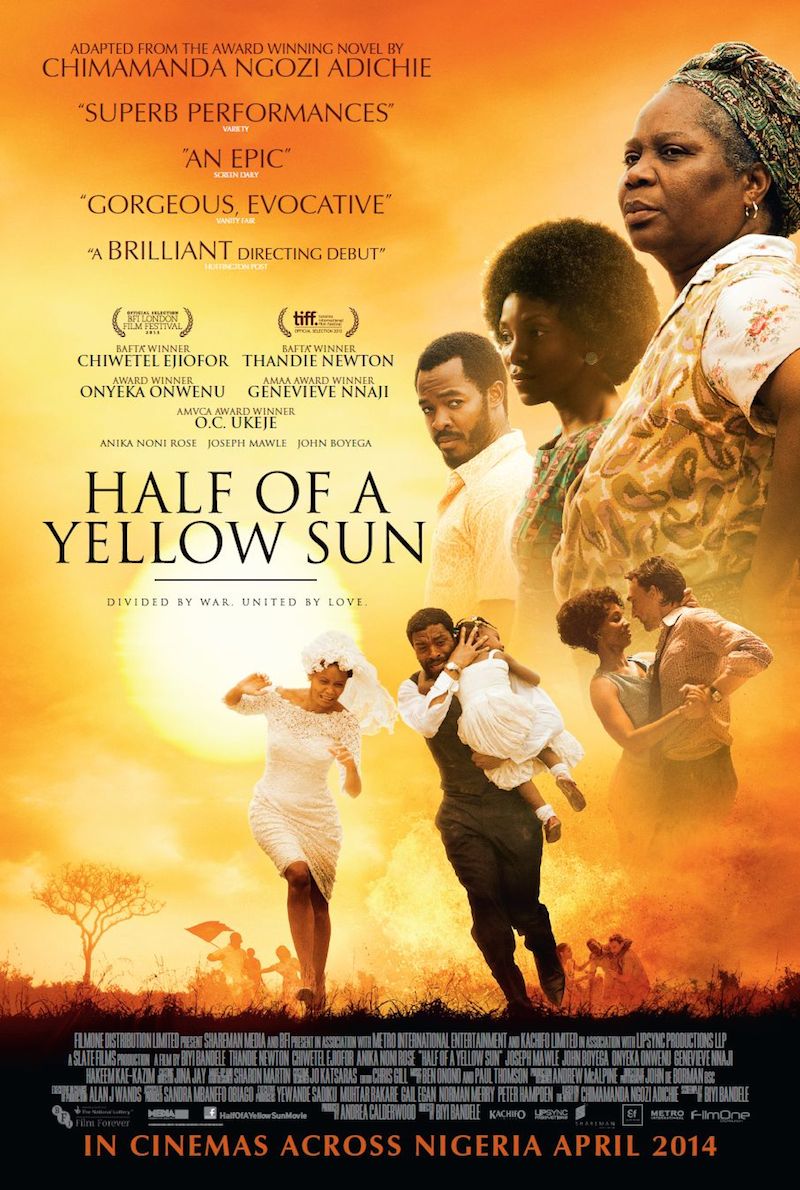
The announcement that Chimamanda Ngozi Adichie’s award winning book will become a movie can easily rank among the best entertainment-related stories that have emanated from Nigeria. And aside a few people who think having Hollywood actors in the movie is a disservice to the relevant slice of history that Half of a Yellow Sun, in book from or the big screen effort is, most Nigerians were more than excited.
While this is not another review of Half of a Yellow Sun, NET seeks to look at the entire project, putting in perspective its importance to the dream of a new Nollywood with functional storylines, quality pictures and ingenious directing, all of which the adaptation of Adichie’s great book combine.
There have been many controversial moments dotting the lane of the project and we look at some of them in this report, from the ones that get to do with the movie and others that concern the politics and controversy trailing its cinema run.
Anika Noni Rose incredibly fails to play the Kainene character, just as Ugwu fails to come alive
One cardinal sin when looking at book adaptations is to compare the resultant movie to the source material in terms of plot structure and chronology. But that said, Anika Noni Rose doesn’t seem to understand the Kainene character she is supposed to bring to life and doesn’t do a good job of it despite being a fantastic actor herself.
John Boyega is another brilliant actor who fails to sparkle in his role as Ugwu.
Thandie Newton impressive as Olanna saves for her flawed Nigerian accent
Save for her flawed accent, which is still inexcusable when one considers that her character and Anika Noni Rose’s are supposed to have studied abroad for a while, Newton shines in her role as Olanna. A stint of a few years abroad do not make your accent fade except if you are a Nigerian ready to impress on all you have been abroad, ask Linguists. Think about her inability to even pronounce the name, Ugwu, let alone being unable to speak a word of Igbo as Olanna does in the book and you would get the point.
Tension between the sisters absent
Aside the focus on the Biafra war, which the movie does a good job of reflecting, another big issue in the source material is the unending tension between the twin sisters who are dissimilar in almost all ways. Hardly is any of that seen in the movie, despite being one of the lines of expectation the movie builds in its advert blitz.
Chimamanda Ngozi Adichie got too involved with the movie premiere and controversies
Most writers are scared to commit their books to movie adaptations and are usually almost mortified even, to behold the end product of such ventures. Not Chimamanda Ngozi Adichie, the Nigerian woman rightly hailed as one of Africa’s best writers.
She was involved in the project from the beginning but got too involved by putting out statements when the Nigerian Film and Video Censors Board delayed the film’s release in the country, aside featuring in the redone KUSH ‘Let’s live together’ song as one of the movie’s soundtrack
Biyi Bandele acted too much like the writer he is, rather than the director he should be
As a director who is first an author, Biyi Bandele’s task was huge. Turning an award-winning literary effort already regarded as one of the great books to come out of Africa into a screen effort is intimidating enough, but Bandele’s issues as a director working on becoming a first grade director would always make the task even more cumbersome.
As a writer, he made a strong impression with his first novel, Burma Boy but had his job cut out as this film’s director.
But through putting out statements on social media and to media organisations, he was more interested in defending his job than leaving it in the pubic as work of art which the public would treat as they would.
Documentary parts water down the big screen side of things
While some reviewers have hailed the infusion of documentary portions in the movie, we think it waters down the functionally fictional and cinematographic effort it is meant to be. The movie would have explained it all.
Issue about funding and sales grossly overplayed
Being a cross-continental production, the issues of funding regarding Half of a Yellow Sun have continued to come up, placing on record its utmost importance to the future and growth of Nollywood especially as it concerns collaborations with Hollywood.
Unknown to most Nigerians, 80% of the budget of the film, $8 million in total, was sourced through Nigerian investors, both individual and corporate.
But with Nigeria accounting for about 60% of the film’s crew and actors including Zack Orji, Genevieve Nnaji, Onyeka Onwenu, Jude Orhoa, Tina Mba, Gloria Young, O.C Ukeje, Hakeem Kae-Kazim, Chinwetel Ejiofor and others taking part in the movie, some of that revenue has found its way to the Nigerian movie industry somehow.
Revenue versus cost figures don’t look impressive
New data obtained by Nigerian Entertainment Today, according to IMDbPro, shows that Box Office figures for Half of a Yellow Sun’s run in foreign cinemas indicate the film has earned a little over N22 million so far aside the pending earnings from Nigeria so far.
Benchmarking N22, 848, 785 against the over N1 billion expended on the project paints a very worrying picture for all concerned but redemption can still come from the cinema run in the country currently although that is now threatened by the evil of piracy in the country.
The public relations stunts by the producers of the movie continue through sending out releases that the movie has become the highest-grossing film in Nigeria yet, but they didn’t release the figures that should lend credence to that claim.
On that lane also, you would have noticed the cameras clicking away in cinema halls if you have watched the film already, which means more publicity-focused news might still hit the papers and web soon.
Most Nigerians yet to read Chimamanda Ngozi Adichie’s book
All you need to know that more Nigerians are yet to read Chimamanda Ngozi Adichie’s book is to take a trip to the cinema. There, the heaves, sighs and outrage accompanying the horror scenes in the movie would probably leave you with a decision never to argue against the notion that Nigerians don’t read ever again.
What about Genevieve Nnaji as Kainene?
Finally, would it really not have been better for everyone and everything if Nigerian star actress, Genevieve Nnaji, had been cast as Kainene for instance. Ever the queen, the grace she brings into her role, as Miss Lara Adebayo is one of utter conviction and class.


2 comments
great movies of the year
U didn’t say any tin about Chiwetal’s performance. U dey fear?