Lagos has a history of settlers that traces back to the old Bini kingdom, Brazil, Portugal, as well as surrounding provinces like Ile-Ife, Abeokuta, Nupe, Awori and others. This rich history reflects in how some of the areas and streets have been named.
Check out these 13 areas in Lagos and learn about their interesting history.
Agege – When the kolanut plantations in the Agege area started to flourish it attracted huge settlements. Agege experienced rapid development and became a powerful center of the kolanut trade. These settlements attracted different people of different backgrounds and interests such as laborers, and most of these were Hausa. Whenever the Yorubas needed labourers for jobs such as cutting of trees, they would engage the services of the Hausa people. Because of this work the immediate area where the Hausas lived was named ‘Ilu Awon Ageigi’ which translates as ‘Town (Ilu) of the tree cutters’.
Ajegunle – The history of Ajegunle dates back to the 19th century. And it is interesting to know that the word “Ajegunle” literally translates to “This is where my wealth lies”. It is ironic that Ajegunle today is a slum and popular for its squalor.
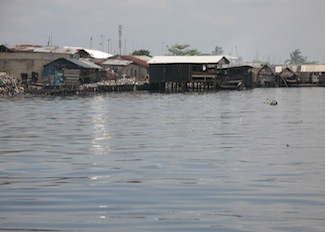
Apongbon – Apongbon is one of Lagos’ most popular markets. It got its name from the then acting governor of the Lagos colony, William McCoskry, who had a Red Beard. The Yorubas who couldn’t pronounce the colonial governor’s name decided to describe him by his red beard and started calling him “Oyinbo to pon ni agbon” meaning a red-bearded man. It later became Apongbon.
Badagry – Believed to have been founded in 1425 A.D, the town derived its name from the fusion of the name of its founder, a famous farmer known as Agbedeh and the word “Greme”, which means farm in Ogu (Egun) language. Originally, the name of the town which is situated between the city of Lagos, and the border of Republic of Benin at Seme was said to have evolved from the dual corruption of Agbedegreme (which means Agbedeh’s farm in “Ogu” language) to Agbedagari and from Agbedagari to Badagry by Yoruba settlers and European slave traders respectively.
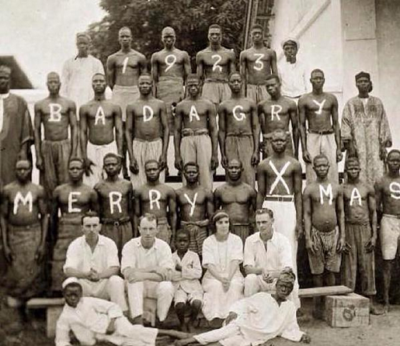
Around 1600, the ancient city of Badagry was reputed as a thriving community for trade in salt, but this legitimate trade soon gave way to slave trade and for its first four hundred years of existence, slave trade dominated all other commercial interests in Badagry. By 1740 Badagry had become a thriving town for slave trade. Badagry became a part of the Lagos Colony in 1901 after the slave trade ended.
Epe – Some group of hunters from Ijebu, led by one Urankaloye or Uraka during a hunting expedition, got to a place called “Igbo Obo” ( the monkey forest), the present site of the University of Lagos, School of Engineering, where they continued their search for games. Uraka on further expedition discovered a place called “Oko-Eepe” (Forest of black ants). As it turned out, whenever Uraka set his traps for games, he always returned home empty-handed. This became a source of worry to him and his wife. Yet he was convinced that Oko-Eepe was home to the biggest game around. Each time Uraka sets out for hunting, Peeta, his wife would ask if he was still going to Oko-Eepe. Eepe town derived its name from Oko-Eepe in the 15th century and some historians believed Peeta, Uraka’s wife must have played a vital role in the naming of Epe Town.
Ikeja – Historically, Ikeja, the capital of Lagos consists of 78 communities. The earliest settlers in the area and its environs were Aworis who migrated from “Ota-an Awori”, a town in Ogun state which was about 24km north of Ikeja township. The name Ikeja is actually an abbreviation for “Ikorodu And Epe Joint Administration”.
Ikorodu – According to available history, the people of Ikorodu descended from the Remo stock of Yoruba tribe who came to settle on a plateau and named it Ikorodu, a shortened word from “Oko Odu” which literally means Odu farm. Odu now in extinction is a vegetable species used for cloth dying, it grew luxuriantly on this plateau, hence the early settlers for want of a better name, found it convenient to name their new found settlement after this abundant vegetable. With time, “Okorodu” changed to Ikorodu.
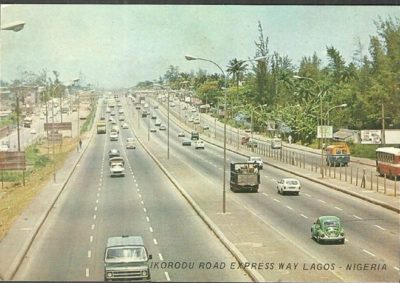
Magodo – Magodo is actually pronounced “Mágodó” which translates to “Do not pound” and not not Màgódò as it is pronounced today. It was believed to be a taboo to pound in the environs as it disturbed Olókun, the goddess of the water. Even today, Magodo is close to the Ogun River which flows into the lagoon.
Mushin – Mushin was founded over six hundred years ago by two hunter-explorers who coincidentally met at the same spot, where they decided to settle. The spot was under the “Ishin” tree, a resting point for birds and animals in those days. Mushin is a contraction of two words, the first “Mu” which means to pick and the other “Ishin” depicting the juicy fruit. Mu-Ishin, “pick the ishin fruit”. It is now pronounced as Mushin today.
Ojota – In the 18th century, the Ojota area was a military settlement where soldiers practised their shooting or perfected their shooting skills. There were several gun firing spots within that axis, the area became known as “Oju Ota” which translates to “Bullets spot”. Later, through constant usage, the name eventually became Ojota as it is known today.
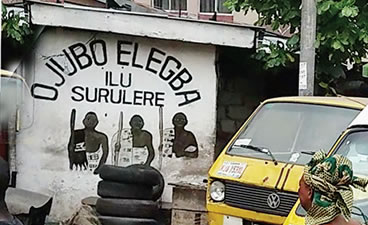
Ojuelegba – Oju Elegba which literally means “the eyes of the cane owner” or “a tribal marked face” as some choose to interpret it, actually has a different, deep-rooted meaning. The name Oju Elegba originated from the idol called Elegba, whose shrine was located at a spot called Oju. The name Oju Elegba emanated from the description of that spot which is “Oju Elegba”, meaning the shrine of Elegba.
Osapa London – The area on Lagos island used to be Osapa Lolo. Osa means Lagoon, while Palolo means calm. But after developments in the area, the name got altered to become Osapa London. It is interesting to note that the local government in that area is called “Eti-Osa, Edge of the Lagoon”
Oworonshoki – The story goes that migrants from Ile-Ife, hunters by occupation settled in a piece of land. On one occasion, while roasting some animal they had killed, other migrants were drawn to the settlement by the smoke that was created. These migrants upon arrival on the settlement were impressed by what they saw and said ‘Ewo ero ni ilu soki yi, ti won se owo’, meaning, ‘Look at this great multitude doing business in this small place’. The people were into all sorts of business. That was how the name Oworonshoki came into being.
This is only a few of the places in Lagos with peculiar names with intersting meanings and history.