


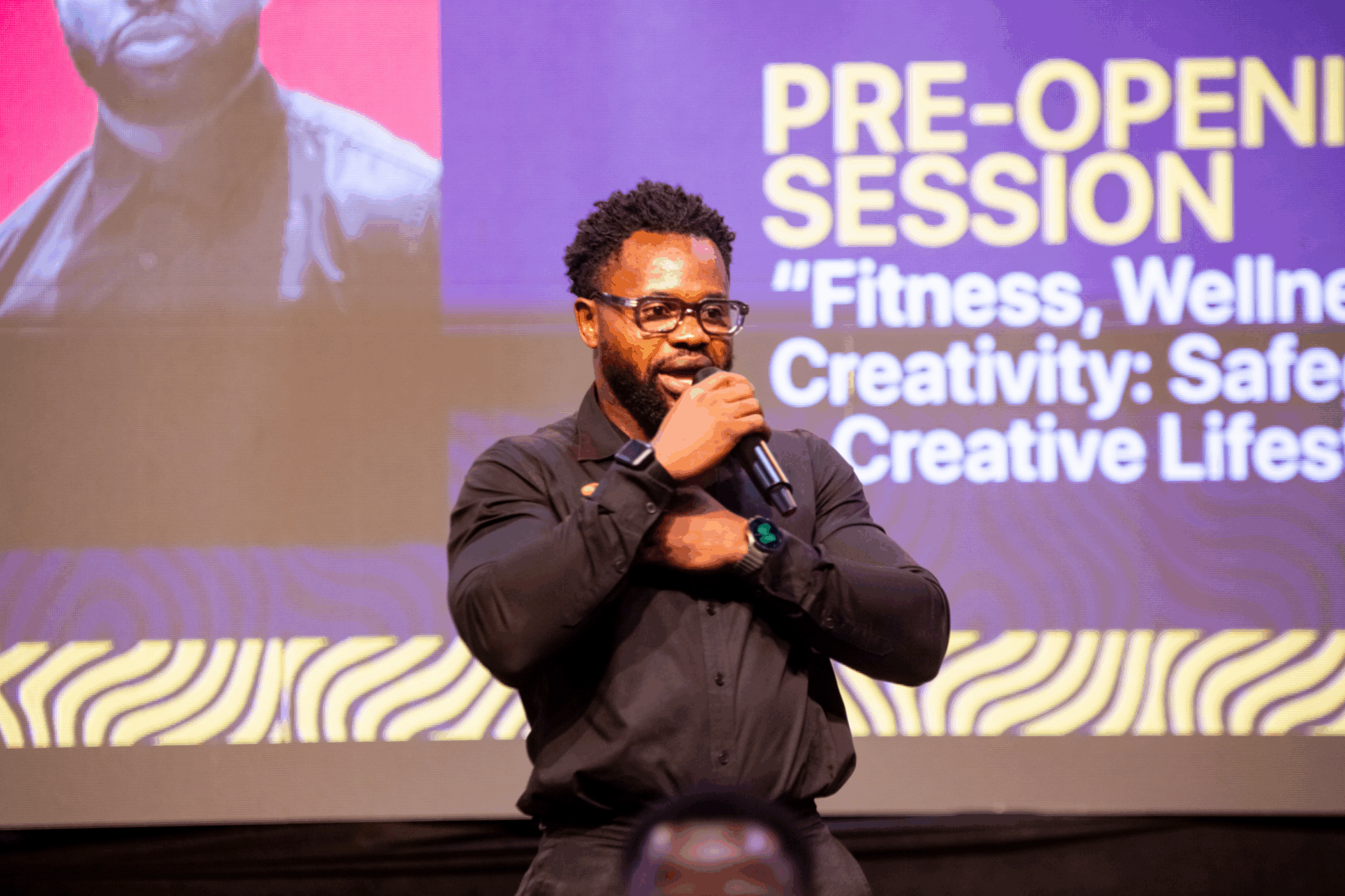
Fitness expert Ekemini Ekerette has issued a stark warning to Nigeria’s entertainment sector, revealing that lifestyle diseases have killed more creatives than accidents and substance abuse combined, threatening the sustainability of a multi-billion naira industry built on compromised health foundations.
Speaking at NECLive 2025‘s breakout session on “Fitness, Wellness & Creativity: Safeguarding a Creative Lifestyle,” Ekerette—known professionally as Kemen Fitness—confronted an audience of well-dressed, smiling creatives with uncomfortable truths about the health crisis silently decimating their industry.
“We are building a multi-billion dollar industry on bodies that are breaking,” Ekerette declared, referencing Nigeria’s creative sector valued at over ₦14.8 billion with Nollywood contributing a rising share to national GDP. “Behind these beautiful looks and brightest smiles, some of you know the struggles you deal with daily. Fame looks glamorous until you see it behind closed doors.”
The fitness coach presented sobering statistics: up to two-thirds of creative professionals report high levels of burnout, anxiety, or fatigue, while 29% of adult deaths in Nigeria stem from non-communicable lifestyle diseases. More alarmingly, global reports since 2020 show elevated rates of anxiety and depression, with high-stress professionals experiencing increased burnout and psychological stress.
Ekerette identified six critical risk factors plaguing entertainers: irregular sleep patterns from long studio sessions and movie shoots; reliance on fast food due to time constraints; substance dependence for stress relief; emotional pressure from spotlight demands; low exercise rates despite over half of young Nigerians being connected to entertainment; and absence of recovery time, with exhausted creatives moving directly from work to social engagements.
“Lifestyle diseases have taken more entertainers than accidents. Lifestyle diseases have taken more entertainers than substance use. And sadly, lifestyle diseases have taken more entertainers than accidents and substance use combined,” he emphasised, asking attendees to remember colleagues lost to preventable health conditions who might still be alive had intentional health care been prioritised.
The presentation reframed fitness from an aesthetic pursuit to a career necessity. “This conversation is not about aesthetics. It’s not about abs. It’s all about sustainability, relevance, and longevity,” Ekerette stated. “Your physical form is your instrument and your mental form is your performance. To entertain at your best, you need to function at your best.”
Ekerette introduced what he termed the “RED FLAG Framework,” leading attendees through a collective pledge: “R – Protect your sleep, stillness is recovery. E – Movement is non-negotiable. D – Eat to perform, not to please.” The interactive moment saw the entire hall rise to recite the commitment together.
Addressing mental health, the fitness expert defined it through three interconnected components: thoughts (perception), emotions (interpretation), and behaviours (actions). “Good mental health is not the full presence of happiness or absence of sadness, but your ability to balance your thoughts with emotions and emotions with behaviors,” he explained, linking mental fitness directly to creative consistency.
For time-constrained creatives claiming insufficient hours for exercise, Ekerette offered practical solutions. “What you need is not time. What you need is structure. If you have just 10 minutes three times a week, it’s enough to build something you can progress over time,” he stated, introducing the “FITT model”—Frequency, Intensity, Time, and Type—customised to creative professions.
He recommended specific training aligned with creative demands: reactive training for performers needing cognitive agility; yoga and pilates for pressure management; and strength training for building confidence and courage. “Your art defines your training,” he explained.
The session concluded with Ekerette’s core message positioned as career insurance rather than optional wellness: “Fitness is no longer an option. It’s the foundation of your performance longevity. Every show, every flash, every applause begins and ends with your health. You are your brand.”
His final challenge before concluding his session: “You don’t need to do everything. You just need to stop doing nothing.”
The breakout session represented a departure from NECLive 2025’s typical focus on economic strategies and infrastructure, addressing the often-overlooked foundation underlying all creative output—the health and wellness of the creators themselves.

