The Nigerian entertainment industry has gone global; our content and artistes are household names from Lagos to Seoul. While executives are not as popular, they are getting their due recognition these days.
But this has not always been the case. On July 25, 2025, a true giant of Nigerian music and film, Obafemi Bandele Lasode, passed away in Lagos after a long illness.
Although you may not have heard of him, he was one of the individuals who laid the foundation for the industry as we know it today. Femi Lasode was more than an entertainment executive; he was a dreamer, a builder, and a pioneer who saw the bright future of Nigerian storytelling and worked tirelessly to make it real.
Born in Port Harcourt in 1955, Lasode’s ancestral roots were deeply planted in Abeokuta, Ogun State, and his passion for Yoruba culture was reflected in his life’s work. He travelled far for his education, earning degrees in Business Administration and Communication Arts in the United States.
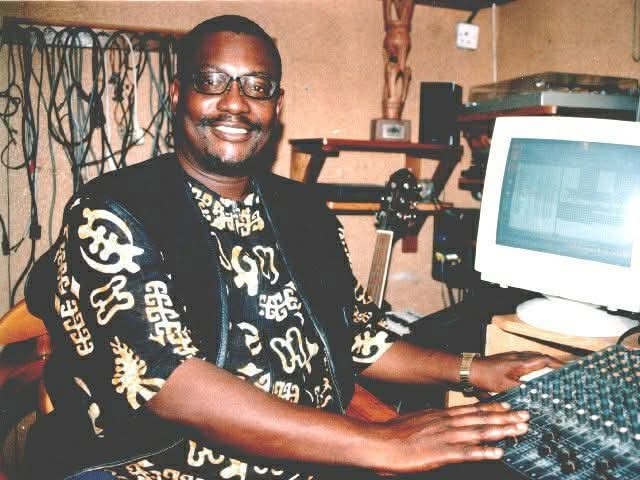
It was in the bustling city of New York that he started to shape his craft, working as a Promotions Coordinator for Inner City Broadcasting in the early 1980s. He was one of the first people who gave their all to promote African film and music overseas while he organised promotional activities for New York’s top black owned and operated radio stations.
He made history by hosting the legendary Sonny Okosun at the famous Apollo Theatre in Harlem in 1984. “That moment at Apollo was about announcing Nigeria’s voice to the world,” Lasode said in a 2001 interview. “We weren’t just performing; we were claiming space.”
That moment was followed up by a performance of Fela Anikulapo-Kuti, some years later. Femi Lasode also worked with Chief Oliver De C’oque, Prince Chief Seven Seven, and the great King Sunny Ade, playing their songs on American radio stations and even inviting them to the US for radio interviews.
“It was inspirational, and it showed how popular Nigerian music really is if packaged and marketed professionally. You know that I have always been good at making friends and we would eat and play together, and furthermore, I had a radio programme in New York called ‘Afrika in Vogue’, where I interviewed them and played their music,” he said in 2014.
When he returned to Nigeria, he brought with him a fresh and ambitious spirit. He wasn’t content with just performing; he wanted to build something lasting. He produced “Afrika n Vogue,” a groundbreaking African music program on Radio Nigeria 2, which had the mission of elevating African sounds during a time of global media influx. In 1995, he took a significant step, establishing Afrika’n Vogue/Even-Ezra Studios, a clear sign of his belief in local production and talent.
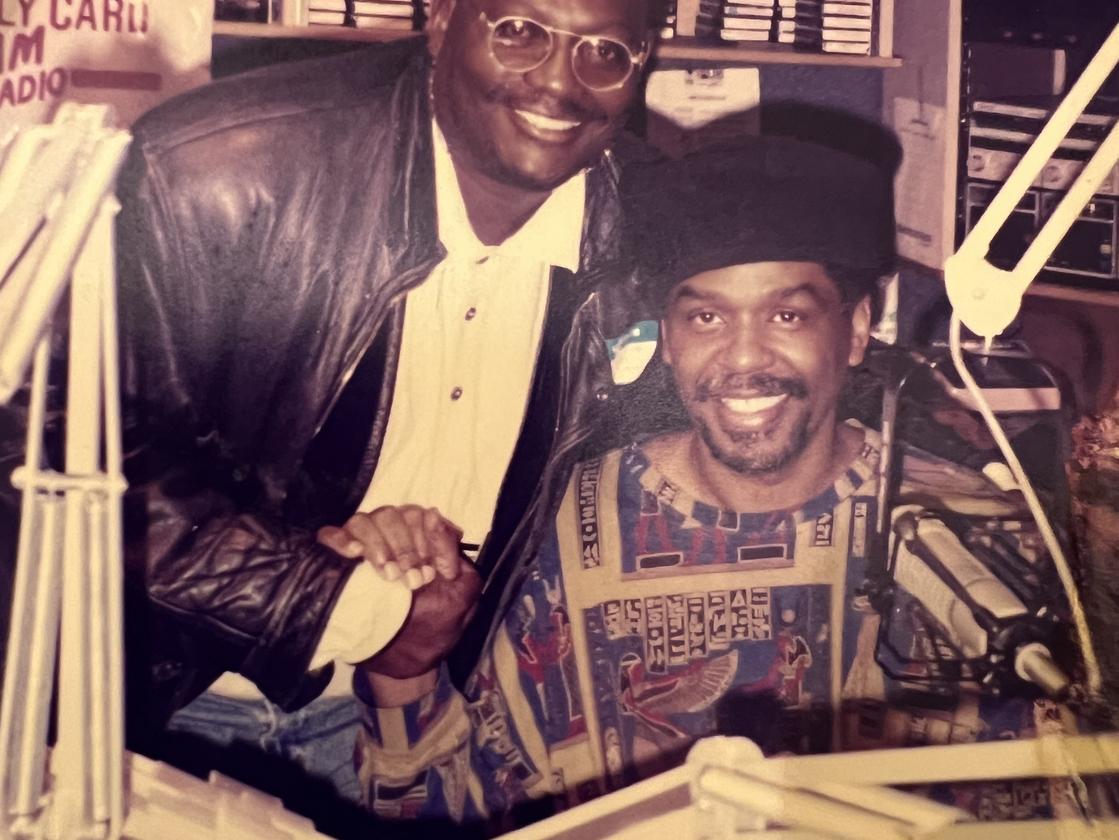
Yinka Davies, the Nigerian singer and judge of the reality TV show, Nigerian Idol, emphasised the significance of Femi Lasode’s move back to Nigeria and his immediate impact in the music industry. Almost every pop artiste who came onto the scene wanted him to play their songs. “Mr Lasode came into the music industry when there was some sort of lull, Ray Power was just a year old, I think at the time, Kennis Music was yet to fly, so all sound made Even Ezra the bus-stop,” she told Netng.
Lasode consistently championed cultural authenticity, and it was in the world of film that he truly shone brightest. His masterpiece, the 1997 African epic film “Sango,” was a groundbreaking achievement for Nollywood. As both producer and director, he poured his heart and soul into creating a cinematic work that captured the imagination of audiences both at home and abroad.
The idea to produce the movie was conceived in New York, and he was worried about the misrepresentation of African history if they did not take charge of telling their own stories. “The urge came from my student days in New York, in the early eighties, when afrocentricism was sweeping the African-American community. They were changing their names to African names, and there was a thirst and hunger to identify with Africa.
There was a special fascination with Orisha, and because they knew I was a Nigerian, they would ask me questions, and I was rather ignorant. I knew more about European and American history and religion than African.”
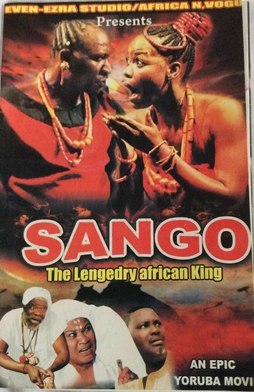
“But it was not until I went into a computer store in Manhattan, and came across a computer game called Shango which portrayed him as a wrestler, that I realised that our history was being distorted and I set out to put the story straight.”
Sango was a powerful declaration of Nigeria’s rich history and storytelling ability, earning international praise and becoming a cultural landmark. The film was screened at prestigious venues like the Smithsonian Institution in Washington and the Minneapolis–Saint Paul International Film Festival.
While many people expected to see more movies like “Sango,” Lasode took a break from that scene for a while. In a later interview, he admitted that he wanted to make impactful movies which required collaboration. He wrote a movie titled Osun the Benevolent, Amazons of Africa; the story of Abeokuta and Jungle Ropes; the story of World Champ, Bash Ali, and he sought co-producing collaborations with the respective state governments.
“I believe that you can go and shoot just any Nollywood film if that is your target. But to do a film like Sango, which is an epic, you need foreign collaboration. That is when you can produce a film that will make as much impact as a movie like Slum Dog Millionaire. So, the film projects I have are those that require that I have a strong international partnership,” he told Nigerian newspaper, Punch, in 2013.
Although there was nothing else like Sango, Femi Lasode’s creative mind never stopped. He worked as Director of Productions at DAAR Communications, the owners of African Independent Television, a free-to-air channel that was popular in the early 2000s, creating popular TV shows like the sitcom “Paradise Park” and the musical program “Afrikan Rhythms.”
He pursued his doctorate at the University of Abuja and wrote an important book, “Television Broadcasting: The Nigerian Experience (1959–1992),” which is a staple in communication studies curricula and is widely cited in research on post-colonial media evolution.
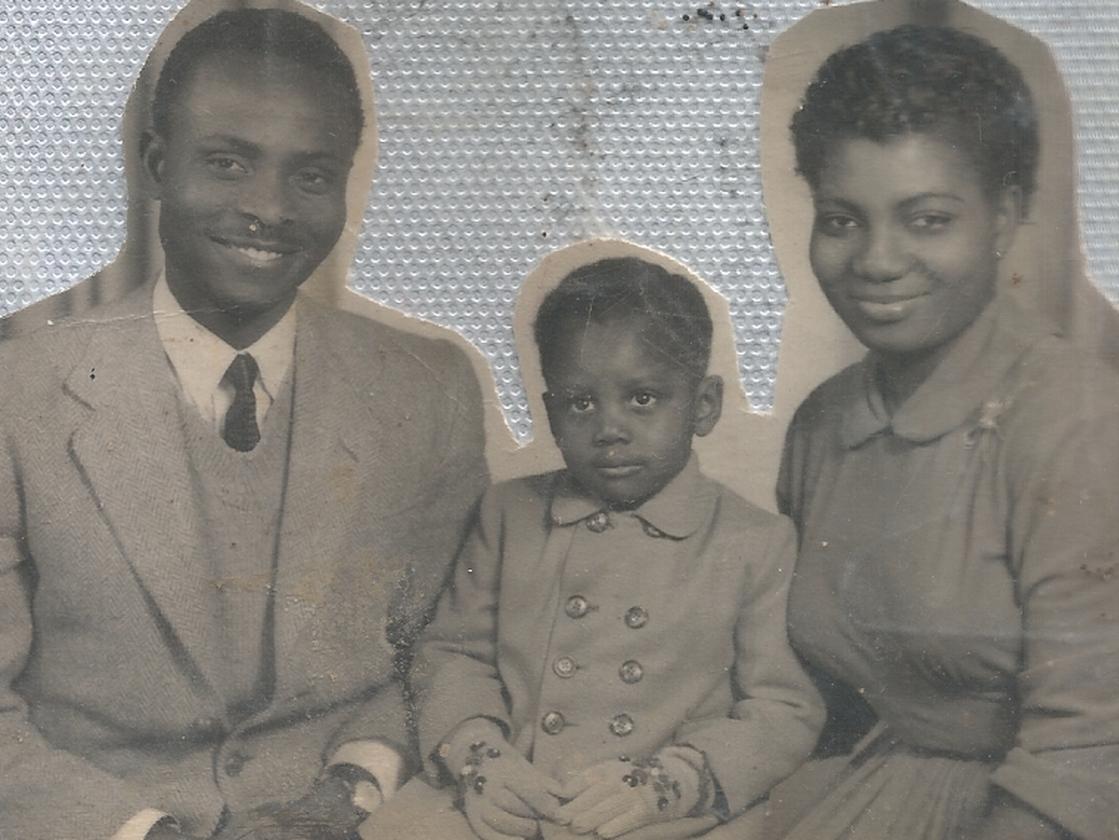
Femi Lasode’s influence extended beyond his creative work. He was a strong advocate for preserving African heritage through storytelling and music, consistently using his art to promote Yoruba culture and values. He promoted artists like Tosin Martins, known for the hit song, “Olo mi” and Rotimi Martins, otherwise known as Alariwo of Africa.
After his death, Alariwo of Africa told Nigerian Entertainment Today how Femi Lasode discovered him at a Barber’s salon in Oregun on the Lagos mainland and went on to sponsor his debut album. “He sponsored my full album, did videos for me, for all my songs, and there was nothing like royalty. All the royalties were coming to me, you know. He showed me the way in the entertainment industry, he said.
The man helped many people. He contributed immensely to the growth of the entertainment industry without looking back, you know, so it was a sad experience to learn of his death.
Femi Lasode became the President of the Performing Musicians Employers Association of Nigeria (PMAN) in 2002, where he tirelessly worked to uplift the Nigerian music industry. He dreamed of a dedicated centre for musicians and even launched the Nigerian Musicians’ Hall of Fame in 2002.
Though his time as president had its challenges, and he later admitted that he was ‘too intellectually inclined to be PMAN President,’ suggesting a need for a more dynamic, hands-on leadership than perhaps the association was ready for. His involvement in the 2003 PMAN election saw Charly Boy emerge as president.
Even after his time as PMAN president, Femi Lasode’s thirst for knowledge and creation never faded. He had grand plans for the future, including a film village and more epic movies, always pushing the boundaries of what was possible in Nigerian entertainment.
May his soul rest in peace.