


By Tobi Alli
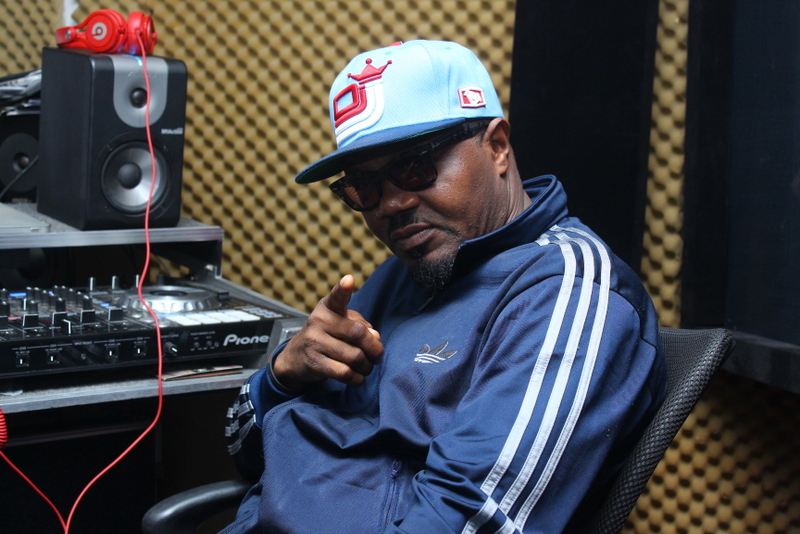
In this interview with NET, Jimmy shares how he got his stage name ‘Dj Jimmy JATT’, how he acquired his skills, the release date for his forthcoming album titled ‘The industry’ and much more.
The world knows you as ‘Cool DJ Jimmy JATT’, how did you get your stage name?
Well, it’s quite simple, my first name is Jimi and my last name is Amu, JATT is taken from the initials – Jimi, Amu, Tunde and Tayo. Tunde and Tayo are my brothers’ names; they actually came up with the acronym.
How did you build up your DJ-ing skills?
After school, I decided to take it seriously, more as a profession. Apart from the fact that my brothers were in the business already, they got someone to teach me the art; back then in Obalende, a guy named Kachi was the one that eventually gave me adequate schooling on deejaying and I started developing myself from there.
Seven years ago, you released the first DJ compilation album, ‘The Definition’. Why is it taking so long to release another?
I’m a DJ, I don’t owe it anyone to drop an album every year. ‘The Definition’ had 21 songs and featured over 50 artistes; you don’t expect such every year. I didn’t think it would take so long to drop another, but it has. There is a new album on its way, which is actually going to be the biggest out of this country. The collaborative effort that went into it is bigger than ‘The Definition’ – the title is ‘The Industry’, and will be released on August 17, 2014. But I can assure you, subsequent albums will not take so long. I had to take a break from working in the studio with some acts for this interview to hold. It’s a very packed album.
So who are the artistes that have been featured on this album?
The question should be ‘which artiste is not on the album?’ If I tell you it’s the biggest collaborative album in Nigeria, then all the names you probably want to think of are already on the list, if someone is missing on the album then someone else from their camp is already there. Look at all the key record labels, cliques and groups; they have one or two artistes on this album. There is somebody from everywhere.
It’s 2014 and everybody has hi-tech gadgets and equipment to work with; how was it when you were starting out?
I won’t say equipment and instruments were poor at that time, what I worked with at that time were the best. Of course, technology will always develop as time evolves, but at that time they were pretty much the best a DJ could work with, though what we work with right now is way ahead of what we used to work with back then.
At the time I started deejaying, my brothers were already into the business, and my father was into importation of electronics, so from the onset, equipment and gadgets were things I had easy access to. Truly, I think I got started with the right set of equipment, maybe in term of the P.A systems, speakers and amplifiers we used then; like the Kenwood amplifier that requires fanning constantly, thank God we have passed that stage, but then, those were the very best to work with at the time (Laughs).
It’s your 25th anniversary; you have witnessed different eras of the industry, how has the journey been for you?
For me, it’s pretty much like every other thing you do in this country today, there will always be ups and downs. At the initial stage it was just a case of convincing people that this is a job and not a hobby. Another stage was the problem of sourcing for equipment and records, and another stage was people thinking they were doing you a favour by giving you money and not for working. We have seen a whole lot of this come and go; with artistes, before they release their first singles, they already think they are bigger than Michael Jackson or the world is waiting at their feet. They already feel like megastars before they start singing.
For me, I think it doesn’t hurt to see yourself as a growing being so there is always room for improvement, but once you think you are on top of the world, there is no room to improve anymore. I have always looked up to the next level and truly, there is always a next level in everything in life.
How did your six city tour across Nigeria go? How was the reception in the various cities you visited?
To be honest with you, looking back I ask myself, ‘why six cities only?’ because right now I feel I should have gone to more cities. The amount of love and respect we got from every city we went to was just overwhelming. It gives you renewed energy to keep doing what you are doing. We ended up doing seven cities; Ilorin, Abuja, Benin, Port Harcourt, Calabar, Lagos and Owerri. Owerri wasn’t part of our initial six but we looked at it and realised we needed to be there. It turned out to be one of the biggest results we had on the tour.
I was blown away with the love, the turn out and the energy people came out with. It made me feel like ‘Yea, I wanna go again’. It was really beautiful, a big shout out to our people, for the support on the tour. And in terms of creating awareness for our main event in August, the tour did very well.
How did family and friends take it when you decided to take deejaying as a profession?
As for my immediate family, I didn’t have to convince anybody; they had always seen me grow into a music person but maybe not a deejay. I always tell people that my family was very responsible for the way I became, they loved and supported me so I didn’t have any problem with my family. But on the outside, I had to face a lot of people looking down on me; judging from what they see and not know. But that was really where I got the energy to forge ahead, knowing these people didn’t expect so much from me, I was determined to prove them wrong. You must keep doing what you are doing with the determination that you must make something out of it, and these people eventually were like ‘wow, we were wrong about this guy’
As the foremost DJ in Nigeria today, sound quality is key in various music productions; to what extent do you go to provide your listeners with the best?
I am more about the people; I’m a crowd pleaser. Once you find out what works for people, you just have to go by it. Sometimes you are forced to work with things you can’t stand, but in this business it’s a two way thing; in as much as I introduce quality substance to you and you want the inferior product, I have no choice but to give it to you. It’s a bit tough, you find DJs playing songs they don’t believe in, but people want it, so what do you do? You are paid to satisfy the people musically, so what do you do? But most times, you still try to always ensure that you guide people to the right direction, so you work more with the quality stuff. Music has developed lately; you don’t depend on the DJ to give you sound. You watch TV, and you can download from the Internet. So when they come to you in majority and say they want the trash, you give them the trash, unfortunately. That doesn’t mean you don’t guide them aright.
Nigeria has witnessed an influx of young artistes in recent years; most of them dropping out of school to pursue a music career. What are seasoned artistes like you doing to educate and enlighten these folks that education is essential?
I do motivational speeches and public awareness often; I go to schools and communities. I tell people the importance of education and whenever you fail in any endeavors, you will have something to fall back on, every other thing is trial and error. I always encourage young artistes to attain the best possible level of education before venturing into music, because truly, in anything you do in life, if you are educated, you will always have an edge over a non-educated person. An educated public bus driver will do better than his uneducated counterpart. Same thing applies to music, if you decide to do music and you are educated, you will fare better than an average guy. Music is poetry and an educated musician will definitely have more words to play around with in their head and they’ll be more enlightened and learned. Though, some people have gotten away without any education, that’s [just] a few. I have always believed that in anything in life, if you are well educated, you will always survive and fare better than an uneducated person.
Have there been any moments when you wished you had chosen another profession?
Not really, but there are times when you ask yourself ‘what am I doing?’ ‘Why am I doing this wahala?’. But it’s never been enough for me to regret it. One thing I have come to realize is that everything in life has its own challenges, even if I had chosen any other profession, it wouldn’t have been easier. If you ask a doctor, he will tell you the same story. There will always be rough patches, especially in a country like ours. There are times like that, but the truth is, I’m passionate about what I do, you know what they say ‘make your hobby a job and you will enjoy it’, and because of my passion for what I do, it sees me through those periods.
Can you remember your very first paycheck for mixing or DJing?
I used to make tapes in Obalende studios when I was working for my brothers. They paid N5 per recording, so I strived to make as many tapes per day. But when I started earning my own bookings, the first big pay I got was N1,000. It was an end of the year party and I scattered their party (laughs). I charged N700 but they eventually gave me N1,000.
As a veteran in this profession, what have been the major challenges you’ve faced?
To be honest with you, I really don’t see those challenges as a serious threat. Like I said, maybe just sourcing for equipment or records and convincing people that they need to pay you for the services rendered. In recent times, most of these issues are prone to happen, it’s like you being in a hundred metre hurdle race, you know you will encounter the hurdles in the race but you have to scale them or they’ll stop you, so all you need do is prepare and brace yourself for the unexpected as well. That’s how it’s been with me, and for 25 years, I have perfected the art.
What do you think of contemporary music in Nigeria?
I think it boils down to the consumer’s taste; they have to filter the good from the bad. You cannot deprive the people of a lot of things. The worst you can do is tell record labels not to sign an artiste that doesn’t have the quality, but of course the artiste has the right to set-up his/her own record label and put his music online or wherever. It is left for people to embrace what is well produced and leave what is not well put together. But in a situation where people put out trash, sorry to say, and millions of people embrace it, what stops you from doing it the next time? That’s the unfortunate thing, so it boils down to people; it boils down to the buying public, who are the final consumers of music. If people are not celebrating these songs, the artistes will go back and work harder. The reverse has been the case; people that are doing the good music have turned round to water it down, because majority of the people do not want quality. I talk to artistes a lot and I am like ‘Guy, this is not what we thought you were gonna do’ and they say ‘Baba, person must chop now and these na the songs wey people dey like.’
As a DJ, producer, songwriter and artiste, would you provide your children with full moral and financial support if they decide to walk the same path?
Why not? With all pleasure! I am a DJ, I make people happy and the job takes care of me, I’m just going on make sure, just like what we have been doing, that we take the DJing to the next level. The story of DJing will soon turn out like that of football. In the past, they’d flog you for playing football, but these days, when you have a son, the first gift you receive at the hospital is a ball. I hope in the nearest future, we will get there and I think we are close to it. As far as it’s this good, it would be nice for my own kids to do it as well, if they want to, but it is not by force!
If this is a very successful career, do you have any sort of institution or academy that teaches the art of music mastery and production? Shouldn’t this knowledge be passed on?
It’s in the pipeline, but I don’t want to give you details. Of course I have always mentored and trained people over the years, but in terms of setting it up like a proper structure and classes, we are working on that right now. Soon, but not this year.
You’re 25 years deep in the game and having a big celebration; any plans to quit?
(Scoffs) I don’t even know the meaning of that word; I will check the meaning in the dictionary later today. It’s 25 years this year, I deliberately decided to mark this 25th anniversary because I want young and aspiring DJs to see a career in this and be hopeful about this job and let no one tell them ‘it’s not a job’. For me, it’s essential to let the upcoming DJs see that there is a way to go with this. So my 25th anniversary is not a retirement celebration. As I speak right now, for the next 12 months, I have activities lined up and we will roll them out as they unfold. Next month is the 25th anniversary official dinner, book launching and ‘The Industry’ album launch; the date is August 17, then September we have a Jump-Off, from October we have a whole lot of CSR events, in-terms of mentorship programs for aspiring DJs as well, so its on-going.
Why haven’t you signed any other artist on to this label?
I have always felt like, since I’m not ready to give 100 per cent attention to it, I won’t sign anyone yet. I am a very mobile DJ, I’m hoping to slow down soon, you know management of a record label requires commitment and more. When the time comes, I will move on to that level.
Having come this far, what are the prospects for someone who wants turns to DJing now?
It’s bigger now, I just tell people. First thing you should do is acquire the skills; a lot of people acquire the clothing and accessories without the skills, but you need to get the skills first, sharpen it within yourself and when you are ready to come out, all the platforms are there for you. You can put yourself out there through social media and good PR, but the most important thing is that you must be a DJ for real, acquire those skills before you go out there. Set out and take up the opportunities available, unlike when we started. You had to think about how to build your music library, because you needed to buy every record, but these days, you can always buy online, download or get complimentary copies from artistes. The equipment is a lot cheaper and more accessible now. But it depends on you to sharpen yourself before you present yourself; a lot of people present themselves as DJs before they start learning the art. That’s sad, and that’s why you have a whole lot of quacks out there.
Tell us about your marriage.
I have been married for 18 years and it’s been wonderful. I am married to my friend, so we don’t even see ourselves as married couple. It’s more like boyfriend/girlfriend, live-in-lovers, and it’s always sweeter that way. People tend to think there are terms and conditions for marriage but we don’t deal like that. I’m very good friends with my wife; we have been together forever, like 24-25 years already. It works for me very well and I have two wonderful kids that I love beyond anything in this world, they are my friends as well. In my house, I am hardly a father or husband, ‘I am just a pally or padi to everybody’, when they see me, they are like ‘this is my guy’ and that feeling is lovely.
For someone who has been exposed to loads of songs, do you have a few you really love in particular?
Stylee, Glasses up, Farida, Victory song, Cool as ice, Emujo, Too much, No duplication. All these are tracks taken from The Definition and The Industry albums. But truly, you don’t expect me to tell you one, I have too much to choose from, those are my favourite songs. (Laughs)
Sound Sultan sometime ago said you were the first person that helped him convert his music from audiotape to CD…
Sultan has reported me abi? (Laughs). It was something I was capable of doing and I felt ‘this is a young artiste, I really like his music’, and I wanted him to be able to perform on every platform. I didn’t want a case where he wouldn’t be able to perform at some places because the technology had come in. He had very nice music that I liked. That’s not a big deal, but that’s Sultan. For me, I just do things for people. If it is something I can help with at the time, I will do it gracefully.
What’s your word of advice for up coming DJs?
Find out within yourself, is it what you are called out for?? DJing has to do with passion, if you are not passionate about music or playing music for people, you can’t DJ. It’s not like buying and selling, if you can’t feel the groove within yourself, you can’t pass it on to people. Find out if it’s within yourself first! If it is, give it your best shot and the opportunities are just there for you, don’t let anybody discourage you, the sky isn’t the limit. Welcome to the real world.


3 comments