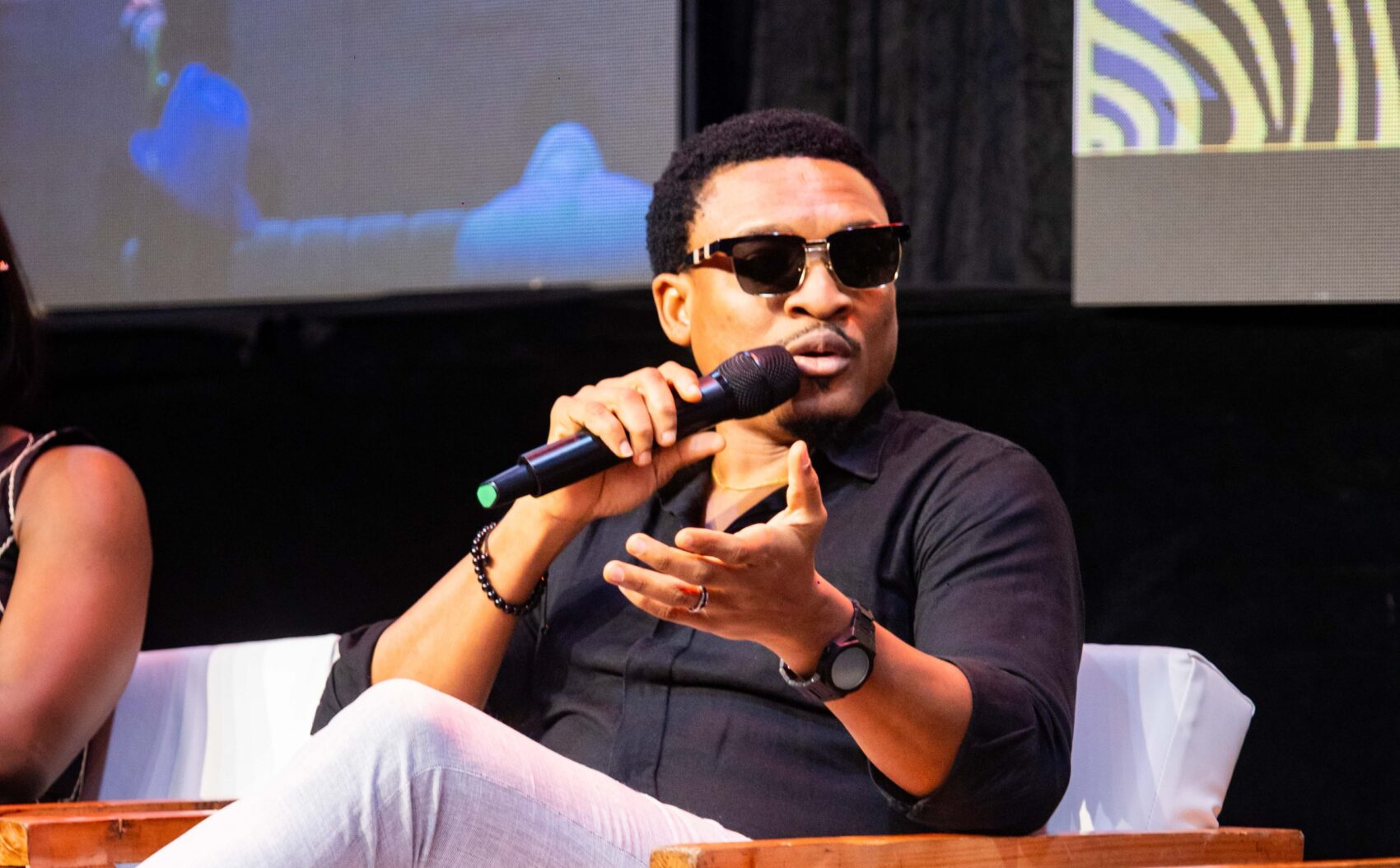
Veteran actor Shawn Faqua has described “Aloma” as a rare filmmaking experience combining exceptional script quality, strong ensemble performances, and complete production cohesion—elements he considers essential for projects that can elevate Nollywood’s global standing.
At NECLive 2025, Faqua revealed that despite reading numerous scripts professionally, few pass his initial four-page test. “Maybe out of 20, one or two might jump at you. But when I’m able to cross the first four pages, then I know I have something,” he explained. Chris Ihidero’s “Aloma” script immediately captured his attention.
The actor praised the screenplay’s character depth and multi-layered storytelling. “The character had a lot of arcs, which is what I loved. It had depth. And I was curious because it wasn’t just his character—the other characters were exciting to read,” he stated, noting his immediate call to Ihidero upon finishing to inquire about story continuation possibilities.
Faqua’s enthusiasm extended to his castmates, singling out Folu Storms for bringing “softness to hard life” and particularly praising first-time actor Ayo Maff. “I never met him before. Blew me away, because I’m like, these people will not have time. He’s just starting his career. His career is taking off as a musician. Where’s he going to find time? Can he act?” His concerns proved unfounded: “He came on set and the boy can act.”
The actor emphasised filmmaking’s collaborative nature, comparing it to football, where no one can “drop the ball.” He stressed that everyone—from makeup artists to leads to directors—must maintain excellence. “Even continuity, one small cup missing in a scene, we can wait another two hours until that cup comes. That’s how much cohesion we need on set,” he explained.
Beyond entertainment value, Faqua positioned “Aloma” as aspirational storytelling needed in Nigeria’s current environment. “A lot of times art imitates life, but it’s important we showcase things humanity can aspire to, especially in a clime like this where there’s quite a lot of despair and hopelessness,” he stated.
Addressing business aspects, Faqua called for creatives to become comfortable with contracts and intellectual property protection. He noted the industry now has specialised entertainment lawyers—a niche that barely existed previously—and emphasised that documentation doesn’t signal distrust but rather professionalism benefiting all parties.