


By Femi Fani-Kayode
I do not mean any offence to Nigerian women by asking the question that I am about to ask or by making the assertions that I am about to make in this note. However, there is an important question that I have not been able to answer myself for a number of years even though I have tried my best to do so.
And the question is as follows: What precisely is it about Igbo women that have made them excel in public office, business, politics, the arts, the sciences, religion, leadership and social activism in just the last 12 years when compared to their counterparts from other parts of our country? There are, of course, some equally notable and brilliant non-Igbo women in our country as well who are doing, and have done, a great job in both our private and public sectors and who have also done great things in their local communities and in our nation. However when I ponder on this issue and I consider the names that are on my list of distinguished Nigerian women that have been outstanding in their various fields of endeavor over the last few years, the overwhelming majority of them are Igbos.
A few names will serve as an illustration of what I am trying to say and let me assure you that I have had the distinct honour and privilege of either knowing most of them quite well or working closely with at least a few, so I am speaking from an informed position. They are all well educated, forceful, strong-willed, focused, creative, disciplined, passionate and decisive characters who are almost ‘German-like’ in their work ethic and in their pursuit of excellence and perfection. They really don’t take any prisoners when it comes to their work or calling and they all do their jobs, or whatever it is that they are doing, with an almost ‘messianic’ zeal.
I am talking about people like Ngozie Okonjo-Iweala (the former Minister of Finance and former Minister of Foreign Affairs of Nigeria who is now the Managing Director of the World Bank), Obi Ezekwezile (the former Minister of Solid Minerals and former Minister of Education of Nigeria who is now the National Vice Chairman of the World Bank), Dora Akunyili (the former Director-General of NAFDAC and the former Minister of Information for Nigeria), Ndidi Okereke-Onyiuke (the former Director-General of the Nigerian Stock Exchange and the person that was credited with building it up literally from scratch), Roz Ben-Okagbue (a leading pro-democracy activist in Nigeria and one of the conveners and leaders of the Save Nigeria Group), Violet Yough (a successful, wealthy and well respected industrialist and business woman of many years standing), Stella Chinyelu Okoli (the Chief Executive and founder of Emzor Pharmaceutical, the most successful and largest indigenous pharmaceutical company in Nigeria), Irene Iroche (the Chief Executive of Finbank), the late Genevieve Onyuike (one of the most versatile and brilliant lawyers in Nigeria and the former President of the Oxford and Cambridge Club of Nigeria), Joy Ogwu (the former Minister of Foreign Affairs for Nigeria and presently the Nigerian Ambassador to the United Nations), Evelyn Oputu (the Chief Executive Officer of the Industrial Bank), Chimamanda Ngozie Adichie (a well respected and notable writer of international standing and repute and the author of the international best-seller titled ‘Half A Yellow Sun’), the late Flora Nwapa (the poet, writer and essayist who was the author of the Nigerian bestseller titled ‘Efuru’), Akachi Ezeigbo (a highly respected Professor of African Literature of international standing and repute), Stella Oduah Ogiemwonyi (the founder and Chief Executive Officer of Sea Petroleum and Gas Group of Companies and who is one of the biggest players in the Nigerian oil and gas industry), Genevieve Nnaji (a leading Nigerian actress), Amaka Igwe (the respected film producer and director and a key figure in the Nigerian movie industry which is known as ‘Nollywood’), Bishop Peace Okonkwo (the wife of Bishop Mike Okonkwo and the co-founder of The Redeemed Evangelical Mission TREM, one of the largest and most respected Pentecostal Churches in Nigeria), Arunma Oteh (the Director General of the Securities Exchange Commission) and so many others.
If you care to do the necessary research and see what they have achieved in their various fields, you will be very impressed with each and every one of them. Of course we Yorubas of the west have our very own female legends, bright shining stars and great innovators too (as does every other part of Nigeria) and we have had them for the last eighty years when none in Africa could come anywhere near Yoruba women in terms of leadership, class, style and innovation.
A few names that come to mind are Funmilayo Ransome-Kuti (who was the most formidable female leader and the greatest activist that we have ever had in Nigerian modern history), Kudirat Abiola (the second wife of Chief MKO Abiola, a formidable and utterly fearless pro-democracy fighter and the first woman to be martyred in the fight for democracy in Nigeria), Funmi Goka (who is both the first female and the first Nigerian Deputy Managing Director of Agip Petroleum), Folake Solanke (who is the first woman to ever be appointed as a Senior Advocate of Nigeria), Lola Shoneyin (who is one of the most forceful and insightful writers of her generation), Bola Kuforiji-Olubi (the first female chairman and chief executive of a Nigerian bank), Eniola Fadayomi (a leading and notable banker in the early ’90’s), Aurora Kayode (the matriarch and doyen of Lagos high society in the ’30’s and ’40’s), Bolanle Awe (a revered and highly respected professor of philosophy and the leader in her field), Ebun Oyagbola (the first woman to ever be appointed as a Federal Minister in the history of Nigeria), Nike Akande (the first woman to ever be appointed as a Federal Minister for Industries in Nigeria), Joke Silva (probably the greatest and certainly one of the most versatile and respected actresses in the Nigerian film industry), Biola Alabi (the executive director of MNET Africa), Olufunmilayo Falusi Olopade (who has contributed enormously to breast cancer research globally and especially amongst African and African-American women) and so many others.
However in the last 12 years, the Igbos seem to have taken over in this respect and are now well ahead of the rest of Nigeria. Just a few years and look at what they have achieved. It really is quite remarkable. Can anyone tell me their secret or why this is so? What could be responsible for their doggedness, their natural drive, their tremendous energy and their great strength of character? What is it about these strong-willed eastern women of Bantu and Igbo extraction that now and all of a sudden sets them so far apart?
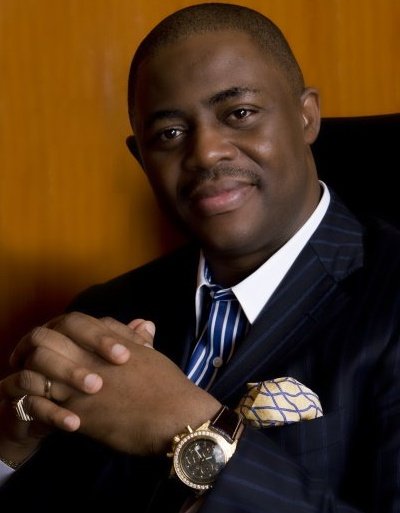
Fani– Kayode is a Nigerian politician, essayist, poet and lawyer.


5 comments
The Igbos will always be ‘cos they av dia ways i mean they dont care,on like d yorubas,4 a lady frm west 2 do anythin she thinks abt her home nd family,lady frm d north her mostly religious.that’s jst d truth abt it.
Uncle K,
I’m reading this piece of your with great enthusiasm, but firstly, I think Igbo women have excelled over time above Yoruba women i gues was because of their Industrious nature.
Igbos generally are known for that whether male or female.
Yorubas onm the other hand are very educated, enlightened but i’ll say less industrious. we (Yorubas) prefer to give orders than to actually do the work.
But give the (Yoruba) women some time, they will bounce back, trust me.
The Igbos will always be ‘cos they av dia ways i mean they dont care,on like d yorubas,4 a lady frm west 2 do anythin she thinks abt her home nd family,lady frm d north her mostly religious.that’s jst d truth abt it.
Papin you should mind your language. Who told you that igbo women don’t care about their home. You should know that igbos don’t like failure. Read THINGS FALL APART.
The secret is INDUSTRY – every Igbo man, woman, and child, has an ‘INDUSTRIOUS CHIP’ in his or her body…its also in our DNA. It sits dormant, waiting for an opportunity; when the opportunity presents itself, then it becomes aggressive!
Equally, the Igbos are a very proud people [anyi bu ndi ngala]… so naturally, we ABHOR failure; we find it most disgusting… absolutely bang out of order.
I’ll give you an example:
When I went to England to take my PhD in Law, I was the only BLACK PERSON in our class of 49. During our introductions, on hearing I was a Nigerian, one of our tutors callously told the entire class that a Nigerian had come to take a PhD at our School, and had spent 18 YEARS pursuing it – and even died before he got it! [The whole class of white people started looking at me really funny]
I proceeded to ask the tutor the Nigerian student’s name [so I could detect if he was lying, and if not, to detect the tribe], and on finding out it was not an Igbo man, I was relieved…
However, I still felt I had a duty to correct the impression they had of Nigerians at their Law School.
So, how did I do this? I DECIDED TO THINK OF MY PhD as a business which must not fail in AN OBVIOUSLY HOSTILE ENVIRONMENT*** To this end, I SIMPLY altered my original plan to work very hard – and went into OVER-DRIVE [whenever I got tired, I motivated myself by saying “by the time I finish this business, they will know that they dealt with an Igbo woman. Nonsense!”]
Long story short, after a most strenuous outing, not only did I graduate within the time prescribed, I ALSO GRADUATED IN 1ST GRADE – i.e “graduated without corrections”… which is a massive big deal – I WAS THE ONLY ONE WHO GRADUATED WITHOUT CORRECTIONS!
You should see my examiners’ PhD Viva report! Its rather paradoxical that we speak of the Igbo woman’s industry, because in the report, my examiners categorically stated that my thesis was ‘DISTINCTLY ORIGINAL AND CREATIVE, STRINGENT AND LUCID, AND CLEARLY SHOWED MUCH INDUSTRY … IN A MOST ROBUST AND ENGAGING MANNER’!!!
When they had the School of Law PhD graduation party, I received special mention [I was referred to as the student ‘all the way from AFRICA’], and STANDING OVATION AS THE BEST STUDENT.
I was in full Igbo form on the day – Nigerians know what this means… [i.e. with my head up, my shoulders held high and back, and my chest out – completely kitted out]
Oh did I mention that all those students who gave me the side-eye when our Nigerian brother was being mocked were SUFFICIENTLY INTIMIDATED.
SUMMARY: IGBO PEOPLE HAVE IN OUR DNA:-
INDUSTRY – which we take into every single vocation [otherwise known as one’s trade]
PRIDE – more than is found in the average individual
LOVE OF SUCCESS/ABHORRENCE OF FAILURE [which drives us over and beyond the norm] – just as some group in Nigeria is stereotyped as having the life mission of a carnal nature #obsessed with marrying under-aged girls etc… the Igbos mission in life from the beginning of time [long long before the war] has always been ‘STRIVING FOR SUCCESS’* FULLSTOP