


Historically, many Nollywood movies have seen a sequel, a ‘part two’ that has failed to live up to expectations. You watch a movie that ignites emotion in you, gets critical and commercial success, and you’re excited for the second part, that feels flat, uninspired, and forced when you watch it and you wonder why the producers did not walk away when the ovation was loudest.
Many Nigerian producers have released multiple parts of a movie due to the industry’s economic model, distribution channels, and production constraints. This practice was more common in the “old Nollywood” era of direct-to-video production, though modern Nollywood releases are often single, high-budget films. Yet, in 2025, the same issue persists and not necessarily as successful as the old Nollywood projects.
This problem is not peculiar to the Nigerian movie industry; it is a universal repetition problem. Hollywood and Bollywood have also churned out less-successful sequels to commercially successful originals. For context, Star Wars: Episode IV – A New Hope remains the crown jewel of the entire franchise, and it was released in 1977.
So, let’s dive deeper into five Nollywood films where the first instalment outshone the sequel.

King of Boys (2018) vs The Return of the King (2021)
Kemi Adetiba’s King of Boys is a political crime thriller that introduces audiences to the formidable Eniola Salami, powerfully portrayed by Sola Sobowale, a businesswoman navigating the deadly Lagos political and criminal underworld. The film was raw, unpredictable, emotionally charged, and paced so intensely that viewers were hooked for the almost three hours it runs for.
When King of Boys hit theatres in 2018, it instantly set a new bar for Nollywood political thrillers. The movie was dark, gritty, unapologetically bold, a storytelling masterclass blending crime, politics, and personal tragedy.
So when The Return of the King arrived in 2021 as a seven-part Netflix series the excitement was palpable. The sequel broadened the story, tracing Eniola’s foray into legitimate politics after years of ruling the criminal world. What started as a fast-paced thriller turned into a political drama that felt unbalanced and dragged in parts.
Eniola, once a larger-than-life figure commanding fear and respect, was now portrayed as reflective and subdued. This dulled some of the raw power that made her compelling. Supporting characters, still intriguing, lacked the impact they had in 2018.
Even though the sequel was released as a series, it still didn’t capture the same feeling or excitement that the original movie had.
The original movie looked amazing with its dark and powerful visuals, but the sequel, even though it looked nice, had more of a TV show style that felt less special. Most importantly, the sequel missed the strong emotions the first film had. The original touched viewers with feelings of heartbreak, betrayal, and tough moral choices, but the sequel didn’t live up to that.
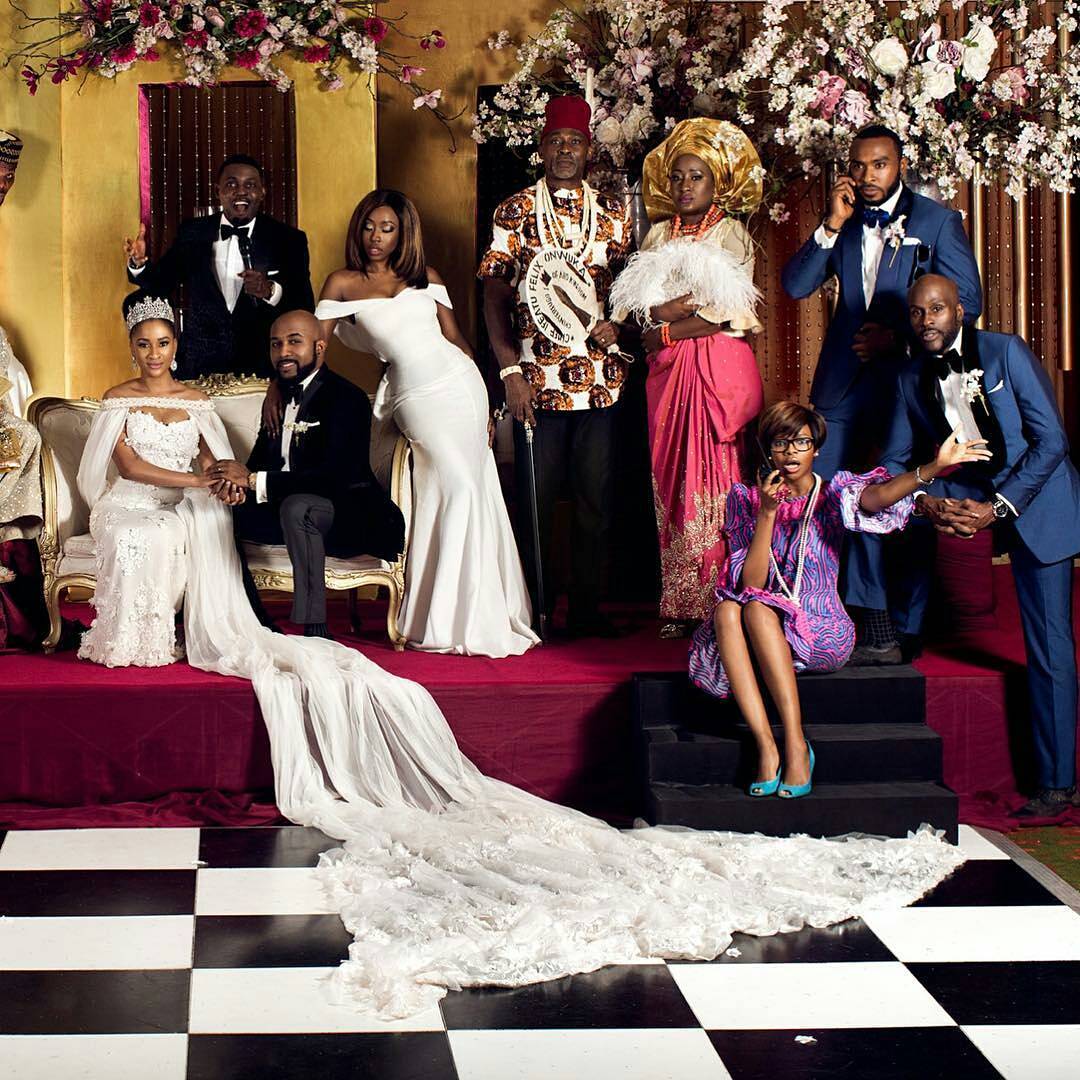
The Wedding Party (2016) vs The Wedding Party 2: Destination Dubai (2017)
The Wedding Party became much more than a rom-com after it premiered in 2016; it was a cultural event that ushered in the new wave of Nollywood. Directed by Kemi Adetiba, the film delivered a perfect mix of humour, love, chaos, and family drama. Its vibrant portrayal of an inter-tribal Nigerian wedding resonated deeply with audiences locally and abroad.
The sequel, Destination Dubai, took the newlyweds on a lavish honeymoon adventure. Unfortunately, it sacrificed cultural authenticity for expensive backdrops and a thin plot. The original’s magic, rooted in Nigerian family dynamics and tradition, was replaced with a story that was rooted in an international relationship between the Nigerian and white cultures.
The sequel felt more like a tourism story rather than a heartfelt story. Lavish scenery, destination glamour, and international culture clashes overshadowed the original’s charm. Ultimately, The Wedding Party 2 tried to outdo its predecessor with bigger locations and more drama, but lost the plot that made the original special and relatable to the Nigerian culture. Today, when people talk about ‘Wedding Party,’ most of them do not remember the second instalment.

Anikulapo (2022) vs Anikulapo: Rise of the Spectre (2024)
Kunle Afolayan’s Anikulapo was a beautifully crafted tale rooted in Yoruba mythology, following Saro, whose forbidden love and quest for power led to tragedy. Its use of language, costumes, and storytelling was widely praised as a return to authentic African cinema.
It was a breath of fresh air in Nollywood, a beautifully told epic blending folklore, tragedy, and morality that resonated deeply. Grounded storytelling, lush cinematography, authentic costumes, and indigenous language made Anikulapo a cinematic and cultural gem, reminding audiences of African mythology told right.
The sequel, Anikulapo: Rise of the Spectre (2024), tried to build on that foundation but leaned more into fantasy spectacle than emotional storytelling. Rise of the Spectre expanded the universe, picking up after the original. Now Saro navigates the afterlife’s trials and temptations in a supernatural realm.
Chief Daddy (2018) vs Chief Daddy 2
Chief Daddy was a chaotic ensemble comedy about the drama and absurdity of a wealthy family fighting over inheritance, as it was the kind of movie that showed the family fighting for something. It balanced humour and heart, powered by a large, talented Nollywood cast.
While Chief Daddy 2: Going for Broke disappointed. Despite returning cast and high expectations, it suffered from an incoherent plot, forced comedy, and weak character development. It was not on par with the original one, as the sequel was not really on point.
When Chief Daddy premiered in 2018, it delivered exactly what audiences wanted: chaotic laughter and relatable family drama, but Chief Daddy 2 (2022) missed the mark. The star-studded cast, featuring popular actors like Funke Akindele, Nkem Owoh, and Joke Silva, returned for the sequel, but the story didn’t really allow their characters to grow or connect well.
The story about saving the family business after a surprise beneficiary cut off the other heirs had potential, but it quickly became messy. The ideas weren’t fully developed, and the scenes felt random and overly dramatic, making the plot hard to follow.
Introducing the Kujus (2020) vs Introducing the Kujus 2 (2023)
When ‘Introducing the Kujus‘ premiered in 2020, it was a heartwarming, emotionally grounded story about a fractured Nigerian family reuniting for their late mother’s fifth memorial. Directed by Biodun Stephen, the film resonated through its subtle storytelling, authentic performances, and relatable family dynamics.
The movie leaned into the everyday sibling rivalry, unresolved tension, emotional baggage, forgiveness, and that ever-complicated yet unbreakable bond of family. Performances by Bisola Aiyeola, Timini Egbuson, and Kunle Remi added warmth and humour without overshadowing the emotional core.
Naturally, expectations were high when Introducing the Kujus 2 arrived in 2023. But where the first film drew strength from restraint, the sequel didn’t measure up. This time, the family reunited again, but instead of exploring deeper connections, the sequel opted for louder arguments, forced humour, and exaggerated conflicts that felt manufactured rather than earned. Even with the addition of music icon Don Jazzy to the cast, it couldn’t match the storytelling of the original version.
Introducing the Kujus 2 lost the emotional sincerity and subtle charm that made its predecessor resonate. In its attempt to recreate the magic of the original, the sequel forgets didn’t necessarily recreate.
In the end, Introducing the Kujus (2020) remains the stronger of the two as it was a beautifully crafted family drama that captured the messiness and love of Nigerian families with honesty and heart.
The year 2025 is shaping up to be another big year for sequels, with upcoming titles including King of Boys 3, Blood Sisters Season 2, Sugar Rush 2, Aiyetoro Town Season 2, Jagun Jagun 2, After 30, ’77, and even a sequel to the cult vigilante classic Issakaba. While there is excitement about these releases, there is also a lingering concern that the follow-ups may not have the same impact as the original installments.

