By Oluwole Leigh
This article is not about the recent loss of the Governorship elections in Ekiti State by Kayode Fayemi of the All Progressives Congress. It seeks to discuss the electoral misfortune suffered by the Alliance for Democracy during the 2003 elections. Action Congress of Nigeria can be described as a re-incarnation of the Alliance for Democracy.
Nigeria transited from military rule to civilian rule on May 29, 1999. The main contenders in the election were People’s Democratic Party’s (PDP) Olusegun Obasanjo and AD’s Olu Falae. Even though, Obasanjo hailed from the Southwestern part of the country, he was seen as a carryover of the military era. He did not represent the democratic aspirations of people from his homestead. He had few votes from that part of the country. The Alliance for Democracy had a peculiar history. It did not meet the basic requirements set for political parties at the beginning of the transition from military rule to Democracy. However, it was allowed to register in order not to aggravate political forces in the South West. They were deemed at that time to have played a huge role in the battle to enthrone democracy. There were three major parties contesting in the 2003 elections. These were People’s Democratic Party (PDP), Alliance for Democracy (AD) and All Nigeria People’s Party (ANPP). AD’s stronghold was in the South Western part of the country. AD had six governors who were contesting for re-election. They were Bola Tinubu – Lagos, Lam Adesina – Oyo, Adebisi Akande – Osun, Adebayo Adefarati – Ondo, Olusegun Osoba – Ogun and Adeniyi Adebayo – Ekiti. The PDP Presidential candidate was the President at the time – Olusegun Obasanjo while the ANPP presented Muhammad Buhari.
The Governorship candidates representing the Alliance for Democracy were chosen based on their ‘Pro-Democracy’ credentials. Governors like Olusegun Osoba, Bola Tinubu and Lam Adesina played some part in the struggle for democracy and they were rewarded. Lam Adesina’s rise to fame came when the Military Administrator in Oyo State arrested him along with Bola Ige. He had taken part in reprisal protests against Pro-Abacha demonstrations that were organized by Lamidi Adedibu and Arisekola Alao. The military administrator at the time declared them to be ‘Prisoners of War’. Bola Tinubu earned his stripes as a foreign-based member and financier of the National Democratic Coalition (NADECO), which played a huge role in international mobilization against the Abacha regime. Olusegun Osoba was a former governor who ruled in Ogun State between January 1992 and November 1993. Adebisi Akande had been a Deputy Governor of Oyo state between 1979 and 1983 while Adebayo Adefarati was a Commissioner in Ondo State during that period.
Between 1999 and 2003, the AD Governors held sway in the Southwest. Their campaigns were based on promises such as fighting for the restructuring of Nigeria, enthroning True Federalism and calling for the convocation of a Sovereign National Conference. Bola Ige, a frontline member of AD took up an appointment as Minister of Power while Abraham Adesanya’s daughter was appointed a Special Adviser in the Presidency. After a few years, disillusionment set in among the party faithful. There were frequent clashes between the AD Governors and the populace. Lam Adesina in Oyo state witnessed demonstrations by students of Ibadan Polytechnic against his plans for the School. Adebisi Akande in Osun state had running battles with Civil Servants. This culminated in the mass retrenchment of workers from Osun state Civil service. In an interview he was quoted to have said ‘Since 1991, no big thing happened in the state because it lacks big minds. And the civil servants were myopic-minded’. Bola Tinubu was nicknamed ‘Ojuyobo’ by Civil servants in Lagos state as a reference to his use of eye glasses. Olusegun Osoba was involved in constant clashes with workers in his state.
It was becoming evident that AD had sent out the wrong job requirements when choosing governors for the states. Struggling against an evil force such as the military had nothing to do with the ability to manage the human and material resources of a state government. Though the AD Governors fought alongside others for democracy they did not know how to function effectively when democracy arrived. Symbolic gestures such as declaring a public holiday on June 12 did little to convince the populace of their sincerity. Issues such as Restructuring and True Federalism were no longer present in speeches delivered by the Governor.
A critical moment was the assassination of Bola Ige on December 23, 2001. He was about to resign from Obasanjo’s government in order to help reorganize AD. His dream was cut short in a brutal manner. Bola Ige had come home in preparation for Christmas and sent the guards out to get something to eat. The assassins struck while they were away and disappeared. Great despair and sorrow came upon the city of Ibadan and other parts of the South West. Bola Ige was a man of the people and the people respected him. I once witnessed this demonstration of respect for his person. His car drove past a densely populated area of Ibadan and people trooped out to prostrate on the road the moment they realized he was in the vehicle. There was also a story of how he had his stolen briefcase returned to him when the thieves realized whose briefcase they had stolen. Bola Ige’s death put AD in a state of confusion. Matters were made worse when the Federal Government did not show any keen interest in ensuring the killers of the former Attorney General were brought to book. AD Governors hoped that the pain experienced by the loss of Bola Ige would translate into sympathy votes. However, this was not the case.
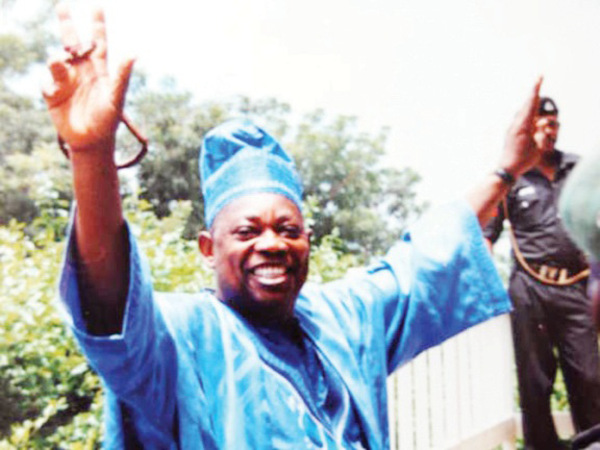
An issue that led to the downfall of AD in the 2003 elections was the lack of a rallying cause. AD Governors contested in 1999 in the throes of the death of Chief M.K.O Abiola who was the presumed winner of the 1993 election. A lot of feelings were sour and there was talk of the South Western states pulling out of Nigeria to form their own Republic. The focal point was that the ‘North’ had denied an individual from the South-West a legitimate opportunity to rule the country. People in this region also had a raw deal under the Abacha Government as evidenced by the arrest of a number of political leaders. Thus, the 1999 elections was an opportunity to rally behind those who had stood for democracy and those who had stood against it. AD was seen as the party of democrats while other parties were viewed as carry-overs from the Military era. After a few years, it became clear that incompetence was no longer an exclusive preserve of the Military. Suddenly, the ‘Northern’ part of the country could no longer be blamed for happenings in the South West. Every governor received allocations and was responsible for spending those allocations. The AD Governors could no longer use the June 12, 1993 election as a rallying cause to get people fired up. During the 1999 elections, the people had rallied behind the pro-democracy cause. In 2003, the AD Governors could not get people fired up to help them deliver the votes in the elections.
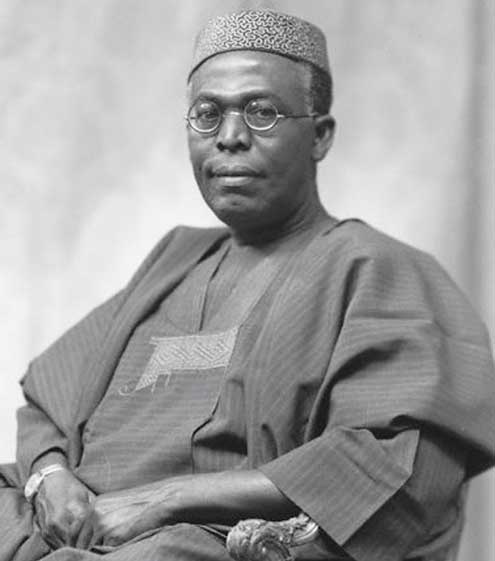
Another issue was the imagery and branding or lack of it on the part of the AD Governors. The only major brand that they projected was that of Awolowo. They projected AD as a descendant of Action Group, which was led by Obafemi Awolowo. Awolowo holds a special place in the hearts of the people of the Southwest that is similar to that held by other post-colonial regional leaders in Nigeria. One of his major policies was that of free education. This policy gave the Western Region of Nigeria a jumpstart on its road to Industrialization. In 1999, the AD Governors played up to the Awolowo Image by promising free Education and healthcare. Not much thought was given to the economic impact of these free initiatives on the state treasuries. They had created an image that they had to live up to regardless of the prevailing circumstances. After a while, the economic ghosts started to haunt them. Increases in the Federal minimum wage led to pressures on state finances and infrastructure projects were left uncompleted. By 2003, it became obvious that it was impossible to implement Chief Awolowo’s policies without much economic planning. People were interested in results but these dividends were not forthcoming. All they were left with were images of a glorious past that did not change the bleak future, which lay ahead.
The central command structure of Alliance for Democracy played a great part in the failures of their governors at the 2003 elections. This concept is known as ‘Baba Sope’ (Our Leader says so) in Yoruba language. Even though the fight for the actualization of M.K.O Abiola’s mandate took place all over the world, a lot of the work was coordinated in the South West. Quite an amount of the planning was done centrally and decisions were communicated from Lagos and Ijebu. This command structure was replicated within the ranks of the AD party. The command center revolved around the Apapa/Ijebu homes of Abraham Adesanya. He was regarded as the ‘leader of the South-West’. It is necessary to point out that the general populace did not hold any elections for this leadership post before the media conferred it on him. He had the final say on most issues. A good example was the gubernatorial primaries held by AD before the 1999 election. Funso Williams was said to have won the primaries but the ticket was handed to Bola Tinubu because the leader said so. An expected advantage of the command structure is that the governors would concentrate on Governance while the party structure would concentrate on the business of elections and politicking. Unfortunately, AD’s central command structure was made of old men who were out of touch with the rapidly changing political environment. They believed that their orders would be accepted by the masses. The results of the 2003 elections in the South West showed that voters in the South West considered the orders issued by the AD Central command to be irrelevant.
The lack of major campaigns on the part of the AD Governors played a large part in determining their fate. Bola Tinubu was the only governor who put a premium on having good media exposure before the elections. He had billboards mounted at various parts of the state showing his achievements. Other AD governors took little or no cognizance of the campaign period. They believed that the electorate would never think of voting any other party. In Ogun State, Olusegun Osoba was more interested in preventing his opponent from campaigning than he was in holding his own campaigns. Lam Adesina did not have any campaign material in the public. The other governors fell in the trap of docility. Their belief was that the elections of 2003 were going to be a repeat of 1999. Their opponents were denied access to State owned media thereby making them think of innovative campaign methods. Ayo Fayose distributed water to Ekiti state residents. Rasheed Ladoja got musical trucks to play loud hip-hop music around Ibadan. He positioned himself as the person who was able to connect with the citizens. Rasheed Ladoja (PDP) occasionally referred to Lam Adesina (AD) as ‘Broda Lam’. His aim was to show him as someone who was aged and out of touch with the electorate. Since the governors were in charge of the party campaign machinery in each state, their docility rubbed off on other AD Candidates. Federal and state legislative aspirants on the AD platform did not do much campaigning too.
The nail in the AD Coffin was the party’s refusal to put up a Presidential candidate to contest against Olusegun Obasanjo. As stated earlier, the Southwest electorate always viewed Obasanjo with suspicion. His government was seen as a continuation of previous military Governments. He had never hidden his disdain for prominent Nigerians of Yoruba extraction such as M.K.O Abiola and Obafemi Awolowo. However his support base in the South West grew after some impeachment threats that were instigated by the Leader of the House of Representatives – Ghaali Naaba. The Impeachment threats were viewed as an opportunity for elements from the Northern part of Nigeria to get back into power without contesting elections. Inevitably, he played the tribal card and AD party leadership rallied behind him. They stood up for him and warned the House of Representatives not to touch ‘one of their own’. This situation made things a little complicated. They had fought to help Obasanjo keep his job while he was under the threat of impeachment. They had to choose between supporting him and supporting another candidate. As usual, the word came down from the central command that the people should be encouraged to vote for Obasanjo in the Presidential elections. Their expectation was that the electorate would choose AD in the state elections while choosing PDP in the Federal elections. They did not realize that they had helped seal their fate.
An interesting point was the age difference between the AD Governorship aspirants and their challengers. Five out of the six AD Governors were older than their challengers. In 2003, Adebayo Adefarati was 72 while Olusegun Agagu was 55, Lam Adesina was 64 while Rasheed Ladoja was 59, Adebisi Akande was 64 while Olagunsoye Oyinlola was 52, Olusegun Osoba was 62 while Gbenga Daniel was 47, Adeniyi Adebayo was 45 while Ayo Fayose was 43, Bola Tinubu was 51 while Funso Williams was 55.
On the April 12, 2003, the National Assembly elections held throughout the country. The results of the elections in the South West reverberated throughout the whole country. AD Candidates lost most of their seats in the National Assembly. The loss led to panic among AD Party members. Initially, the Governors claimed the elections were rigged and threatened possible violence if the next set of election results went the same way. According to them, the youth were embittered and were roaring to protest the results. Eventually, they realized that the only roar, which was coming from the electorate, was the excitement of changing leadership. Suddenly, the Governors began emergency campaigns. Lam Adesina put up a billboard overnight in Ibadan. Olusegun Osoba appeared on a TV Interview show to apologize to the people for being abusive to them in previous times. The emergency campaigns were accompanied by meetings within the party leadership and their adopted candidate – Olusegun Obasanjo. They wanted him to fulfill his own side of the bargain. It became clear to them that it was too late for them.
The Governorship elections held on April 19 and all but one of the AD Governors lost out. Bola Tinubu was quite aware of Obasanjo’s Trojan horse. He did everything within his power to ensure his victory. The rout was completed on the May 3. In summary, AD lost 11 out of 16 Senate Seats, 38 out of 60 seats in the House of Representatives and 5 out of 6 Governorship races.