By Tadeniawo Collins
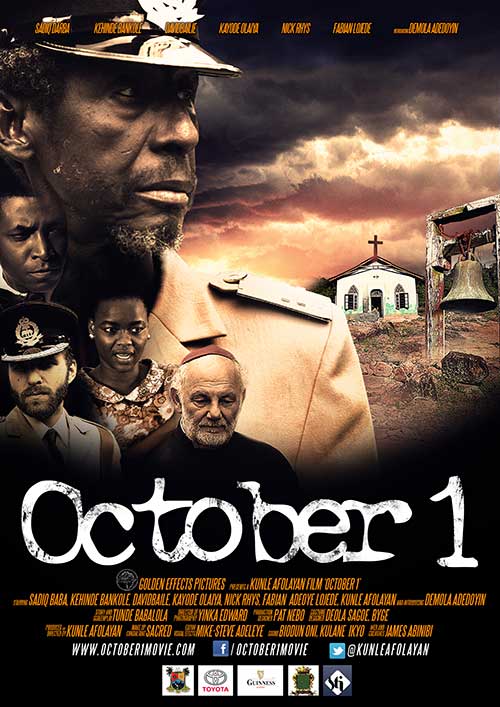
Coming from a family where art (theatre/film) was a as good as a staple, it would seem Kunle Afolayan had no excuse not to become a successful actor or filmmaker. But life’s lessons have shown many times that success is a deliberate choice and not automatic, no matter whose child you are.
Born September 30, 1974, to the famous theatre/film director and producer, Adeyemi Afolayan ‘aka Ade Love’, Kunle Afolayan had planned to be where he is today. To become a distinguished filmmaker, director and an actor were among his goals all along.
His production outfit, Golden Effects Pictures was incorporated in 2005 as a film production company and in the last 10 years, Afolayan has produced four multiple award-winning movies: Irapada (2006), The Figurine: Araromire (2009), Phone Swap (2012), and October 1 (2014).
In this exclusive chat with NET, he talks about Golden Effects’ 10th anniversary coming up this year, his plans for 2015, details about his new projects, and also drops a subtle hint on who he will be supporting in the forthcoming elections.
You stated while picking up an award at AFRIFF 2014 that you intend to recover your investment on October 1 fully. How well is that going at the moment?
I would say it is going well, although we haven’t recouped the money. One can really not expect to recover such a huge investment in such a short time. The film was released barely six months ago, and I think we are on course as the film has already bagged a distribution deal that extends beyond the shores of Africa, which I believe will go a long way in helping to recoup this investment.
30 Days in Atlanta recently broke Ije’s long-standing highest-earning box office record and October 1 follows closely behind at number four. Do you see your movie overtaking 30 Days in Atlanta in the near future?
For me, it’s really not about just one platform. The Nigerian cinema box office is one platform, but there are so many other platforms around the world. There are some films that will do well in this territory but would not do well in other territories. I make films that will do well in any and every territory.
Because of the genre and length of my films, most times, they don’t get high slots in cinemas as compared to other films that aren’t that lengthy. And most times, my films are rated 18 and above, which makes them unsuitable for viewing by minors and that also reduces the potential of your box office returns. But like I said, I make films for the international audience. What we have made from October 1 in Nigeria so far is more than N100m, but it is not just from cinema box office. We did private screenings, and we’ve done screenings on other platforms. There is really no competition. 30 Days in Atlanta is a highly commercial film and I’m glad that it has done so well in the cinemas as this will give a lot of people encouragement to do similar projects.
Your movies can best be described as timeless, yet entertaining, and your only commercial film till date is Phone Swap. Is that an intentional pattern in your choice of projects?

Well, I’ll say it’s not intentional really; I’ll call it a coincidence or fate, because most of these scripts were not prepared in advance or pre-planned to follow this pattern. I’ve never had long-term script plan. Most times these scripts and ideas come and I put my all into executing them, and at the end of the day it turns out that way.
Someone asked me recently why I always do sad stories; even the project I’m working on presently is a sad story (laughs). The person asked if I am a sad person, and I said no, but maybe it’s because I think a lot. For me, life is never about happy endings. We watch movies and always expect the hero not to die and all that. Of course, sometimes we do that just to encourage some people and give them hope; which I still do in some of my projects. But most times I try to tend towards reality, and I try to deal more with facts of life. These projects come and we just execute them.
Can you please tell us about the project you’re working on presently?
I’ve never really mentioned these details to anybody before now. The script of the film was originally set in Seychelles, but I decided to adapt it to Nigeria. It was my brief, but was written by Tunde Babalola. It’s going to be a Pan-African film as we’re having cast from Kenya, Ghana, and South Africa. We’re also having people from China and India as well, and it is going to be shot here.
The film is based on a beach resort, so we’re trying to get a resort we can partner with on this project and of course; they’re going to get good mileage. We hope to shoot in April; we’ve started pre-production already, and it’s going to be released this year.
I have another big project I’m working on presently too in partnership with the Law School, Lagos. We’re going to be shooting a series using real Nigerian cases, and I am so excited about this project too. It’s going to be major, and I don’t think it’s something anybody has ever seen before in terms of producing a TV series. Those are the two major projects we’re working on right now.
Do you have titles for the projects at the moment?
Yes, I do. The working title for the film is The CEO, and for now, the series is titled Eko Law.
As a very gifted filmmaker and actor, how do you select the roles that you play in other productions?

Well, I look at the script and also find out who’s behind the production. I’ve not really done much in terms of acting in the past few years, but recently I featured in Tunde Kelani’s film because, for me, that was where I started. I believe in what he does, and I loved the script when I read it. So for me, the first major thing is the script and the next thing is who’s behind it and the team that I’ll be working with.
So, if an upcoming movie producer approaches you, will you turn them down?
Why will I do that? I’m always willing to encourage upcoming filmmakers and actors because, of course, the future is theirs. But like I said, the important thing is content. The script is important, and also their commitment level to the project. If you have a good script and compromise on production values, it’s still not going to end well. So for me, it’s important that the script is good and the production values are considered.
Golden Effects Productions will be 10 this year. How does it feel to have been around and successful for this long?

Everything that I have achieved today were things that I set out to do. My plan from the beginning was to come and make a change; change has always been my motto. I wanted to prove that change through my talent, ideology, and also what I believe in, because I don’t think that we should all sleep and put our heads to one side. I believe that people should always think out of the box and put heads together to form an empire, because I believe we can build this industry to the level where major international studios will come into the country to work with us and the stories will still be told for Africans by Africans. And, now that our films are getting international distribution deals, I believe we’re not far from that point.
So, are you planning any big celebrations to mark this landmark occasion?

I don’t have any specific thing planned yet, but it will be nice to celebrate 10 years of Golden Effects. Maybe we will tie it to the premiere of The CEO.
How have you been able to keep yourself from scandals and controversies in your remarkable career?
Scandals are a part of what we do as thespians, especially when one is just starting. Quite a number of negative things have been reported about me too in the past. For you to report anything about anybody you need to have your facts right, and I have been pretty transparent in all I do of late. I’m not saying I’m a saint, but I’m saying that in the past couple of years it’s been all about my works which everyone can see.
Brands will run away from anybody with a lot of scandals to their name, but every project that I have done, even from Irapada, have always had brand involvement. So, I think it’s because I’m plain and I just do my thing. Of course, there are still many bad belle people out there. But these days, you can’t hoard news because of the advent of social media, which makes it impossible for you to bribe one person not to release information about you. I won’t say I’ve been perfect, but I’ll just say that I believe more people love me than those who hate me.
I understand October 1 was placed on DSTV box office immediately after its release. How well has it done there since?
I don’t have the figures yet, but someone told me recently that it has done better than all the films they have ever put on box office – both local and foreign. In terms of figures, I don’t know how much that has translated to, but that’s what I’ve been told.
You were appointed as an INEC ambassador recently. What exact roles are you expected to play for the organisation?
I thank INEC for appointing me as an ambassador; I was also supposed to pick up an award at the event but unfortunately I couldn’t attend. From the brief I got, we’re meant to be advocates of non-electoral violence during these elections and we’re meant to preach to the youths and encourage them not to go the violent way.
The Sun Publishing Company recently named you ‘Nollywood Man of the Year’. How does that make you feel?
I feel great. It’s another achievement; being recognised by a national daily as big as The Sun. Such things make you want to work more, because when you get recognition from such platforms, it means you’re doing something right. So, I’ll just want to remain on that right track.
The elections are around the corner; who is your preferred choice, and why will you be voting for that particular candidate?
Well, I’d rather not talk about that right now (laughs). I am going to vote for the right candidate of my choice, but I will not mention who.
Is it because of your INEC appointment?
No, not at all. INEC is an independent body and we’re independent ambassadors as well. Personally, I’m going to vote and I’m going to have to vote for someone, and really, the truth is, Nigerians need a change. That is all I can say for now.
What do you feel about entertainers publicly campaigning for political candidates as some have been doing lately?
I think it’s good, I mean, you have to believe in something. I also believe in something, and very soon everyone is going to publicly see those that I believe in. it’s a good thing because we’re all human, apart from the fact that, to an extent, our work has made us influential. You have to believe in something. If you believe that the current administration has been good and should continue, then you should vote Goodluck. But if you believe that there needs to be someone new, then you should vote for another candidate. It’s as simple as that. So, sincerely, I have no problem with anybody endorsing anybody.