By Oluwole Leigh

Arsenal Football Club of London played the 2014 FA Cup Final against Hull City FC. Arsenal FC was the clear favourite, based on their history and experience. They came into the match with the weight of expectations on their shoulder. However, football is not usually a lesson in history.
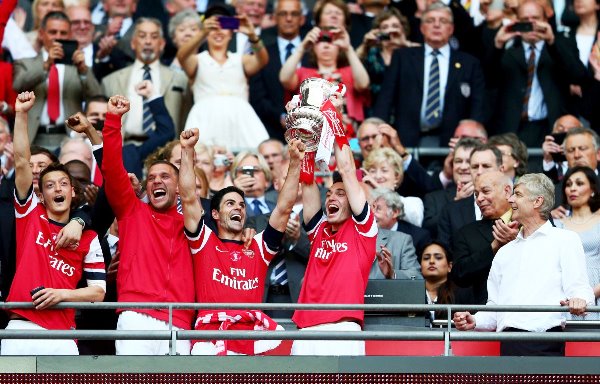
Less than ten minutes after the match started, Arsenal was down by 2 goals. Their defence had caved in and given in two goals in rapid succession. Shortly after going behind by two goals, an opportunity presented itself. Arsenal’s first major foray into the opponent’s half had resulted in a free kick a few metres outside the penalty box. Two players lined up to take the kick – Santi Cazorla and Lukas Podolski. At the end of the day, Santi Cazorla who is blessed with the ability to use both feet took charge. He raised the ball high above the wall and sent it into the upper left hand side of the Hull Goal post. Even though the Hull Goal-keeper got his hand to it, he couldn’t keep it out. That moment turned out to be the pivotal moment in Arsenal’s comeback. Two more goals were scored by Arsenal to secure an improbable comeback.
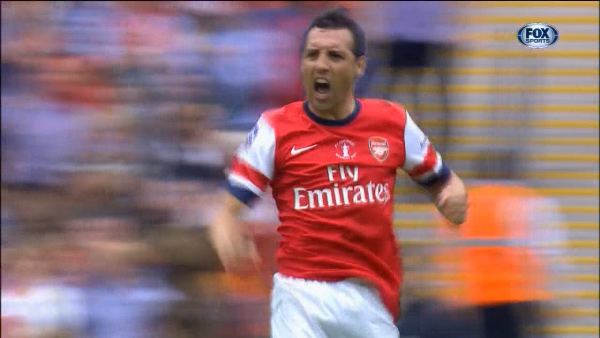
In my own estimation, the turning point in the match was the moment cazorla sent in the ball into the net. He signalled a turn in the direction of the game and struck fear into the opponent.
While thinking about our country and our experiences in the last few years, I realise that we’ve had more bad moments than good moments. A lot of school girls have gone missing, lives and properties have been destroyed and people are in mourning. A country that used to be the pride of Africa is now a laughing stock. Smaller countries are now promising to lend us a helping hand in our troubles. Back in the day, we invaded other countries to help fight wars. We chased bandits across our borders into other countries. Unfortunately, the Giant of Africa is now appealing to these same countries for help. Foreign forces are being embedded in our Armed Forces. The biggest economy in Africa cannot pay its soldiers a living wage. We can’t even search our own forests.
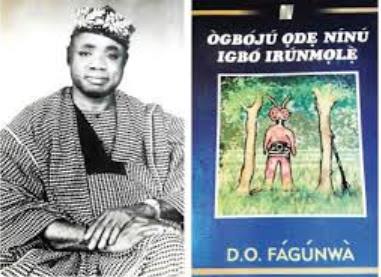
Just as D.O Fagunwa‘s lead character in ‘Ogboju Ode ni Igbo Irunmole‘ gathered 7 valiant men to go on a mission, unarmed citizens are gathering themselves to storm a forest. How did we fall so low? We have gone from a country whose president showed up in another country and coup plotters cancelled their coup to a country whose president flies to Europe in order to solve a problem in his backyard. The issue with some of these low moments is that they are not often seen as low moments. It often takes the passage of time to help see their long term effects. It is usually with the benefit of hind-sight that we realise the devastating impact of these low moments.
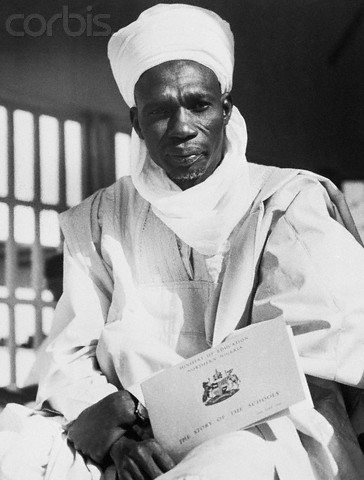
One of the low moments happened in January 15, 1966. Nigeria had secured independence from Great Britain and the first republic was in full swing. Unfortunately, corruption seemed to be the order of the day and the government in power, led by Prime Minister Tafawa Balewa, seemed to be drifting. Chief Obafemi Awolowo, the former Premier of the Western Region was facing charges of treason. There seemed to be a general feeling that the country was going nowhere fast. A couple of young Military officers decided to take actions into their hands. Rather than wait till the next election cycle, they made an armed intervention. By the time the dust of the intervention had settled, about 11 Senior Government officials lay dead. Some of the dead included Prime Minister Tafawa Balewa and the late Sardauna of Sokoto, Ahmadu Bello.
One of the coup plotters wrote in his memo: ‘Our enemies are the political profiteers, the swindlers, the men in high and low places, that seek bribes and demand 10%; those that seek to keep the country divided permanently so that they can remain in office as ministers or VIPs.‘
A casual glance at those words makes one see the naivety of their actions. They were of the opinion that lasting political or social change could be enforced through the barrel of the gun. As events played out, the January coup in 1966 led to a counter coup in July, 1966. These sad events ultimately led to what is known as the Nigerian Civil War. My mind wonders if events would have taken another turn if the young majors chose not to intervene.
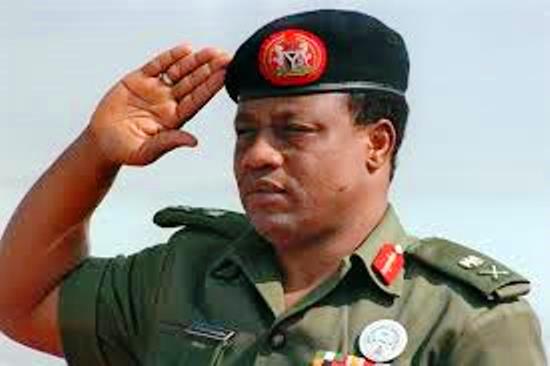
Another low moment which we had was the annulment of the June 12 election in 1993. Nigeria’s Military Ruler, Ibrahim Babangida (IBB), banned all political parties and decreed two into existence. These were the Social Democratic Party (SDP) and the National Republican Convention (NRC). Chief M.K.O Abiola was the flag bearer for SDP while Alhaji Bashir Tofa got the ticket for NRC. On June 12, 1993 the elections were held under a cloud of uncertainty. A last minute attempt to secure an injunction at an Abuja High Court did not stop the elections. Nigerians trooped out in their millions to vote for their chosen candidates. As the results came in, it became obvious that Chief Abiola was going into an unassailable lead.
The electoral umpire was asked to halt the results declaration. Shortly after the election results were halted, IBB came on air to announce an annulment of the June 12 elections. In his speech, he said: ‘Our need is for peace, stability and continuity of politics in the interest of all our people.’ IBB did not foresee the turn of events following the Annulment. Nigeria was thrown into a prolonged period of civil strife. We ended up in the arms of General Abacha who turned Nigeria into a pariah nation. Chief MKO Abiola was put in jail and died there. IBB has consistently tried to absolve himself of all blame for the decision which he took. If he could turn back the hands of time, he may have acted differently.
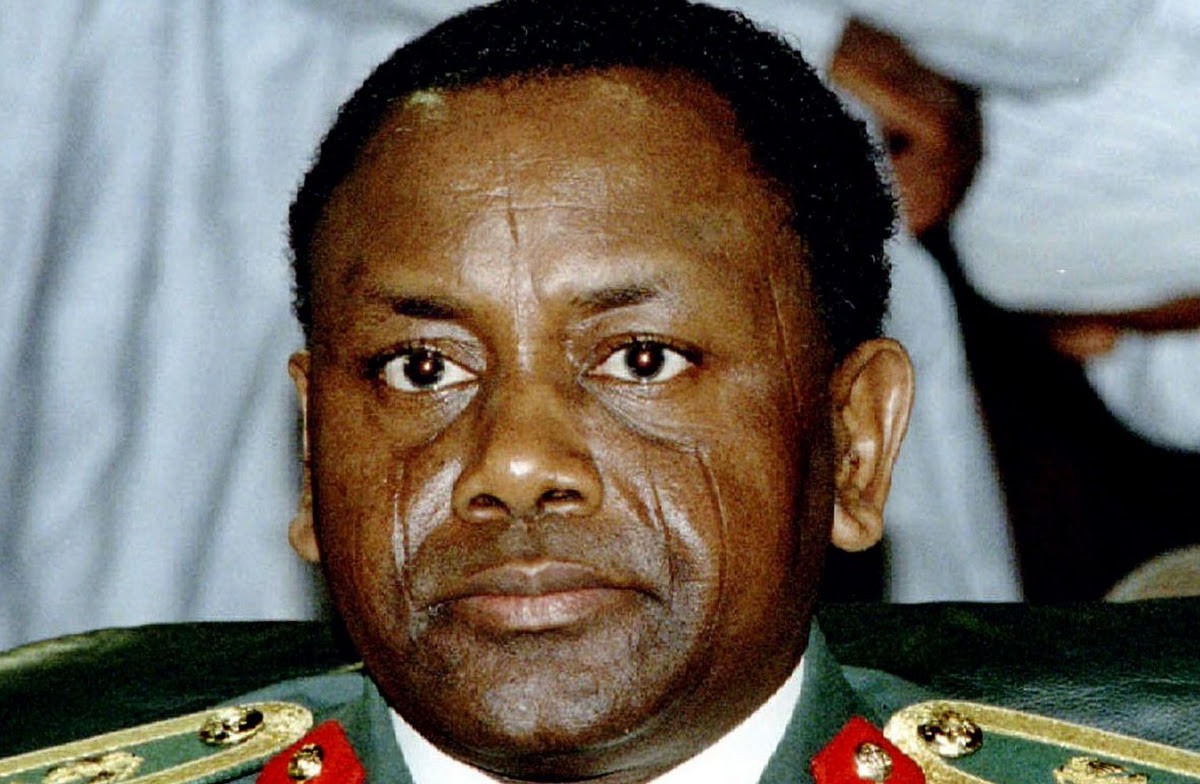
We had a distinctively good moment that changed the destiny of our Nation. On the June 8, 1998, General Sani Abacha joined his ancestors. Abacha had held Nigeria in a vice-like grip since he overthrew President Ernest Shonekan on November 17, 1993. Like his predecessor, he had decreed a couple of political parties into existence. These political parties were described as ‘Five fingers of a leprous hand’ by Chief Bola Ige. All the political parties had plans to adopt him as their sole candidate. News filtered in to every part of Nigeria that Gen. Abacha had died and his passing led to a chain of events that ended on May 29, 1999 when an elected president was sworn in. The logical explanation for the sequence of events was that the moment of Abacha’s death gave rise to a new future for Nigeria. Like the Cazorla moment, earlier described, Nigeria turned from dark abyss where we seemed to be headed.
Coming back to the present, we stand right in the middle of great hope and despair. The truth about our situation is that the World expects us to go downhill from here. Foreign Policy experts are lining up to explain the downturn in our affairs. In spite of the gloom around us, there is a general feeling that it is possible for this ship to sail out of troubled waters. A sequence of positive actions that would change the course of our affairs may be needed. Some say the moment of change can come at next year’s elections while others say we have to look up to the heavens for intervention. Though the road to sanity may be long and windy, we need to start our comeback. Where is Carzola?