


By Oluwole Leigh

Percy Bysshe Shelley, an English Poet opined that ‘History is a cyclic poem written by Time upon the memories of man.’ History tells us of the past and helps to guide our path to the future. It tells of where others have been and where they may yet go. The human memory is limited in its capacity to retain accounts of events. Thus, history is transmitted in our books, songs, proverbs and in many other cultural elements. As Nigerians, our sense of history is continually put to the test. Current events force us to reach into the past and discover trends that help us explain our immediate circumstances. Some of our lessons in history come from unlikely sources. You might not need to go to a Museum or listen to a lecture by Prof. Ade Ajayi to get an idea of our history. One of these unlikely sources is a group of people known as ‘Kegites.’
Kegites are a group of people present in most of Nigeria’s Higher Institutions of Learning. They are popularly known for singing ribald songs and consuming lots of Palm wine. Their moments of celebration are called Gyrations. During these Gyrations, they sing a combination of original songs, songs in the popular domain and religious tunes, whose words have been changed to fit with the Kegite message. The songs are often accompanied by a lot of drumming and clapping, similar to what’s seen in some African Churches. At the beginning of these gyrations, one of the songs that is rendered is called ‘E rora’. The chorus is ‘E rora , E rora o, Aye mama gbege o ‘E rora ‘ translates to ‘Slow Down ‘ or ‘Be Careful’ while ‘Aye mama gbege o ‘ translates to ‘ Life is unpredictable’. The song starts out in a somber mood and is supposed to get the listeners to have a moment of deep reflection. The song dishes out a quick moral lesson before the risqué jokes and songs begin. The verse usually mentions prominent individuals in Nigeria’s history whose circumstances changed over time.
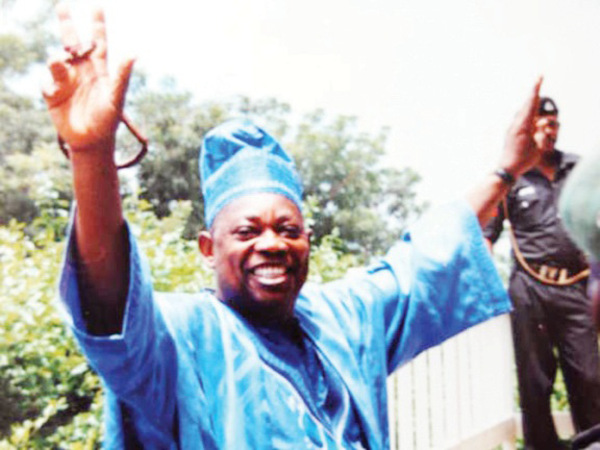
One verse goes thus ‘Abiola Olowo ma ni, Abiola Olowo ma ni, Olowo mama sun cell , e rora’. Chief M.K.O Abiola was a man who became rich as a result of his association with the Country’s leaders in the 70’s and 80’s.He was a friend of the establishment and also a cultural Icon. Many songs were sang in his honor. He had business interests in Telecommunications, Oil & Gas, Publishing and Sports, and was the ‘Aare Ona Kakanfo’ of Yoruba land. This traditional title is conferred on an individual who is regarded as the Generalissimo of the Kingdom. His stature earned him many admirers and enemies throughout the country. Somewhere along the line, he decided to throw his hat into the political ring. He became a Presidential Candidate and stood for elections on June 12, 1993. The elections were annulled by one of his good friends, Ibrahim Babangida, and he fled the country. The chain of events ended with him in jail. Many of his associates stood by him for a while but abandoned him when incarceration took its toll. A man who had ridden the heights of fame and wealth lay at the bottom of the valley of humility. Chief Abiola’s name is mentioned in this song as a lesson for those who may have attained some form of prominence. They are expected to remain humble.

Another verse in the song talks about General Olusegun Obasanjo. The words are ‘Obasanjo, elewon ma ni, Obasanjo o, elewon ma ni, elewon ma ma di President, e rora.’ He was a former ruler who retired and went into his favorite past time of farming. He kept himself out of circulation except for a few Interviews here and there, and was said to have kept a sign warning journalistsoff from his home. On the 9th of March, 1995, General Abacha arrested Obasanjo and a couple of others on the grounds that they were participants in a coup plot. After a trial was held, Gen. Obasanjo was sentenced to life imprisonment.
On the 8th of June, 1998, Gen. Abacha joined his ancestors, and the process to release Obasanjo and others from prison began. Obasanjo was sworn into power as Nigeria’s president a year later. He moved from prison to the presidency. While this story is the opposite of the previous one, it supports the popular statement that says ‘No Condition is Permanent’.
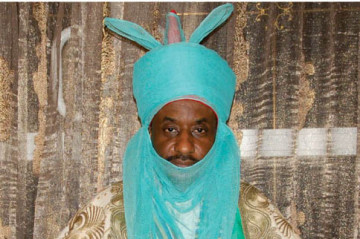
Verses are usually added to this song as occasion demands, with the aim of teaching the listeners about our history. Modern events also help usre-write the verses of these songs and sing them to the hearing of others around us. A remix could feature Reuben Abati, who went from Social Critic to Government Spokesman, Nasir El Rufai who from a Govt. Minister became a Social Critic, Lam Adesina who went from Retired School Principal to Governor, Dora Akinyuli whowas transformed from Civil Servant to International Heroine, and Sanusi Lamido Sanusi, who went from dismissed government Official to royalty, becoming the Emir of Kano.
The verses do not judge the actions of the character in the verse. They just try to get the listeners to learn life’s best lessons. One of the best lessons we can learn about life is that a lot of things we see are transient. We are expected to treat others as we would expect them to treat us. Some believe the good we do will come back to us while others believe our actions do not have any consequences. Even though we cannot see into the future, we can do our own bit to help others make their lives better.
E rora.


1 comment
Spain won the world cup 4years ago and 4years after they crashed out in the first round…E rora O…