


In the heart of the University of Lagos, Nigeria, a group of youths trooped out from an afternoon class, discussing their upcoming exams, the state of things in the country and the upcoming elections that would decide the fate and future of their nation.
Among them were Olumide, Ada and Aminu. “How am I supposed to put my PVC to use when I don’t even have the cash to transport myself to my polling booth come Saturday”, asked Olumide to the group.
“Well, it’s frustrating; but we still have to find a way. Many drivers now take transfers – the Naira redesign is a good strategy but its implementation is questionable…”, responded Ada.
“It’s all too stressful for me. As much as I would have loved to vote, I think I’d just sit this one out. After all, it’s just three votes out of millions”, supplied Aminu as the trio agreed in unison.
The trifecta was bright, ambitious, and deeply cared about their community. However, they were all too feeble and didn’t see just how much one person’s vote could decide a people’s future. With all their weeks of digital campaigns, months of energetic calls for change and a deep-seated passion for the defying “Soro Soke” movement, they weren’t going to participate in the democratic process.
After finishing a short class three days before the election, the crew, as arranged during one of their many conversations, gave Ada’s uncle a visit at his X3M Ideas company, a few minutes walk from their Campus. They had always heard about the company and had been curious to see the backend of such a creative outlet. It was rumoured to be an inspiration of innovators and a collaboration of creatives; they now had the chance to confirm themselves.
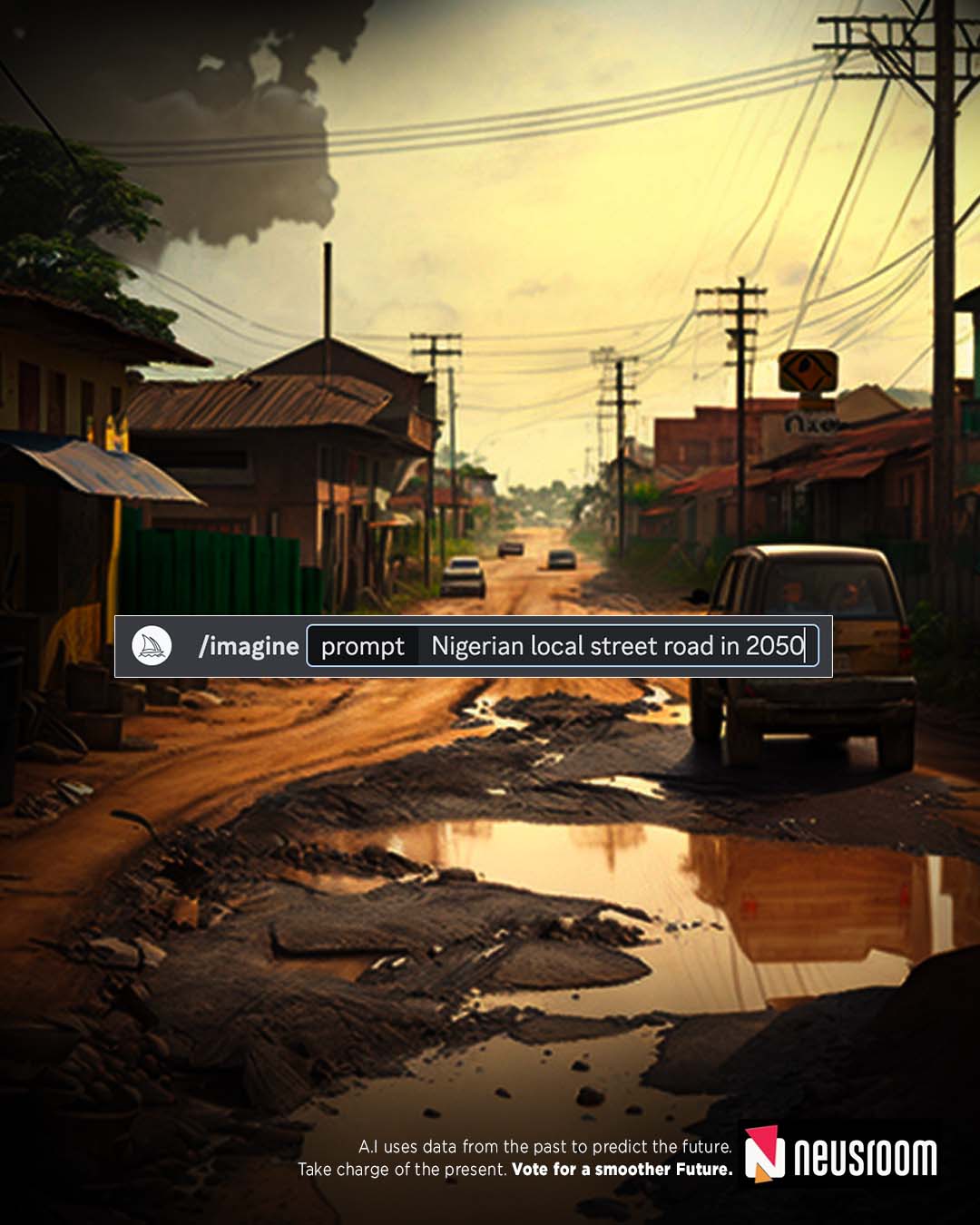
Before long after they settled into his office, Ada’s uncle ushered them to join an ongoing showcase where an AI, christened Mid Journey, depicted what their country, the most populous Black nation, would look like in the nearest future based on assessments from its past and present. And the reveal felt so real: as real as a dream turning into reality or the sound of waves crashing on the shore. The group could feel themselves transported to a strange new world.
The sky was dark, and the buildings looked bleak, with no signs of blooming life. Spiritless commuters trudged the pot-holed roads and the city looked like it had been drained of many of its resources: its intricate dances, its joyful bustle, the gain of trade and the reign of calm – all gone.
“That’s the future! A world where corruption thrived, where unemployment soared and people had lost their rights and freedoms”, the exhibitor’s voice seared with an air of distress even in its calm.
The triumvirate soon learned that the future was the result of voter apathy in their time, which led to unfit politicians being elected and implementing laws that didn’t favour ordinary citizens. The future they saw was a dystopian society where the government couldn’t provide basic infrastructures and amenities, the people had left the country in droves and the few that remained lived in poverty.
Olumide, Ada and Aminu were horrified by what they saw. They realised that their apathy in the upcoming election was not just a personal choice, but could also have severe consequences for society. So, they jolted themselves to their civic duties – even as youths – and vowed to do everything possible to prevent that future from becoming a reality.
They immediately began mobilising their peers to vote. They organised social media groups with other young people, urging them to exercise their right to vote and have a say in their future. They implored them to defy all the austere circumstances that could stop them from carrying out their responsibilities as electorates.
Their efforts paid off, and on election day, there was a massive turnout of young voters. The election results were a reflection of the people’s voices, and a new generation of leaders emerged, committed to creating a fair, favourable and just society for all.
The trio were proud of what they had accomplished. They had learned that voting was not just a right, but a responsibility with significant consequences. They were determined to continue their advocacy work, and they hoped that the lessons they learned would inspire future generations to be active participants in their democracy. After all, Nigeria was the only motherland they had, and the only motherland they’d ever have.

