On April 22, 2010, Nigerian music lost the one voice that could have changed everything. Sixteen years later, the hole Dagrin left in our hearts has never really been filled.
There is a generation of Nigerian rap fans who can tell you exactly where they were when they heard. Not only where they were when Dagrin died in 2010, but where they were when they heard Pon Pon Pon for the first time.
That distinction matters because Oladapo Olaitan Olaonipekun, the boy from Meiran, Alagbado, who called himself Dagrin and meant every syllable of it, did not arrive gently. He arrived like someone who had been waiting too long at a door nobody bothered to open, and when it finally cracked, he pushed it off its hinges.
Today marks sixteen years since that door closed for good.
Born October 25, 1984, to Mr and Mrs Olaonipekun, Dagrin grew up in Meiran — a world away from the polished corridors where Nigerian music was being made and marketed at the time. The rap scene in the mid-2000s still largely spoke in American accents and borrowed American reference points.
Dagrin was building something else entirely: a sound rooted in Yoruba, soaked in Lagos pidgin, and narrated in the cadence of someone who had actually lived the story he was rapping about. He was not romanticising the struggle. He had been inside it.
“The beginning was very rough, financially. As a poor boy who just appeared from nowhere, nobody believed in me. I’m a boy who has hustled in computer village, collected people’s phones and sold them to someone else. I’ve swindled people. Collected my mum’s money. I’ve done so many bad things. I used to be very bad, but music changed my life,” he said in one of his last interviews in 2010.
That refusal to dress up the origin story is what made Dagrin different. His music was not aspirational in the way that Nigerian entertainment usually packages aspiration. It was factual. It was ‘this is where I was, this is where I am now, and I’m taking all of you with me.‘
Chief Executive Omo-Ita, and the moment everything clicked
He released his debut album, Still On The Matter, in 2007 to lukewarm acceptance. His epiphany came two years later, after meeting Ola Badmus, who helped him create his own label, Misofunyin Entertainment, under the management of Edlyne Records. With singles like Pon Pon Pon and Kondo, Dagrin released C.E.O. (Chief Executive Omota) in 2009 to critical acclaim.
C.E.O. was not just an album. It was a declaration. In an industry still figuring out whether it was okay to rap in your mother tongue without apology, Dagrin wrapped Yoruba around his bars like he owned the patent and dared anyone to tell him otherwise. The streets responded. The album won the Hip Hop World Award in 2010 for Best Rap Album, and by then, the conversation had shifted. This was no longer a niche experiment. This was the direction.
Pon Pon Pon became a cultural document — a tour of the ‘street life’ curated the way only someone who belonged could. You did not listen to that song. You placed yourself inside it.
Dagrin’s accident, death, and burial
On April 14, 2010, Dagrin’s car — a Nissan Maxima 2008 model, bearing the plate DAGRIN 03 — ran into a parked lorry in front of Alakara Police Station, off Agege Motor Road, Mushin. The crash left him with a fatal head injury. He spent eight days in the hospital before succumbing to the cold hands of death.
When NET broke the news of his death, it only took minutes before the website crashed due to overwhelming traffic. That single data point captures what numbers cannot fully convey. Nigeria was not prepared. Nobody had rehearsed this grief.

Thousands stormed Atan cemetery on April 30, 2010 — the burial had been planned for 150 people. Desperate fans almost tore down the Ebony gate when they were initially prevented from entering, and refused to leave even after the burial was done. A generation was saying goodbye to a version of itself.
He was 25 years old.
The most remarkable thing about Dagrin’s legacy is not what it looked like in 2010. It is what it looks like now, in 2026, sixteen years on, traced through the careers of artists who were watching, listening, and building with him as the blueprint.
Olamide, YBNL founder and one of the most decorated figures in the history of Nigerian rap, has been unambiguous about the debt. “Dagrin’s C.E.O. album is a timeless project,” he said in a recent broadcast. “That’s the only rap album almost everybody in the South-West can sing word for word. He influenced a lot of rappers. Whenever we need motivation, we go back and listen to his album.”
The connection runs deeper than admiration. Many enthusiasts believe Olamide tried to emulate Dagrin and that YBNL was built on that ambition. YBNL went on to sign artistes like Lil Kesh and Asake, whose dominance of the scene, rapping and singing in Yoruba, English, and Pidgin, reshaped the entire sound of African pop music. The line from Dagrin to Asake is not straight, but it is unbroken.
Reminisce. Olamide. The entire architecture of Yoruba-inflected street music that now underpins so much of what the world calls Afrobeats. These are Dagrin’s children, and many of them will be the first to say so.
Dagrin’s unrelenting effort to record in Yoruba and pidgin English set him apart and inspired the likes of Olamide and Reminisce, who went on to record incredible successes among the many who came after them. He validated the dreams of young Nigerians struggling to escape poverty. He became more than just a rapper. He was the poster child for the grass-to-grace story of the unpolished and the nameless.

In 2023, Vuga Music Inc., in collaboration with Misofunyin Entertainment, released a three-track EP titled I Am Dagrin to mark his thirteenth anniversary. It included remastered tracks recorded in 2007 that were never released during his lifetime, and a tribute track featuring Falz. The EP was a reminder that people who knew him — who were in the room, who watched the sessions happen — have never stopped holding the memory deliberately.
Ghetto Dreamz, the 2011 documentary film about his life, remains one of the few pieces of visual documentation of who he was beyond the music. For younger listeners discovering Dagrin today through algorithm-surfaced playlists, it is essential to watch.

Sixteen years is a long time. Long enough that some of the fans weeping at Atan cemetery in 2010 now have children old enough to know every word of Pon Pon Pon. Long enough to take stock of what was lost and what was built on the rubble of it.
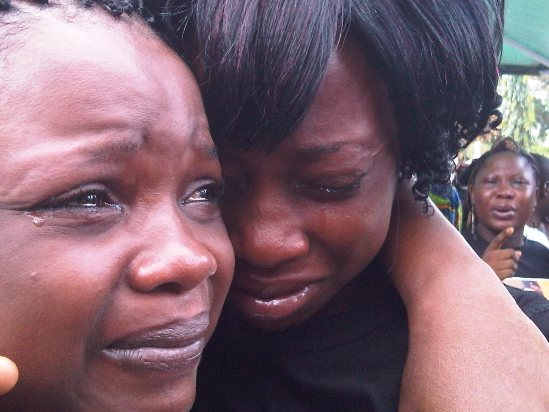
What makes Dagrin’s death different from other premature losses in Nigerian music is the specificity of the tragedy. He did not die at the beginning of his story — he died right at the moment the story was becoming undeniable. The album had landed. The awards were coming in. The culture was finally catching up to what he had been saying since 2006. And then the Nissan Maxima hit that lorry on Agege Motor Road at 3am, and everything after that is the life he never got to live.
He predicted his own ending in the posthumous release called If I Die. He rapped about death the way someone raps about something they have made peace with — not fearlessly, but honestly. That peace, that willingness to look at his own mortality and make music out of it, was the final proof of his artistry.
Sixteen years later, the C.E.O. is still in the building. The music still plays. And somewhere in Lagos — in Meiran, in Mushin, in a okada rider’s bluetooth speaker on Agege Motor Road — Pon Pon Pon is almost certainly playing right now.
Dagrin (Oladapo Olaitan Olaonipekun) — October 25, 1984 to April 22, 2010. Chief Executive Omota. Gone too soon. Not forgotten.