About eleven years after it launched as Africa’s bold answer to international streaming platforms, Showmax officially switched off on April 30, 2026.
For Nigerian subscribers who spoke to Nigerian Entertainment Today and reacted on social media, the loss goes far deeper than a streaming service.
Showmax had occupied a very specific space in the hearts of Nigerian entertainment users; its prestige local originals, HBO classics, and, crucially, Premier League football available on your phone for only a few thousand naira a month have been the best bargain in the market.
The first announcement came on March 5, 2026, when Canal+, which had acquired MultiChoice in September 2025, confirmed it would discontinue the service following sustained financial losses, with operations ceasing entirely on April 30.
Within hours, social media was filled with reactions ranging from simple shock to questions about favourite shows and the future of African content. For Nigerians, the grief was particular because what Showmax offered the market was not only content, but also access, affordability, and ambition in a single package.
Showmax’s Journey in Nigeria
Showmax expanded into the Nigerian market in 2019 as part of a broader push to establish a dominant streaming presence across sub-Saharan Africa. Operating within one of the continent’s largest media economies, the platform pursued a localisation strategy centred on original content commissions; a bet on Nigerian stories at a moment when few international platforms were willing to make it, and it gave Nollywood a new kind of ambition.
Its first Nigerian original, Ghana Jollof, premiered in October 2021, marking a formal entry into indigenous production and setting the template for what would follow. Diiche, Showmax’s first limited-series drama, followed alongside Flawsome, Crime & Justice Lagos, the long-running telenovela Wura, and the reality powerhouses The Real Housewives of Lagos and The Real Housewives of Abuja.
These shows introduced stars like Sunshine Rosman, Folu Storms, Enado Odigie, and others who have now become a mainstay in Nollywood’s biggest movies. Showmax built an interesting catalogue of originals within a few years and got Nigerian audiences watching.
In March 2023, Showmax announced a landmark partnership with Comcast’s NBCUniversal and Sky. By February 2024, it had relaunched entirely — a new look, a new app, and a product suite powered by Peacock’s globally-scaled technology.
If Showmax’s original content won the industry’s respect, it was a different product that won the everyday Nigerian subscriber’s loyalty. In February 2024, Showmax relaunched with a brand-new look and entirely new product suite powered by Peacock’s globally-scaled technology and launched a first-in-Africa standalone mobile-only Premier League package. The price point was accessible, and the convenience was unprecedented. You did not need a decoder, a big screen, or a DStv subscription to follow your favourite football teams in England. You needed your phone and roughly ₦1,700 a month.
For millions of Nigerian football fans, that was the product they had been waiting for. “I will miss Showmax mainly because it allowed me to watch Premier League matches anywhere because it was on my mobile phone and the monthly rate was very cheap too,” one subscriber told Netng.
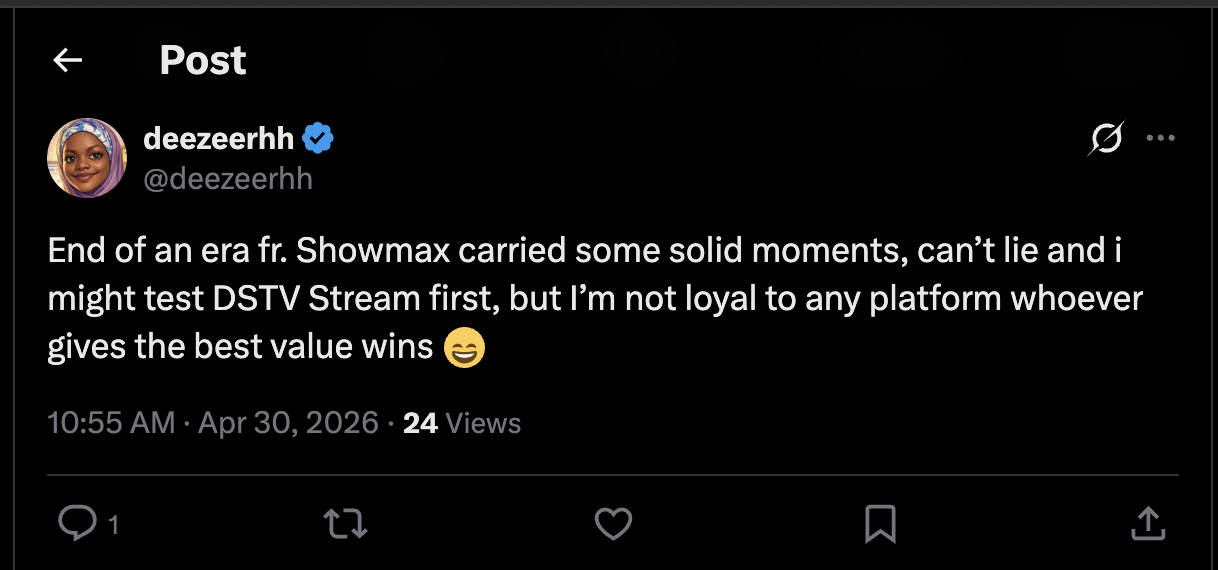
The sentiment was widespread across social media timelines from Abuja to Port Harcourt. The mobile Premier League package had democratised access to the World’s most-watched football league in a market where full DStv subscriptions remain out of reach for a significant portion of the population.
Beyond football, Showmax had built a genuinely loyal Nigerian audience through its content library. Between the platform’s homegrown originals and its international catalogue, which included HBO prestige titles like Succession, Game of Thrones, and House of the Dragon, it had positioned itself as the streaming service that offered both local soul and global quality at the same address.
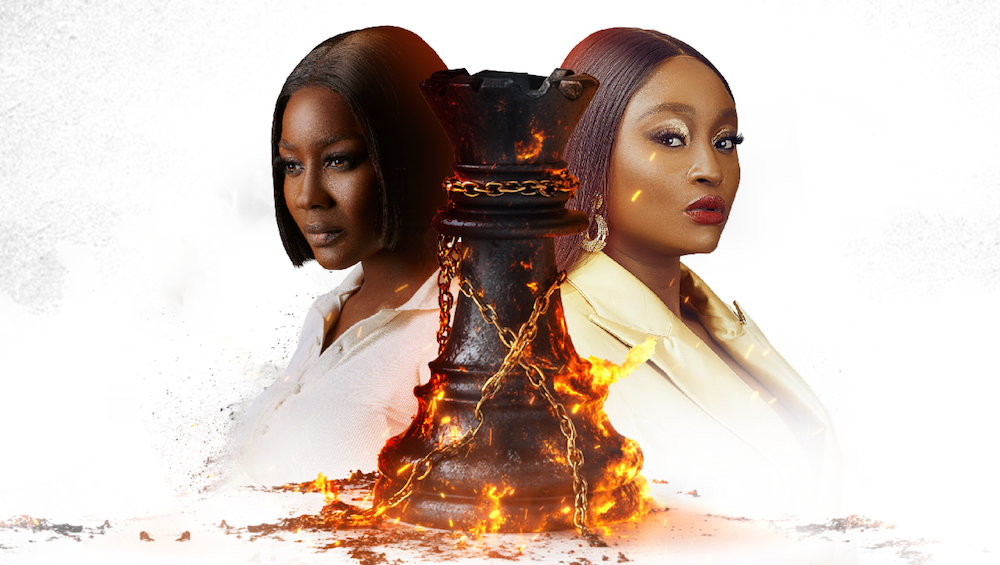
“I know people think there are already enough streaming platforms like Netflix and Prime, but Showmax had those Showmax originals and HBO shows like Succession and Game of Thrones,” another subscriber said before adding that she hopes DStv Stream can match up to it.
That tension — between what Showmax was and what DStv Stream might become — sits at the heart of Nigerian reactions to the closure. It is not simply that a platform has gone. It is that Showmax had found a formula that worked for this market: local content that competed with anything on Netflix, international prestige programming, and live sport at mobile-accessible prices. The question every Nigerian subscriber is now asking is whether anything will replicate all three.
What Happens to Your ShowMax Subscription
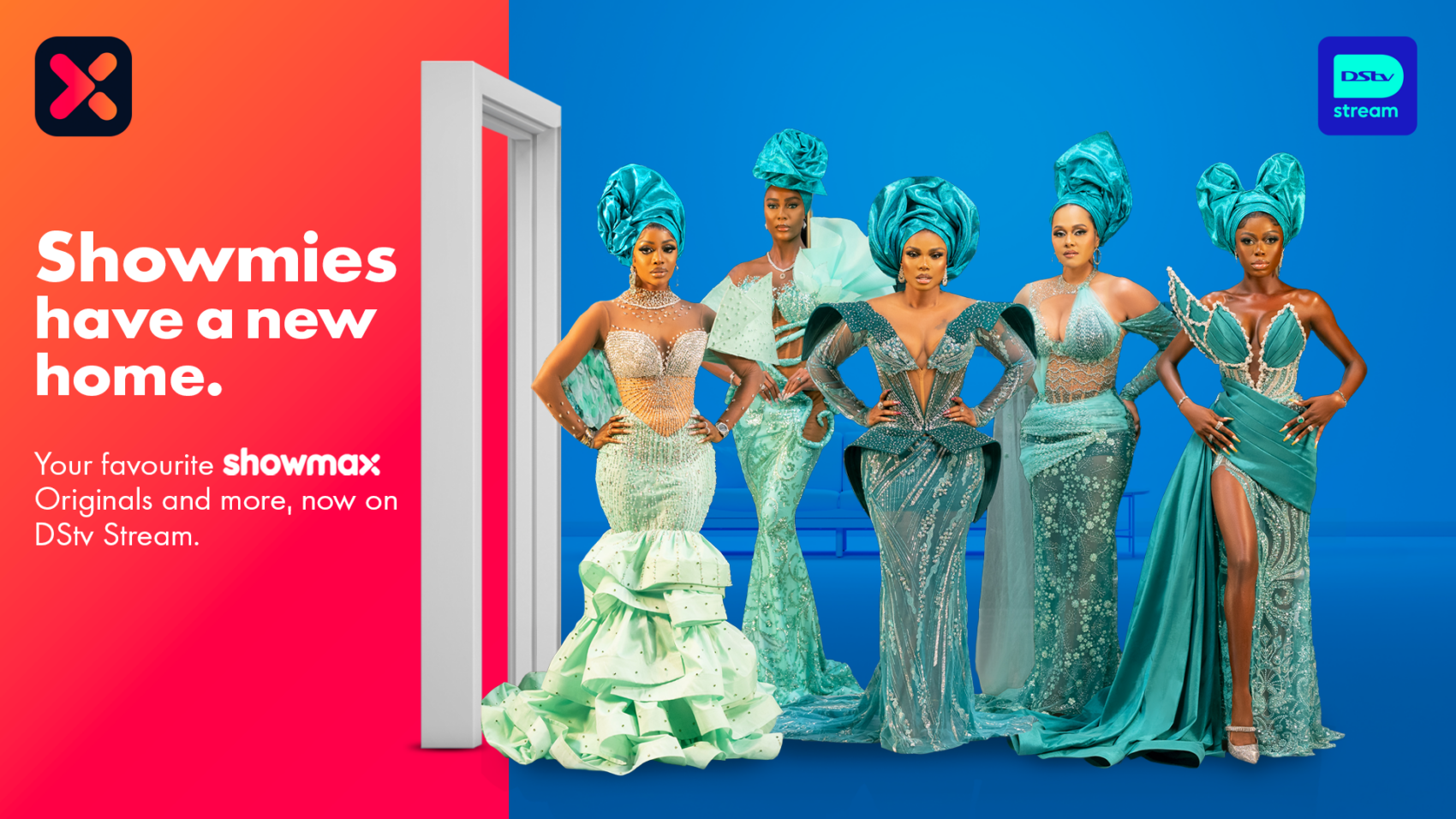
MultiChoice confirmed that eligible Showmax subscribers in Nigeria will receive trial access to DStv Stream Compact as part of the transition to a single streaming home. After the trial period, qualifying customers can continue on DStv Stream Compact at a special price, giving them access to live TV, international series and movies, kids’ content and live sports via SuperSport, available on mobile devices and smart TVs.
MultiChoice has stressed that streaming remains central to its strategy going forward: “We will keep investing in premium content, technological innovation, and partnerships to give our customers the best entertainment experience possible.”
For information on the transition, visit dstv.stream.
Showmax did not just exist in Nigeria. It invested in the creative economy extensively by commissioning stories, handing writers, directors, and cinematographers the kind of budgets that told the world that their work was worth taking seriously. As MultiChoice’s director of content, Nomsa Philiso, put it in a statement: “Productions from Nigeria, Kenya and across the continent were created through collaboration between MultiChoice’s content teams and local producers. That commitment to African storytelling does not change.”
Got a reaction to the Showmax shutdown? Tell us in the comments.