The Biblical narrative informs us that Goshen was the part of Egypt where the Israelites lived. Historians have placed Goshen in the Eastern part of Modern Egypt. It was from this part of Egypt that Israelites were to launch their escape.
The most remarkable thing about Goshen was that all the plagues and diseases that were unleashed upon Egypt did not affect Goshen’s inhabitants.
Goshen is similar to Iraq’s Green Zone, where some form of safety is assured in spite of surrounding terror.
Plagues were said to have struck Egypt as long as its ruler (Pharaoh) refused to let the Israelites leave.
The concept of the Goshen safe zone has permeated through Christianity down the ages into society at large. Christian leaders emphasise that Goshen is no longer limited to ancient Egypt but is available to their followers anywhere they reside. Thus, the Goshen mentality has become uppermost in the minds of many Christian adherents.
Cars, houses and physical possessions are labelled with religious stickers in the hope that these might give some sort of protection in the day of trouble. The effects of the Goshen Mentality on Nigerian Christians and those of other religions who hold a similar belief are quite apparent.
One of the effects of the Goshen mentality is the inability to confront realities that surround us in Nigeria.
On January 1, 2012, Nigerians woke up to discover that the pump price of gasoline had tripled. The Federal Government had removed ‘fuel subsidy’ and the forces of the free market were unleashed.
In the midst of the ensuing confusion and indignation, there were dissonant voices from the Church establishment. A few were of the opinion that the sudden price increase was unjustified while others took a neutral stance.
One opinion that seemed to take hold among Pentecostal Christians was ‘The price of fuel does not affect me, My God will supply my needs.’
I checked the Facebook wall of a popular Pentecostal preacher. He told his members to stay calm and not say anything negative about the Government’s actions. He reiterated the ‘God will supply your needs’ statement.
Interestingly, his Facebook location update revealed that he was at a luxury hotel in a country close to Eastern Europe. I imagined the cleric lying down in a Sauna while undergoing a deep-tissue massage and sending messages of calm to his poor followers.
The belief that our fate is not tied to that of our country or of our fellow citizens prevents us from making our leadership accountable.
Another effect of the Goshen Mentality is the growth of individualism and the dearth of community-led initiatives. Due to the fact that the Nigerian Government has failed to provide basic amenities for the people, we have been forced to fend for ourselves.
Electricity is practically non-existent. Roads are in poor shape and water supply is as scarce as can be. This terrible situation has led to increase in insecurity.
The normal reaction to such a state of anomy should be strategic community-based efforts with the aim of demanding better infrastructure. The power of numbers living in various communities could be made to influence government policy to provide benefits for all.
However, what we have is that individuals would prefer to provide their own power supply, water supply and security so their lives would not be affected by the environment. Once the individual safe haven has been created, other members of the community are left to their own devices.
This is the reason why you find roads in high-income neighborhood in a poor state while state of the art cars are purchased by the inhabitants. This is also the reason why an electricity transformer would remain unrepaired for long periods while the neighbors run their diesel generators.
The Goshen Mentality creates a mindset that makes others appear to be different from us. The original narrative informs us that no harm came to Israelites while Egyptians were subject to terror. The effect of this interpretation is that others who are not of our tribe or religion are deserving of the suffering which they experience.
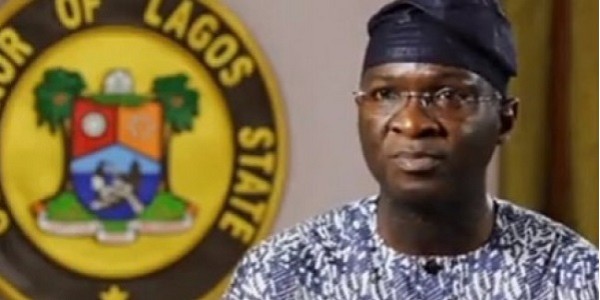
We will choose not to speak on behalf of them because they are not like us. This type of behaviour was witnessed during the deportation exercise carried out in Lagos state by former governor Babatunde Fashola.
Poor people from various parts of the country were rounded up, kept in camps and then sent back to various parts of the country based on their perceived states of origin.
The deportation of poor people from the Northern part of Nigeria did not attract any attention. However, the removal of poor people from the South Eastern part of Nigeria made the headlines and became a political issue.
This mentality prevents us from seeing that all poor people share a common fate. The effects of poverty are seen among people of all religions and ethnic groups.
One of the key figures in the Goshen story was Pharaoh. Pharaoh was said to be the King of Egypt and the one who determined the fate of all. The sufferings experienced by Egyptians during the plagues were a result of his actions or inactions.
The Goshen Mentality pushes us to see an individual as being responsible for our condition. The easiest way to respond is to attack that individual.
However, reality tells us that our problems are defined by a system and not an individual. There is a system in place that is represented by various individuals. Changing the individuals without changing the system is usually an exercise in futility.
The system is well capable of surviving an attack on its individual representatives. A classic example of this dilemma is when people decide to vote out bad leadership in an election. On assumption of office, the new leader comes to office to realise that not every one shares his or her revolutionary views.
More often than not, such a person is a lone wolf. At the end of the day, the people are disappointed because their revolutionary leader has become a dictator.
The final effect of the Goshen Mentality is the belief that freedom will be the result of the actions of a deliverer. The biblical narrative tells us that Moses was chosen to lead his people. His actions led to a systemic breakdown in Egypt’s affairs. He became a rallying point for his people and stood as their representative.
The expectation of many Nigerians is that our individual actions do not matter as long as we await our deliverer. It is high time we realised that our deliverance lies within our own hands. We have to put in our individual shifts and contributions to change the system. Every little bit counts.
While we lived under the military, we looked up to the likes of Olisa Agbakoba, Gani Fawehinmi, Chima Ubani, Ken Saro Wiwa, Oronto Douglas and Femi Falana for guidance. It seems as if the Nostalgia for that era of civil disobedience prevents us from understanding that the rules of engagement have changed. We have to confront every local government chairman, senator, governor, councillor or president in order to take our country back.
In conclusion, I dream of a time when Nigerians realise that Goshen is an aberration and not a permanent place of abode. The escapees in the Biblical narrative looked back and saw Pharaoh and his gang riding chariots in hot pursuit.
The escape scene for Nigerians might look like something out of a Hollywood animation. Nigerians will be running into freedom with bishops and clerics riding jets in hot pursuit.
No Fields Found.