


By Victor Enengedi, senior correspondent

On Sunday October 24, 2009, artist-broadcaster, Steve Kadiri, popularly known as ‘Steve, the sleek‘ of Ray Power FM died following years of battling with kidney problems. In 2001, Kadiri suffered a major health crisis when doctors said his kidneys could no longer function properly. He had to be placed on daily dialysis before Nigerians came to his rescue to fund his treatment. Kadiri had two transplants: One in 2004 (kidney donated by younger brother Isaac), and another one in 2007, after he suffered a relapse. He would later have his left arm amputated, as he fought for years to live, before finally passing on in 2009.
Since Kadiri, Many celebs have suffered similar fate: publicly and privately. Some have been lucky to find their lives again, others not so lucky.
These days it is fast becoming popular to find on TV, radio and internet sites, people seeking for funds, always in the millions, to save Nigerians who need to go for an organ transplantation or the other overseas, the latest of such being that of music producer and singer, OJB Jezreel, who needed about N16m for a kidney transplant.
Renal failure had been a serious medical concern in Nigeria but it was not until Kadiri was diagnosed of the disease that it became a national concern.
It was a shock to many Nigerians when the President of the Nigeria Association of Nephrology and Chief Medical Director at St. Nicholas Hospital, Lagos, Ebun Bamgboye, declared that ‘at least 36.8 million Nigerians (23 per cent) are suffering from various stages of kidney disease.’
Bamgboye made this known at an awareness programme organised by the Hospital to mark this year’s World Kidney Day in March 2013. Despite the severity of the disease, Bamgboye said, Nigerian patients are faced with many challenges in terms of treatment in the 21st century.
An estimated 15,000 new patients are diagnosed every year in the country.
Even more scary fact: one out of every seven Nigerians has one stage of chronic kidney disease. Unfortunately, out of 50,000 patients who should ideally be on dialysis, fewer than 1,000 are currently on dialysis as at today.
What is Renal failure
Renal failure, sometimes called kidney failure or renal insufficiency is a medical condition in which the kidneys fail to adequately filter waste products from the blood. It could be acute renal failure which is quite reversible if proper treatment is administered or Chronic kidney disease (CKD) which is the long term consequence of irreversible acute disease or part of a disease progression.
Renal failure ranks high among killer illnesses in Nigeria, but unlike malaria and HIV/AIDS, it is often ignored. In the past, kidney issues were considered as exclusive disease of the aged, particularly in Nigeria. Today, more Nigerians, children inclusive, are coming down with the ailment.
However, as Kidney Specialist, Mumeen Amisu opines, ‘The kidneys may be small, but they perform many vital functions that help maintain your overall health, including filtering waste and excess fluids from your blood. These organs maintain the balance of salt and minerals in the blood, and also help regulate blood pressure.
Kidneys have an important job. They filter waste out of your blood and remove extra water from your blood to make urine. Your kidneys also control your blood pressure and make hormones that your body needs to stay healthy’
As a result, when the kidney is in a bad shape, it hinders the proper functioning of a whole lot of other vital organs of the body, hence, failure and eventual death that will come if not properly taken care of.
The Causes of renal failure
Recent studies have shown that hypertension and diabetes are the leading causes of kidney failure in Nigeria across all ages.
According to Uche Okoronma of Grace Hospital, Egbeda, Lagos, There are a wide array of factors that can cause kidney disease. In Nigeria for instance, long-term ingestion of herbal concotions/preparations, the abuse of pain killers, aspirins and ibuprofen, smoking, high salt intake, abnormal blood flow to and from the kidney due to obstruction of the renal artery or vein and urinary tract infections are some of the more common causes
For those that indulge heavily in the abuse of drugs and alcohol, ‘In the process, they are placing an enormous burden on the kidneys. This is because the kidneys act as filters; and, like the oil filter in a vehicle, the filter provided by the kidneys, though powerful, has limits to how much it can take in terms of impurities,’ Amisu told Nigerian Entertainment Today.
Signs and Symptoms of renal failure
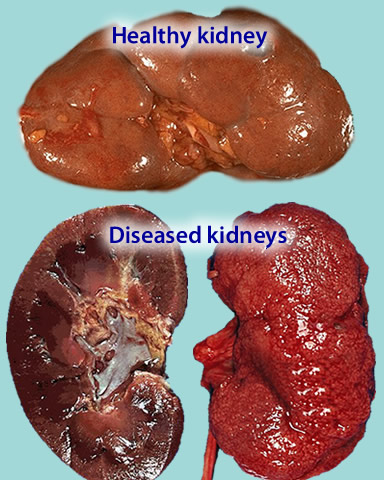
Acute renal failure is most often diagnosed during a hospital stay for another cause. One may be in the hospital for one test only to find out that he or she has problems with his or her kidney.
Symptoms can vary from person to person. Someone in the early stage kidney disease may not feel sick or notice symptoms as they occur.
Vomiting , Weight loss, frequent urination, blood in the urine, bone damage, muscle cramps, muscle paralysis, swelling of the legs, face and/or hands, shortness of breath, pain in the back or side, feeling tired and/or weak, memory problems, difficulty concentrating, dizziness, Low blood pressure are some of the symptoms.
The high cost of treatment, dialysis and transplant
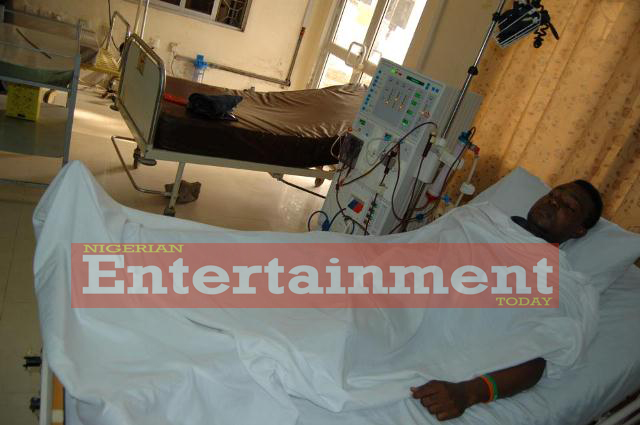
According to Nathan Foundation 15,000 new cases of kidney failure occurs every year in Nigeria. Statistics have further showed that 30 million Nigerians are suffering from Kidney disease and currently, patients pay as high as N150, 000 for three sessions of dialysis every week and about N5 million annually; costs of transplant varies from hospitals but ranges between N4m and about N8m and a patient needs about N150, 000 monthly to get immuno-suppressive drugs after a successful transplant.
In view of the high cost. In Nigeria, kidney failure remains a death sentence if not detected early and managed appropriately as managing the disease is out of the reach of the poor.
Tunde Akinboye of Subol Medical Health Centre, Ikeja explained that government’s intervention in providing adequate healthcare system in terms of free dialysis in government hospitals could really help. ‘Only in very few countries of the world do people pay fro their own pocket for dialysis, because it is very expensive to sustain. Government and the private sectors in most countries even support by making it free for children’, Akinboye said.
Ifeanyi Dike, actor and member Board of Trustees of the Actor’s Guild of Nigeria who has had two transplant procedures in India told our reporters that kidney transplant has almost put a hole in his pocket. ‘If you are a millionaire and you are on dialysis, your pocket will run dry. The cost of dialysis is N70, 000 and you have to do it 3 times a week. I was on dialysis for one year. In Nigeria people wait in turns to use one ECG machine. Abroad, dialysis is free of charge. But here in our country, it is not so. Patients pay through their nose for this dialysis and that is why most people die as a result of not being able to afford it’

According to a journal published by the Kidney Consultants International (KCI), the typical renal patient has a three to five hour dialysis treatment; three times per week and dialysis can only replace only about 10 per cent to 15 per cent of the function of healthy kidneys. In Nigeria, each session of dialysis treatment will cost an average of N25,000.00 or N75,000 per week, a cost much more than the average Nigerian worker earns. Minimum wage in Nigeria is currently N18,000, and a recent survey by development organisation EFiNA says 52% of Nigerians earn below minimum wage.
Apart from the challenge of transplant relapse, sometimes it is difficult to get a compatible donor, even when the person can afford a kidney transplant.
KCI noted, that a kidney transplant provides the patient with a healthy kidney from a donor but it often requires a lot more in terms of finances. When a donor(which so far in Nigeria have been living relatives, spouses or friends) is found, their suitability for surgery is determined and they are tested to determine if their blood type and other issue factors match the patients. Some of these investigations are done abroad and this helps to compound the cost of the surgeries.
‘Once you get a transplant, though, you will have to be on medications for life’ says Bode Durojaiye of the Lagos State University Teaching Hospital, LASUTH, Ikeja. ‘After the surgery, transplant patients must take immunosuppressant drugs, which keep their bodies from fighting and destroying the transplanted organ and these drugs must be taken for life with a combination of other drugs, which are usually not in stock by regular pharmacists due to their high cost. When required, they are often imported specially for the patients’ use’.
Aside being on medications for life, people who receive kidney transplant must also be monitored by a physician who specializes in kidney disease (nephrologist) for the rest of their lives. This explains why before his death, the late President Shehu Musa Yar ‘Adua‘s was frequently making overseas trips after having a kidney transplant in a Saudi Hospital. Yar’Adua died on May 5, 2010.
Veteran actor, Enebeli Elebuwa was bed-ridden for months, hospitalised here and in India, where he finally had a transplant, before passing on at Asian Institute of Medical Sciences, India, on December 5, 2012. Yet another casualty of a disease silently ravaging the country. Like Kadiri and OJB, Elebuwa had to raise funds for his treatment from friends and family.

The kidney trade business
Meanwhile the kidney donation business has been thriving. There have been reports of some Nigerians who have travelled to Malaysia, Pakistan and India through ‘kidney salesmen or agents’ to help them sell one of their kidneys.
Each kidney, NET gathered is sometimes sold for up to N10 million and hundreds of Nigerians make trips to these countries each year.
In 2008, the International Society of Nephrology and the Transplantation Society came together in Istanbul, Turkey, at a summit organised by the World Health Organisation on Organ Trafficking and Transplant Tourism. It produced the Istanbul Declaration, a framework to govern organ donation and transplantation activities around the world.
The Declaration called on the medical community, especially transplant surgeons and nephrologists, to join the WHO to put pressure on health ministries in various countries with a transplantation program to eliminate organ trafficking and transplant tourism.
‘The Declaration forbids commercial kidney transplantation, transplant tourism, or organ donation for a fee. This is now recognised worldwide as something that should not be done by anybody and Nigerian doctors, being part of that declaration, have been trying to make rules in Nigeria and ensure that the Senate and House of Representatives join the rest of the world to promulgate that act. Most countries have enacted it,’ said Olugbenga Awobusuyi, a consultant nephrologist and kidney specialist.
Just like former Inspiration FM Presenter Chaz B,actress Ngozi Nwosu, Rhythm Fm’s Meka Akerejola,

and others who have had successful transplants, OJB is hoping to leave for India in a matter of weeks, to undergo a transplant.
The producer will not be the only one getting a new kidney this summer though. NET investigations revealed that there are nearly half a dozen entertainers currently going through dialyses here and abroad. And one particular gentleman who’s had one transplant is right now back in India, after suffering a relapse.
‘It’s not a disease for entertainers alone really’, one industry source told us last night. ‘While it is true that many of them are victims, I’m sure there are many more everyday Nigerians suffering from this killer disease’
Entertainers have the opportunity though, to draw national and global attention to the situation; providing helpful information, while working with government and private organisations to provide ways of helping sufferers survive.
Some popular victims
| Name | Profession |
| Chaz B | OAP |
| Enebeli Elebuwa | Actor |
| Meka Akerejola | OAP |
| Mozzyx of Fellyx and Mozzyx | Singer |
| Meka Akerejola | OAP |
| OJB Jezreel | Singer/Producer |
| Shehu Musa Yar’adua | Politician |
Possible causes
* Hypertension
* Diabetes
* Long-term ingestion of herbal concotions/preparations,
*Abuse of pain killers, aspirins and Ibuprofen,
* Smoking,
* High salt intake,
* Abuse of hard drugs and alchohol,
* Urinary tract infections
* Abnormal blood flow to and from the kidney due to obstruction of the renal artery
* Low blood volume due to blood loss
* Adverse medications that are toxic to the kidney,
* High blood pressure
* Prostrate problems
* Chemotheraphy
Average yearly costs of kidney management (KCI)
Cost of twice weekly haemodialysis
N2,388,168.00
Cost of thrice weekly haemodialysis
N3,255,368.00
Cost of CAPD (Continuous Ambulatory Peritoneal Dialysis)
N3,699,925.00
Cost of renal transplant plus immunosuppressant for two years
N4,802,680.00
Cost per year
N2,401,340.00


0 comments