


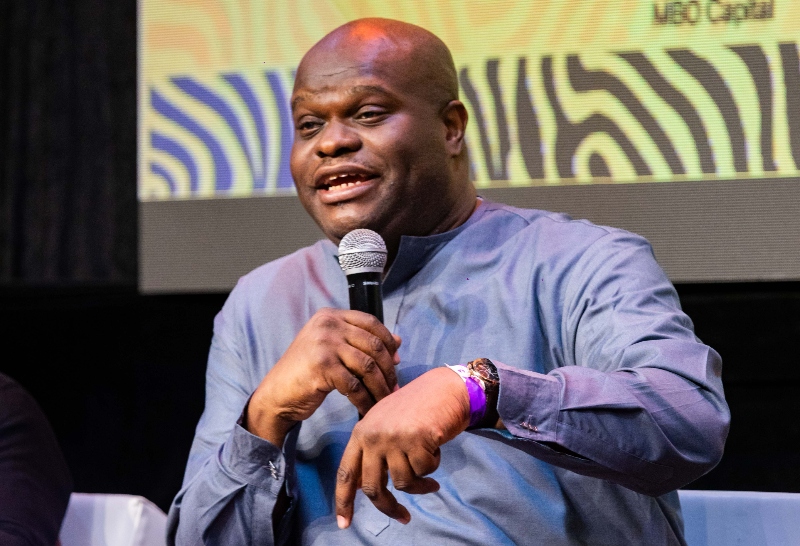
An investment executive has challenged the widespread belief that financing shortage hampers Nigeria’s creative sector, revealing his firm has deployed over $6 million across 35 Nollywood productions while lack of business structure remains the primary barrier to funding.
Speaking at NECLive 2025‘s panel on funding creative enterprises, Adekunle Adebiyi of MBO Capital stated plainly: “I actually don’t think financing the creative space is a challenge anymore.” His declaration contradicted recurring complaints from earlier panels about funding difficulties plaguing the industry.
MBO Capital finances SMEs, businesses, and projects. The company’s portfolio demonstrates substantial creative sector engagement: 25 of their 35 financed films currently stream on Amazon Prime or Netflix, with three theatrical releases showing in Nigerian cinemas.
“It’s quite simple: it’s the same thing we look at when we invest in any other business. We need to see structure. We need to see that you are organized,” Adebiyi explained. He rejected suggestions that investment models should bend to accommodate creative aspirations. “I heard someone say that financing needs to change to match the creative’s dream. That’s not going to happen.”
However, Adebiyi distinguished between creative and business expertise, noting the firm doesn’t expect creatives to possess deep financial acumen. “If you’re a creative, make sure you have a finance person or an accountant. And if you’re not a lawyer, make sure you have a lawyer as well. Those are the people who will help you build structure that makes your business investable.”
The investment executive emphasised three essential requirements: tax compliance, filed audited accounts, and risk management capabilities. “As a finance firm, I have finance, legal, and risk management functions. I need to manage risk of investing in any business, not just creatives,” he stated.
Addressing streaming platforms’ reduced Nigerian investment, Adebiyi characterised their departure as an opportunity rather than a crisis. Previously, MBO provided debt financing against Amazon or Netflix contracts with minimal risk—lending dollars and receiving dollars against guaranteed platform payments. The platforms’ exit forced model evolution toward part-debt, part-equity structures like the “Aloma” arrangement.
“A movie producer is now asking me to take financing risk with him. I can’t just take debt. With equity, if the movie does really well, you make a lot more,” he explained, describing the new approach as “essentially a marriage” where both parties share success.

