


Nobility is our Pride; that is the slogan of Sultan Bello Hall in the University of Ibadan, Nigeria’s first institution of its kind. While I was a student in the hall in the early 2010s, it was a joke to other students who deemed Bellites as ‘weaklings’ who preferred not to cause trouble.
But that was not always the case.
In the mid to late 90s, it was one of the most troublesome hostels within the school campus because of its press and their publication called Echoes Magazine. At the heart of the publication was a lanky history student who would later go on to become one of the best journalists from Africa, even if he would not accept such high praise.
His name is Olumide Iyanda, and this is his story.
When I spoke with Mr Iyanda for this piece, he reminded me that his passion was to tell other people’s stories, and he was not particularly keen. Yet, the little I knew about him convinced me that we need to document our griots’ journeys, lest their contributions to history be forgotten, and he agreed.
Born in Lagos Mainland to Gabriel and Yetunde Iyanda, Olumide Iyanda did not set out to pursue a career in journalism like his elder sister, Olufunmilola, the revered ace broadcaster and media executive.
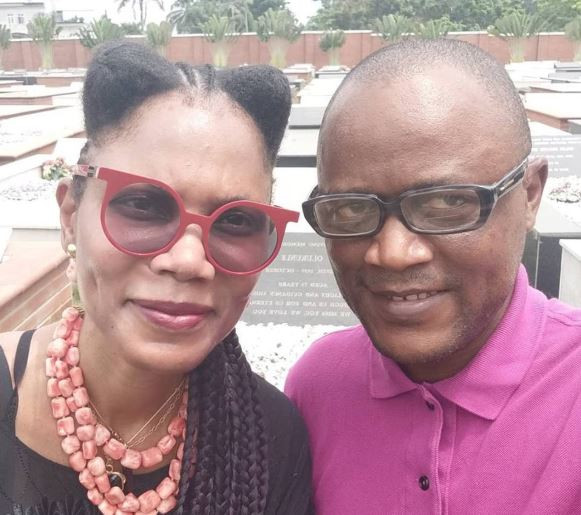
At a young age, before seeking admission into the university, he envisioned himself in the world of public relations, inspired by an uncle who held a prominent position in advertising, sales promotions, and public relations at Texaco Nigeria. This aspiration led him to apply for the Communications and Language Arts program, the equivalent of Mass Communications at the University of Ibadan in 1992, but fate had other plans.
He missed the cut-off score by just four points and was offered an undergraduate program in History instead. Despite this initial detour, he still had the drive to tell stories and connect with people, just as he had in his secondary school days, where he was active in the Literary and Debating club. His desire to study Communications and Language Arts drove him to register and take most of their courses in his first year at the University.
“What I did back in the University because I wanted to write was to take the same courses CLA students took in their 100-level. All their courses, both compulsory and elective.”
He found an outlet in his hostel’s press organisation. He rose to become the editor of ‘Echos’ magazine, a publication that, by his admission, was notorious for its daring investigative stories about fellow students and other members of the university community.
“We did a lot of what we call bugging back then. You write about fellow students, and some of them didn’t like the kind of stories we wrote about them, and there were elements within the system, and some ‘organisations’ that didn’t want anybody to write about them. Knowing what I know now, I think we should have also been a bit careful about the kind of stories we were writing. But because we were young, we were daring about just about anybody“
The mid-nineties were the height of cultism in Nigerian universities, and it was a cause for concern for the University of Ibadan authorities. This period, while exhilarating, also came with its share of challenges for Olumide Iyanda. He recalls instances where he had to leave the school environment for days after the magazine’s release because “there were guys who were practically paying for your blood, ladies who were angry that you had written some things about them.”
This early exposure to the raw, unfiltered realities of journalism, though risky, honed his skills and perhaps, unknowingly, solidified his commitment to the profession. It was a time of youthful exuberance and a touch of recklessness, as he puts it, “I was young, I was a bit, a bit, carefree.”
Yet, it was also a period of profound learning, laying a strong foundation for his future. He proudly states that by the time he graduated from the University of Ibadan, he was “one of the best journalists in my set, although I didn’t study Mass Communication or Communications and Language as it were.”
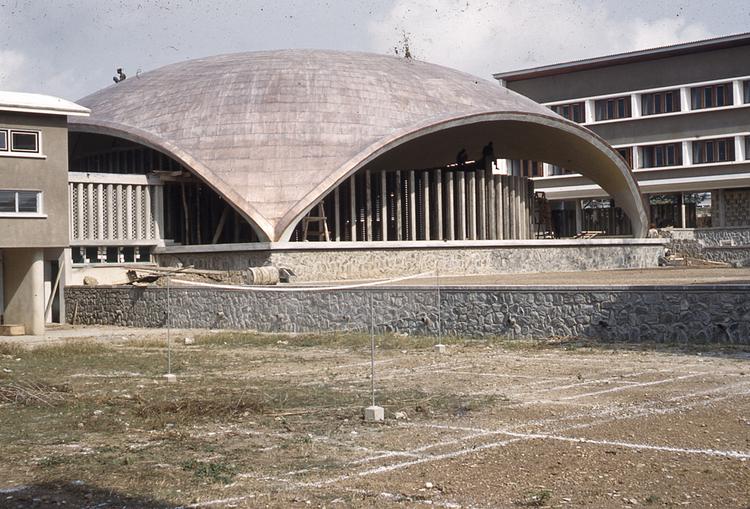
After graduating from UI, the young Olumide faced a moment of uncertainty because the intensity of campus journalism had left him questioning if he wanted to continue in the field. He took a six-month break, a period of reflection before a pivotal conversation with Mr Babafemi Ojudu, arranged by his sister, brought him back to his calling. Mr Ojudu, a renowned journalist who went on to become Senator for the Ekiti Central constituency of Ekiti State, Nigeria, was impressed by Olumide’s deep understanding of journalism, culture, and entertainment, offered him a job at the now-defunct Tempo, marking his formal entry into professional journalism.
It was at Tempo around 1997/1998 that Olumide Iyanda got his first post-graduation job, where he was mentored by Funso Aina, who would later become a Senior Manager at MTN Nigeria. Aina, who was Olumide’s first line manager as a journalist, instantly recognised his potential. “I took to him instantly because I could see the hunger in his eyes,” Aina recalls when he spoke to me. “It was really, even at that early stage, I could see that he was, he had plans, you know, to, to be different, you know, to, to stand out.”
Aina noted that even then, Olumide’s approach to entertainment reporting was unique. “He saw things differently,” Aina said. “He would have done his own due diligence. He would have done his research. He would have looked at angles that had not been previously, you know, explored. So he would write about King Sunny Ade or Ebenezer Obey, and the story angle would be something that many people didn’t previously know about them.”
It was at Tempo in 1999 that he wrote, ‘Nigeria: Femi strikes Gold,’ a reportage of Femi Kuti winning the KORA All Africa Music Awards in South Africa and one of his most memorable stories to date. “I think one of the first stories that easily comes to mind was the one about Femi winning KORA, because I like to celebrate people’s victories more,” Mr. Iyanda said.
Femi Kuti won the Best Male Artist of Africa and Best Male Artist of West Africa at the awards following the success of his album, “Bang! Bang! Bang!.” Ironically, the lead song on the album was deemed inappropriate for public broadcasting and banned from airplay in Nigeria by the Nigerian Broadcasting Commission. Femi Kuti went on to become the first Nigerian to win the World Music Awards in the same year.
Funso Aina, who was his line editor at the time, remembers the story vividly, highlighting how it exemplified Olumide’s unique journalistic eye. He credits Olumide Iyanda with being able to “lift that veil” and show the world Femi Kuti’s individual capability outside the shadow of his legendary father, Fela Anikulapo Kuti.“What was unique about that story was how Olumide Iyanda was able to unveil or make people see Femi in a totally different light,” Aina explains. “The report sort of made everyone see Femi, as his own man, and more than his father’s son. He has carved a niche for himself.”
“There are many more memorable stories [over the course of his career], but that one sticks out for me,” Olumide Iyanda said. “Z Mirage, his record label, had my story on the wall for several years because they were also impressed by the quality of the reportage and the celebration of Femi’s achievement. Remember that the album that won him the awards was banned in Nigeria.”
A visit to Funso Aina, now senior manager, external relations at MTN Nigeria, the country’s biggest telecommunication company and the first African to win the ‘innovator of the year’ at the SABRE Awards, played a role in his move to Punch Newspapers, the most widely read newspaper in the country at the time.
Aina, who had moved to Punch in the early 2000s, saw the platform as a natural fit for Olumide Iyanda’s talent. The editor of Punch at the time was looking for someone to do something different with Saturday Punch, and he knew Olumide Iyanda was the man for the job. “I arranged a meeting and, you know, they met and that was how he came to Punch,” Aina recounts.
It was at Punch that Olumide Iyanda established himself as one of the greatest entertainment journalists of his generation and changed the face of Saturday Punch. His arrival, according to Funso Aina, was “like a breath of fresh air” for the newspaper. He attributes this to Olumide’s “ability to see what others cannot see, he goes deeper than scratching the surface and it brings out what others have not been able to establish.”
This approach led to Olumide Iyanda redefining the entertainment reportage at Punch with fresh insight and new angles. In a previous interview with City People, Olumide Iyanda said, “I went to Punch to write entertainment and of course, it’s a bigger platform and I won a few of their awards. And of course, I also think that we changed the face of Saturday Punch back then.”
Steve Ayorinde, renowned journalist and Former Commissioner for Information/Tourism, Arts & Culture of Lagos State, recalls Iyanda’s contribution to Punch’s success. “Many art aficionado will remember Olumide Iyanda as one of the entertainment writers in the vaunted history of Saturday Punch who contributed to adding to the layer of success that the tabloid recorded, especially in the early 2000s.”
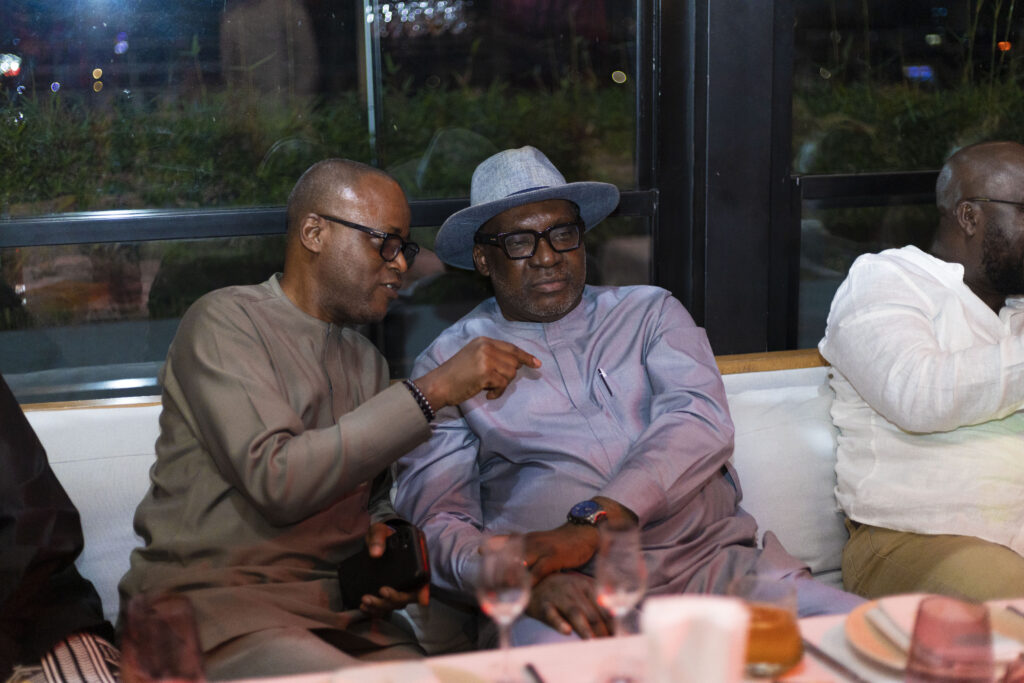
“His pungent interviews with celebrities and artistes were as cerebral as they were entertaining. His style was unmistakable”
In 2004, Olumide Iyanda transitioned from a reporter to a leader, becoming the first Features Editor for Saturday Independent. He found immense satisfaction in managing and mentoring younger reporters, sharing his knowledge and guiding them in the intricacies of the profession.
“I enjoyed being an editor as much as I did reporting because I was able to mentor more people and teach people about this job. One of the reasons I do what I do now is the fact that journalism, just like any creative enterprise, needs planning, partnership, and serious execution,” he says.
Adedayo Odulaja, Netng’s former editor and now Director, Research and Public Policy at Caritas Communications Limited, expressly declares his time working as a reporter and assistant editor under Olumide Iyanda’s supervision at Saturday Independent as his most enjoyable time in journalism and is not surprised that ‘Mighty’ enjoyed his time as an editor.
“I cannot imagine him not loving his time as editor because being an editor is like being a surgeon. You have what you want to do in your head, but it’s when you get to the practical aspect of it that you see it all come together,” he said.
“Mighty is great when it comes to spotting talents, people who are dedicated, and the way he shapes you, he shapes your thinking, your perspective, and your life beyond being a journalist, but also as a man. That was also my most enjoyable time in journalism, by every measure”
“He’s the sort of person that would say, ‘What is your plan?’ You give him that and he says, ‘What is your plan B?’ And you give him that, and he says, ‘What is your plan C?’ These are practical steps and measures that, if you apply them to life, it would be difficult for you to be at some point where you won’t have a plan.”
Adedayo also speaks of Olumide Iyanda’s mutual respect for everyone and his ability to create a special bond with the team he supervised. Till today, he still holds some of the gifts he got from Olumide Iyanda on his wedding day.
“He is the sort of person who was also interested in your personal life. It’s difficult for any one of us to look back to any important celebration, like a wedding or naming ceremony, that he wasn’t present. He watches out for you as long as you’re dedicated. He called the team the ‘Saturday Independent First Eleven.’ For many of us who worked with him, he calls us his brothers and sisters, and we have maintained that relationship over time.”
While at Daily Independent, Olumide Iyanda nursed a desire to explore online media. When he left the platform in 2014, he had a brief stint as the executive editor of TheNiche on Sunday before establishing QEDNG and then Mighty Media Plus Network. “I’d wanted to go into online publishing even while I was the editor of Saturday Independent, and the journey so far has been nothing short of remarkable.”
Mr Iyanda credits Ayeni Adekunle, the publisher of Nigerian Entertainment Today and X3M Ideas’ Steve Babaeko, for encouraging him to pursue this venture despite his limited knowledge of business at the time.”One of the things that Steve Babaeko told me back then was to stop thinking creative people can’t be business people. So I went into Mighty Media with little knowledge about business but I’ve learned a whole lot along the way and it’s been interesting so far.”
Funso Aina is not surprised by Olumide’s subsequent success, noting that his work at Punch put him in good standing to become the editor at Saturday Independent. “Right from the get-go, I saw that glint in his eyes. I saw that hunger. I saw that verve and that task to do something that is totally different and he pursued it.”
Olumide Iyanda has travelled to many countries across the world, sat on the boards for many awards and won a few himself. Yet he believes that the greatest reward in his career is not material wealth, but the ability to positively influence and teach others. He lives by the simple yet profound philosophy: “A grain does not fill a sack, but it helps.”
This belief fuels his commitment to contributing, even in small ways, to the growth and development of those in the creative industry, and it is part of the reason he convened the inaugural QEDNG Creative Powerhouse Summit in 2025.
In a profession often characterised by financial struggles, Olumide stands as a beacon of integrity. He openly acknowledges that journalists in Nigeria are not always well-paid, and he consciously chose to avoid relying on handouts. With nearly 30 years in the business, he proudly asserts, “I don’t think anybody in good conscience can say that I collected money from him or her to either publish or kill a story. If your definition of wealth is to be content, to be satisfied with what you have and to live a life that’s devoid of stress, strife, and worry. I think I have bag loads notes of that.”
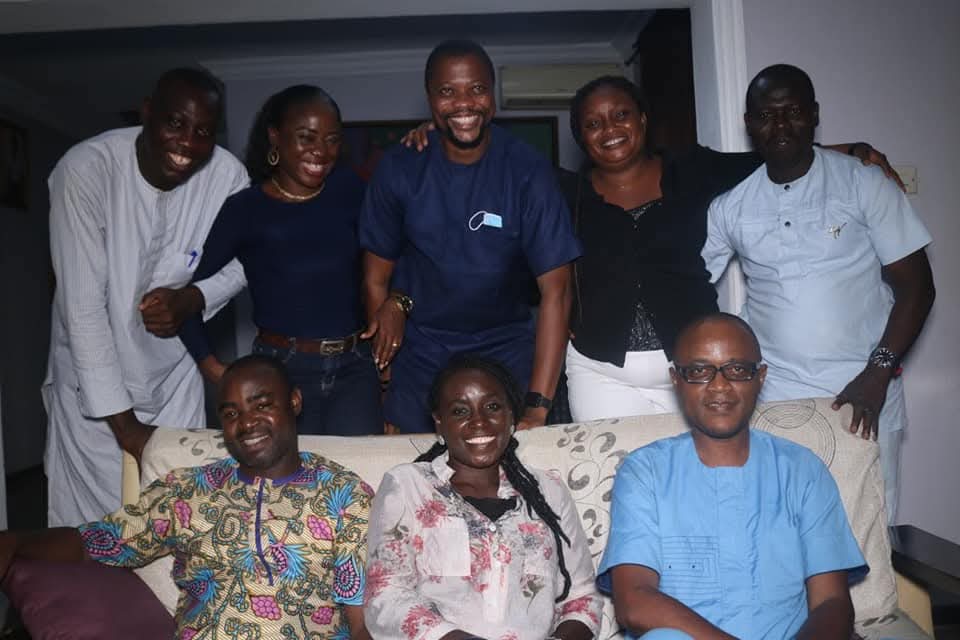
Sitting – Lukman Akintola, Temitope Ojo and Olumide Iyanda.
Adedayo Odulaja quips that Olumide Iyanda not only held this belief but instilled it in the people he led. “He was also one of those journalists who didn’t care about what was supposed to come [in terms of monetary gain]. No, it was just about the story, ‘Oh, this person is telling a story, he’s shooting a movie, he’s recording a song, he’s doing all of that, and it needs to be heard.’
“It’s difficult to see anyone who is diverse in his thoughts, diverse in his appreciation of the arts like Mighty. Whether you’re talking about visual arts, music, movies, stage plays, or fashion, he’s very knowledgeable. That’s why nobody is surprised that people from all walks of life hold him in high regard.
Olumide Iyanda observes the current global success of Nigerian entertainment with a profound sense of joy and excitement. While he is happy that Nigerian creatives are now recognised worldwide, he also offers a crucial historical perspective, reminding us that Nigerian artistes have always been celebrated.
“Fela remains for me the biggest artist out of Africa ever, and of course, that was in an age when there was no social media, so there was no kind of virality that you have now. There were no streaming platforms, but these were artistes that people were making documentaries about. There was a King Sunny Ade who was nominated for a Grammy.”
He views the present boom not as a sudden phenomenon, but as a natural progression of a rich legacy. His insights extend to the very core of entertainment journalism, drawing a clear distinction between genuine journalists and what he terms “gate crashers” – individuals who, armed with internet access, claim the title of journalist without proper training or understanding of the profession’s ethics and rules.
“You hear people say they are ‘citizen journalists,’ but there are no citizen doctors. There are no citizen lawyers. There are no citizen architects. So you’re either a journalist or you’re not. If you decide to be a journalist, the first thing you should do is to learn about this business. You must know, you must learn the tricks of it. You must know the rules of this business, the rules that guide everything we do. Then, of course, you must be dedicated.
At QEDNG, the platform he publishes through Mighty Media Plus Network, this commitment to quality and integrity is paramount. He takes immense pride in the fact that “People will say to me that when they want a story, when they want to confirm a story, they go to QEDND because therey, they are sure of the quality of stories they are going to get.”
Steve Ayorinde agrees, saying, “QEDNG is a useful companion to creative industry followers, due to the unique way in which Oluminde has curated the content of the digital publication”
Olumide Iyanda acknowledges the transformative role of technology, noting how modern tools can assist journalists, effectively replacing roles that once required multiple individuals, like proofreaders and typists. Yet, he stresses that these tools are only as effective as the diligence and knowledge of the journalist wielding them.
“What I bother most, or what I, what I’m interested more is what I can do to the next person behind that come behind me,” he shares. This philosophy encapsulates his role as a teacher and a mentor, constantly striving to empower and equip aspiring journalists with the skills and values necessary to excel in a rapidly evolving media landscape.
For me, and indeed for anyone seeking inspiration in the world of media, Olumide Iyanda stands as a powerful example of what it means to be a journalist of substance, a leader with heart, and a visionary who continues to shape the future of storytelling in Nigeria and beyond.

