


In 2015, NET broke the story of Dagrin’s abandoned grave at Atan Cemetery — and the N3,000 fee to see it. Ten times that amount later, nothing has changed. It seems like nothing has changed except the price.

Sixteen years ago, Nigeria lost Oladapo Olaitan Olaonipekun, the rapper known as Dagrin.
The Chief Executive Omo-Ita, who made rapping in Yoruba mainstream, died at 6 pm on April 22, 2010, at LUTH, eight days after his Nissan Maxima ploughed into a parked lorry on Agege Motor Road.
In April 2015, NET paid a visit to Dagrin’s tombstone ahead of his 5th year remembrance and found it abandoned — plain, undecorated, unvisited. The attendant on duty that day, a man named Christian, charged our reporter ₦3,000 for entry, explaining that his boss had issued standing orders: anyone who wants to see the grave must pay, because the site had been left without upkeep for years.
A woman named Jummy — believed to be a girlfriend — had been sending money for maintenance, but her number had gone dead two years prior, and nobody had stepped in since.
That story ran. People were outraged. Tributes were posted. The culture expressed its grief loudly, in the way the culture does — online, in full feeling, briefly.
Then it moved on.
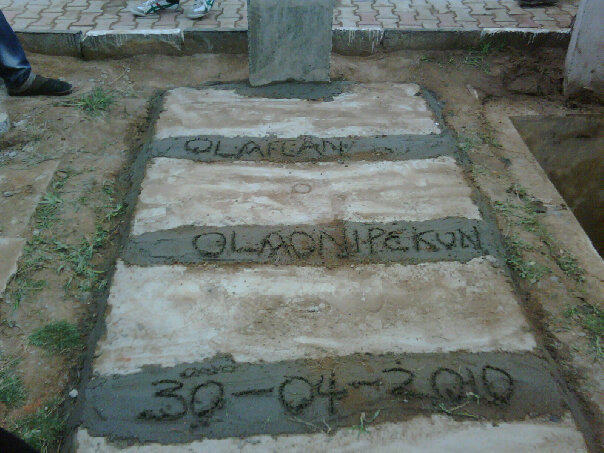
Eleven years later, the fee has inflated by a factor of ten. The explanation has not changed in any meaningful way. According to some people who work at the cemetery, the grave remains unattended, and not a single person showed up on the day of the 16th anniversary of his death.
The man whose death crashed the NET website within minutes of the announcement. The rapper whose burial drew thousands to Atan when only 150 had been planned — fans who refused to leave after the casket was lowered, who almost tore the Ebony gate off its hinges trying to get in. That man’s grave sat unvisited on the anniversary of his death in 2026.
What the attendant did note was that some people had passed through roughly a week earlier. Not to pay respects. Not to lay a wreath or leave flowers. They came, in the attendant’s words, to shoot content.
Dagrin spent his whole career rapping about being the boy nobody believed in. The hustle from Meiran. The computer village. The collected-and-returned phone money. He documented, in meticulous Yoruba bars, what it felt like to be overlooked by the industry until you couldn’t be ignored anymore.
There is a generation of Nigerian artists who owe their careers — directly or by inheritance — to what Dagrin built. Some of them have the resources. All of them have the platform. A coordinated effort to restore and permanently maintain that tombstone is not a big ask. It is the minimum.
NET will continue to follow this story. Anyone with information about ongoing maintenance efforts or family-authorised restoration plans can reach us at contact@thenet.ng.

