


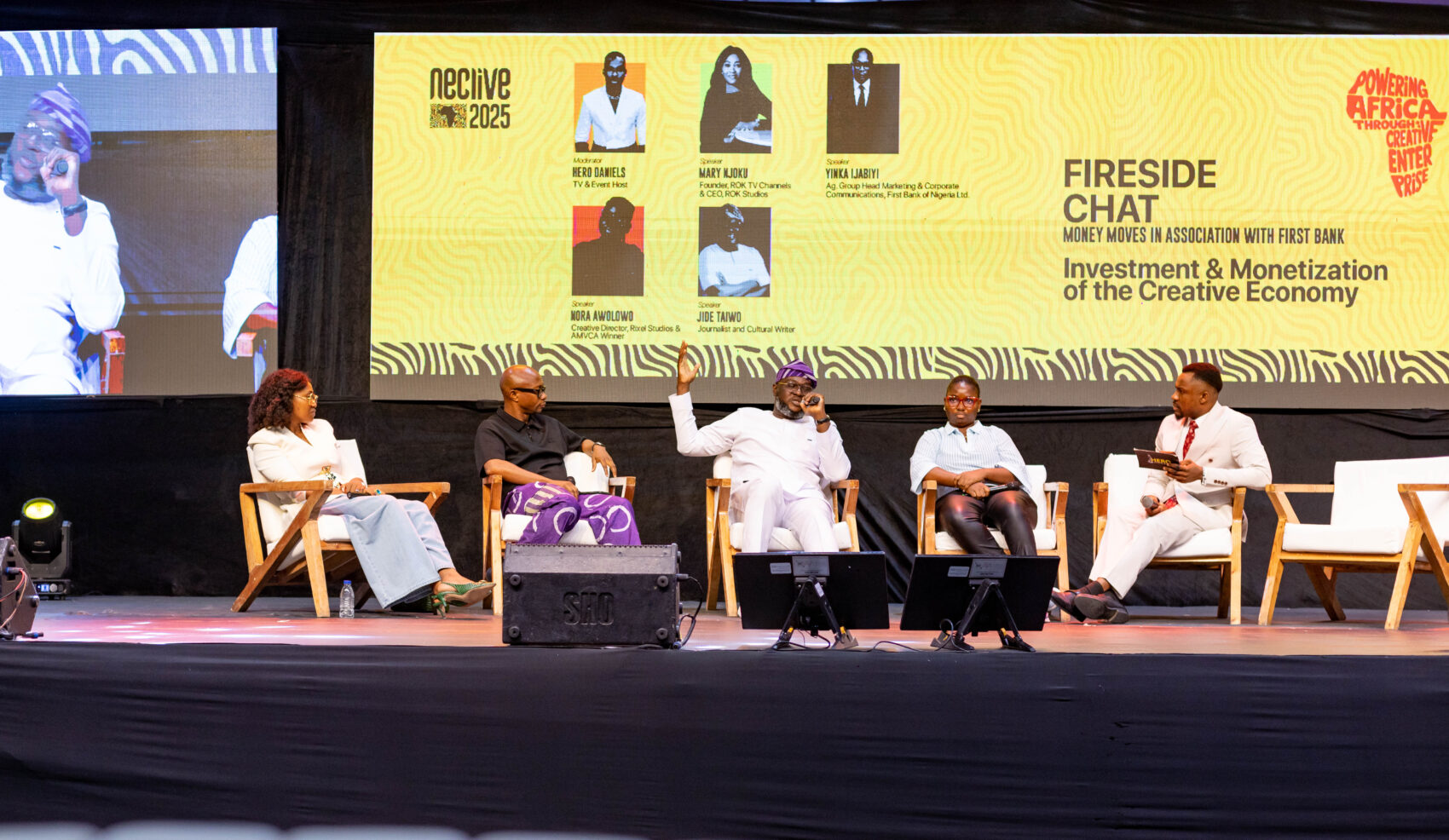
The path from creative passion to sustainable business was the central theme at the NECLive 2025 fireside chat, “MONEY MOVES – INVESTMENT & MONETIZATION OF THE CREATIVE ECONOMY,” presented in partnership with First Bank. Moderated by Hero Daniels, the session brought together industry titans and financial experts to dissect the challenges and opportunities in monetizing Africa’s booming creative sector.
The core question posed to the panel—comprising entrepreneur Mary Njoku, First Bank’s Yinka Ijabiyi, filmmaker Nora Awolowo, and Afrobeats specialist Jide Taiwo—was: How do creatives move from mere artistry to building sustainable enterprises?
Mary Njoku, who successfully transitioned from actress to founder of ROK Studios, emphasized a shift in mindset. She argued that true enterprise begins when a creative’s focus moves beyond “paying the bills” to solving problems within the industry. “If you have the mindset that you want to solve a problem, you will go big,” she stated, citing ROK’s success as a result of identifying and addressing a gap in talent development. Njoku also passionately called for a change in the media narrative, announcing her new focus on making “being good cool again” by celebrating unsung heroes in society.
Representing the financial sector, Yinka Ijabiyi outlined the rigorous metrics banks apply to creative proposals. He stressed that while passion is important, financial institutions must prioritize value for their brand, the sustainability of the business model, and concrete guarantees due to tight regulation. “We must also first and foremost be able to crunch the numbers and see that they make sense,” Ijabiyi explained, challenging creatives to better package their properties for corporate partnership.
Filmmaker Nora Awolowo offered a practical guide for young creatives, focusing on bankability and structure. She advised that a strong track record is the most effective collateral. “You need to build the bankability first… people need to trust in you,” she said, recounting how showing evidence of work, rather than just talking about it, attracted investors to her first film project. Awolowo also highlighted the importance of owning and scaling Intellectual Property (IP).
The conversation took a critical turn with Jide Taiwo, who analyzed the global success of Afrobeats against the backdrop of local monetization challenges. Taiwo argued that the industry cannot rely on foreign-owned platforms and rules. “We have to design truly local solutions… We cannot run by pre-existing rules,” he asserted, pointing out the disconnect between global success and local affordability (e.g., high concert ticket prices). He also challenged the banking sector to take a risk on emerging talent—the “Blackberry Babes”—not just the established “ROK” successes.
The panel concluded with a consensus: the future of the creative economy lies in creatives adopting an entrepreneurial mindset, financial institutions adapting their risk models, and the industry as a whole committing to building indigenous, sustainable structures that favor African talent. The session served as a powerful call to action for both artists and investors to collaborate in building a more profitable and equitable creative ecosystem.

