


Uzoma Blessing Chibuike, known professionally as Blessing Uzzi, never intended to become a filmmaker. Armed with a first-class degree in International Relations from Eastern Mediterranean University in North Cyprus, her path seemed set for diplomacy or politics. But curiosity has a way of redirecting even the most carefully laid plans.
“My love for photography, really,” she explains when asked about her unlikely journey into filmmaking. “Whenever I saw an image or watched a film, I found myself wondering how it was made. Even as a child, I’d watch films like Mortal Kombat—which I loved—and think, ‘How are they doing all of this? How did they bring these things to life?'”
What began as a childhood wonder evolved and crystallised into something more tangible during university when she chose photography as an elective. Suddenly, having access to school cameras opened up a world of experimentation. “You’d just sign them out and use them, which gave me the freedom to experiment and shoot. That’s where the joy began,” Blessing Uzzi says.
Today, as the founder of Bluhouse Studios (formerly Eccentric Media), Blessing Uzzi has established herself as a formidable voice in Nigerian cinema, with a portfolio that includes the critically acclaimed short film “9:07,” feature films “No Man’s Land” and the AMVCA-winning “Freedom Way,” and numerous music videos and advertisements.
Her work consistently engages with pressing social issues—such as forced evictions, police brutality, and urban survival—and themes that reflect both her political background and her lived reality in Nigeria.
The Mechanics of Meaningful Storytelling
For Blessing Uzzi, the intersection of politics and filmmaking is deeply practical. “Freedom Way”, her politically charged film about police harassment of young Nigerians, taught her valuable lessons about navigating Nigeria’s regulatory landscape.
The film’s 80% outdoor shooting schedule presented logistical nightmares, requiring road blockages, permits, and careful coordination. But the real challenge was more subtle and far-reaching.
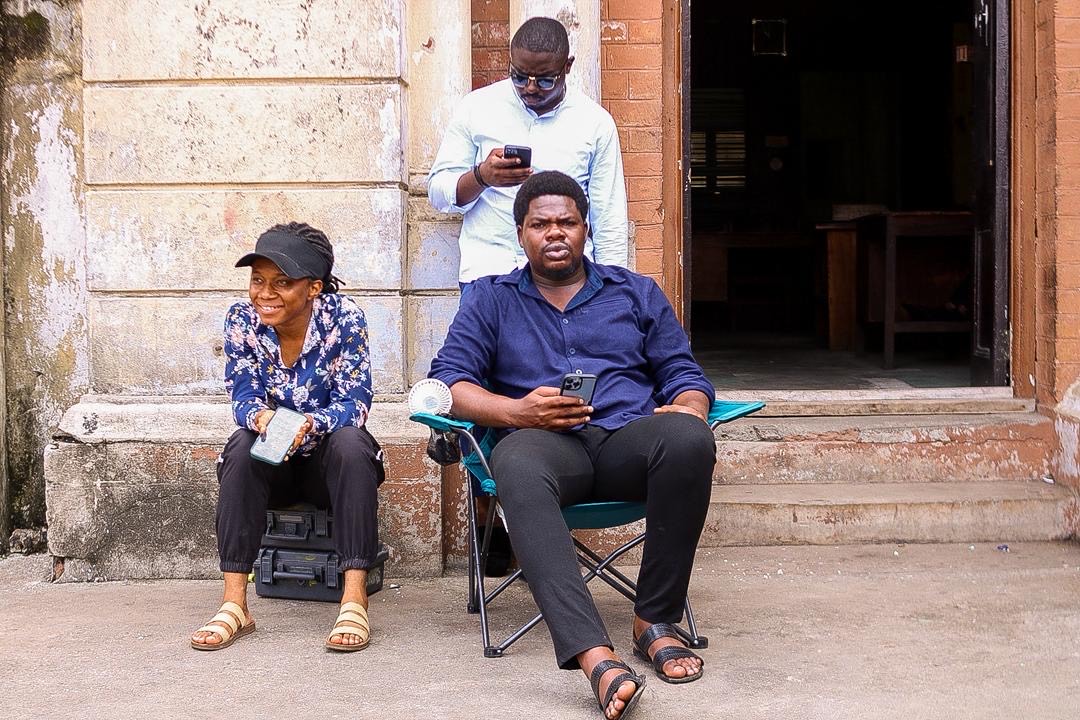
“When you’re writing here, especially for stories like Freedom Way, your choice of an ending can’t just be about where the story naturally leads,” she reveals. “You also have to think, ‘Will this get me or anyone on this project into trouble?'”
The pressure isn’t necessarily from audiences, she clarifies, but from the system itself. “The way things are set up, especially with the Censor’s Board, there’s often an expectation that a film should carry a moral lesson.” This means making strategic choices, such as including “good” police officers to balance narratives, even when it might not reflect the lived realities of many people.
“Freedom Way” rewarded Blessing Uzzi’s careful navigation of these challenges with an impressive festival run, premiering at Red Sea International Film Festival, TIFF, and AFRIFF, where it won the Special Jury Prize. For her, these accolades served as validation of a core belief: “Focus on the story and on what you want to say. Say it with honesty and authenticity.”
The festival’s success reinforced her commitment to authentic storytelling. “We didn’t set out thinking Freedom Way would go this far. We just wanted to make a film, and the rest happened naturally.”
The Business of Creative Storytelling and the Art of Short Films
Contrary to industry conventional wisdom, Uzzi sees no hierarchy between short and feature-length projects. “I’ve always been a firm believer in short films,” she states firmly. “A lot of filmmakers see shorts as something you eventually outgrow, but I don’t think that should be the case.”
For her, short films serve multiple purposes: discovering new voices and talents, experimenting with stories that might later become feature films, and providing a training ground for taking bigger risks. “I have many stories that I know will eventually become features, but I’ve first done them as shorts to test how they play out before taking that bigger risk.”
Unlike the stereotypical tortured artist who shuns commercial considerations, Uzzi embraces the business side of filmmaking. “If you’re a storyteller, you know that storytelling requires money—my darling, it really does,” she says with characteristic directness. “I’ve never been the kind of creative who says, ‘I’m just an artist; money doesn’t matter.’ That has never been me.”
This pragmatic approach likely stems from her background in music videos, where the commercial realities of production are impossible to ignore. “Art is also a business. Whether people like it or not, that’s the reality.” Her strategy involves telling stories that are both artistically strong and commercially viable—a balance she sees as essential for sustainability. “As I always say, dem no dey use poverty brag.”
The Future of Nigerian Cinema and the Power of Unique Stories
When discussing the future of Nollywood, Uzzi’s excitement becomes palpable as she considers the untapped potential of Nigerian experiences. “We have so many unique experiences in this country, and as filmmakers, we haven’t even tapped into half of them.”
She points to specific examples that illustrate Nigeria’s storytelling goldmine: “In 2023, people were literally jumping through windows in banks just to get cash. Where else in the world would you see that? And how do you even explain to an outsider that your country changed its currency overnight and people couldn’t access money? That’s a story right there.”
These peculiarities, she believes, will be both Nollywood’s salvation and catalyst for expansion. “The stories that eventually travel and resonate globally will be the ones that are original to us.”
With influences ranging from Iranian director Asghar Farhadi (“A Separation”) to Denis Villeneuve (“Dune”), Uzzi continues developing projects that blend her political interests with human storytelling. She’s currently working on a new drama rooted in everyday Nigerian realities, set for release in early 2025.
Her advice for aspiring filmmakers, particularly young Nigerian women, is refreshingly practical. She encourages them not to wait for validation from others before beginning their creative journey, emphasising the importance of starting immediately, regardless of circumstances or preparation level.
“For a while, I was over-reading, trying to know as much as Christopher Nolan before I even made a short film. But filmmaking isn’t something you master by only studying; you learn by doing.”
As Nigerian cinema continues its evolution on the global stage, filmmakers like Blessing Uzzi represent a new generation that refuses to choose between artistic integrity and commercial success, between local relevance and international appeal. In her hands, these aren’t contradictions to be resolved but complementary forces to be harnessed in the service of authentic storytelling.
Her next project remains under wraps, but given her track record of finding the extraordinary within the everyday Nigerian experience, audiences can expect another honest, politically aware, and deeply human story. In the meantime, the advice she wished someone had given her years ago continues to guide her work: trust the process, start where you are, and let your hunger for authentic storytelling meet the right collaborators along the way.

