


I had a good time at the 12th edition of the Africa Magic Viewers’ Choice Awards (AMVCA) on Saturday at the Eko Hotels and Suites in Lagos. It may seem surprising that I deem it important to say I had a good time at a ceremony celebrating the biggest names in African cinema, but it means more than it reads.
Awards nights in Nigeria can be a lot of things: delayed, overlong, underattended, politically predictable, or just plain exhausting. But Saturday night was different. It reminded me of something the Nigerian entertainment industry often says it wants but rarely manages to build: a strict schedule, elite planning, and a genuine community.
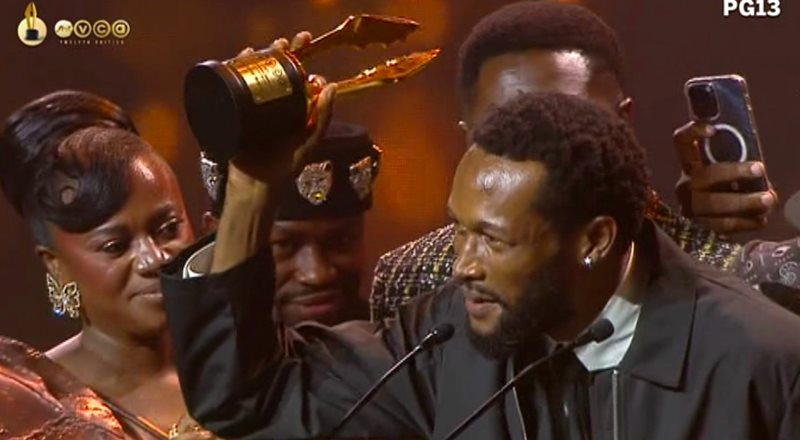
One of the things that has stayed with me since the event ended had nothing to do with the awards themselves. Yes, it is always good to see creatives receive recognition they have actually earned. But it is better still to watch an industry gather with real intent to celebrate a year’s worth of work.
There were so many noteworthy moments, banter between the hosts and the audience, between award presenters and winners, and even between winners and fellow nominees. Huge credit to Bovi and Nomzamo Mbatha, filling the shoes of IK Osakioduwa as the event’s hosts. However, the winners, the presenters, and performers who took the stage were all very engaging.
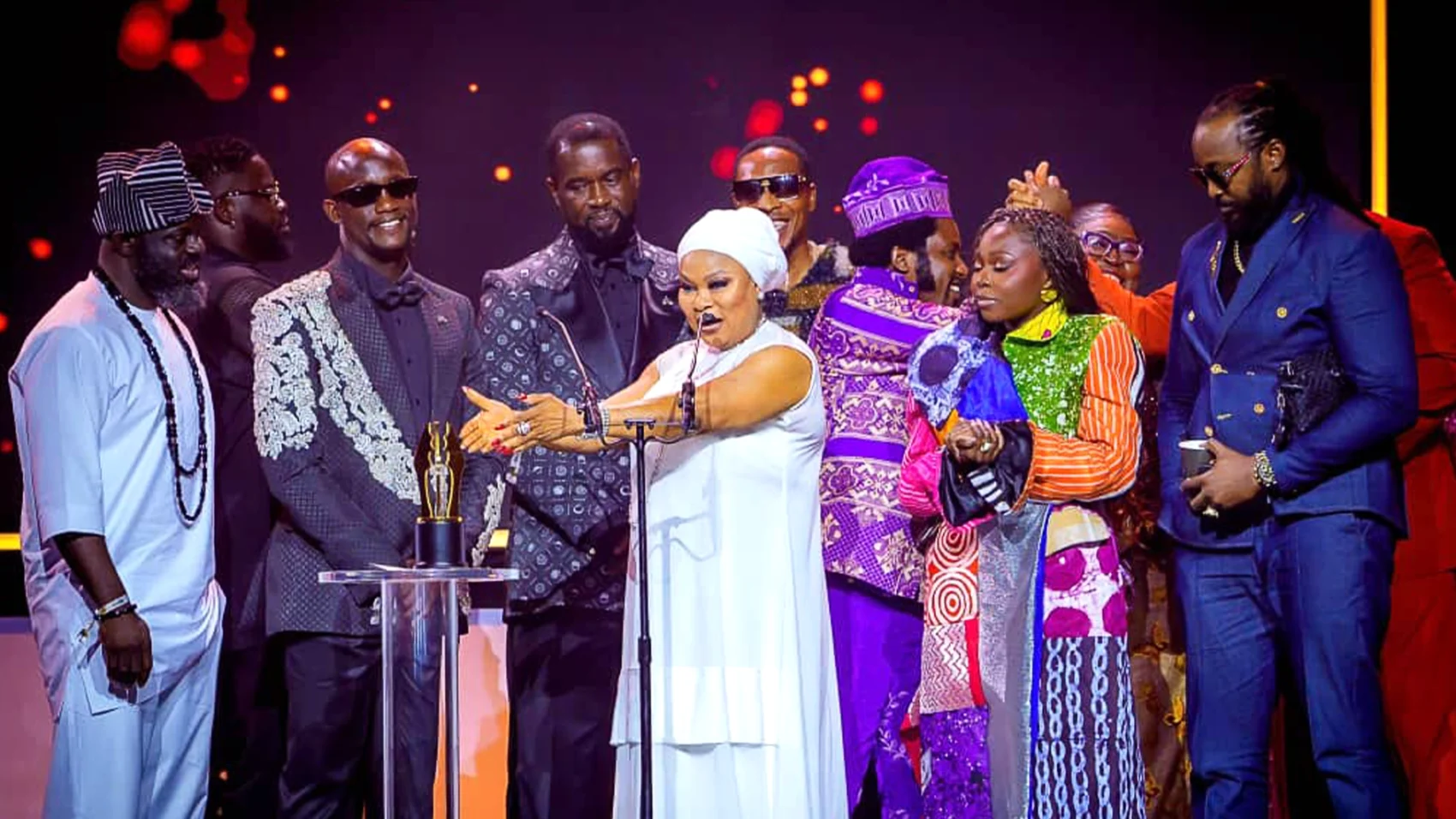
Uche Montana’s fake acceptance speech before the real one, Bucci Franklin’s emotional speech when he picked up the Best Supporting Actor Award. The speeches from the Industry Merit awardees, Sola Sobowale and Kanayo. O Kanayo.
That playful banter from the red carpet to the stage and after party featured lines delivered with perfect timing by African cinema’s most enduring performers; it tells you everything about the health of this industry. That is what a creative community looks like when it is working. It did not even seem like they were rivals, but collaborators who seek to sharpen one another. Competition that makes the room louder and not quieter.
This is one of the things that the music industry can learn from: competition can and should be healthy. I am not arguing that music should be completely without tension. Some of the most enduring songs in Hip-Hop and Afrobeats canon have been born from friction.
Beef, properly managed, is culture. But there is a texture to how Nollywood carries its rivalries — publicly, warmly, without the scorched-earth dynamics — that Afrobeats has not yet mastered. The actors compete fiercely. They lose on the same stage they win on. And they remain in community with each other through both.
The AMVCA works because Nollywood has built something that no award statuette can fully represent: an industry that understands the difference between competition and corrosion. All the nominees were secure enough in their own legacy to celebrate and needle each other in the same breath, in front of the same audience, to universal delight.
Here is another thing that would probably not get talked about enough: the hall was packed. Not just well-attended. Packed. From the OGs to the newbies, everybody who we wanted to see at the AMVCAs was there. People did not mind standing just to get a chance to cheer their favourites when they won.
There was an energy in that hall — loud, invested, unguarded — that I have found conspicuously absent at The Headies, at AFRIMA, and at too many other awards nights I have sat through in recent years.
That energy is the product of an industry that shows up for itself. When the nominees, the veterans, the new names, the industry executives and the press all occupy the same room at the same time, something happens that cannot be scripted. The event becomes evidence, evidence that the people in this business believe in it enough to be present.
And this is precisely where Nigeria’s music awards scene has a problem: it has refused to properly confront. The biggest music awards shows in Nigeria — and I will extend that to Africa — routinely see their biggest names show up very late or are even absent on the day. Nominees ghost the ceremonies for their own nominations. The biggest names rarely perform and then vanish. The community never quite materialises because the most important members of it are elsewhere.
You cannot build an industry on a foundation of strategic non-attendance.
At the last edition of the AMVCA, you could actually find your favourite actor on the red carpet. You can run into them at the after-party. That access — that willingness to be present and accessible as a community — cannot be quantified in press releases. It is felt. And it compounds over time into something that looks, from a distance, like an industry that genuinely loves itself.
Our music has global momentum. It has the streaming numbers, the crossover moments, the stadium shows. What it is still building — and what Saturday night at the Eko Hotel demonstrated so clearly — is the kind of community that turns an industry into a culture.
The model already exists. Just follow the Nollywood and AMVCA’s documentation of African Cinema.
Take notes.

