


By Akinyemi Ayinoluwa
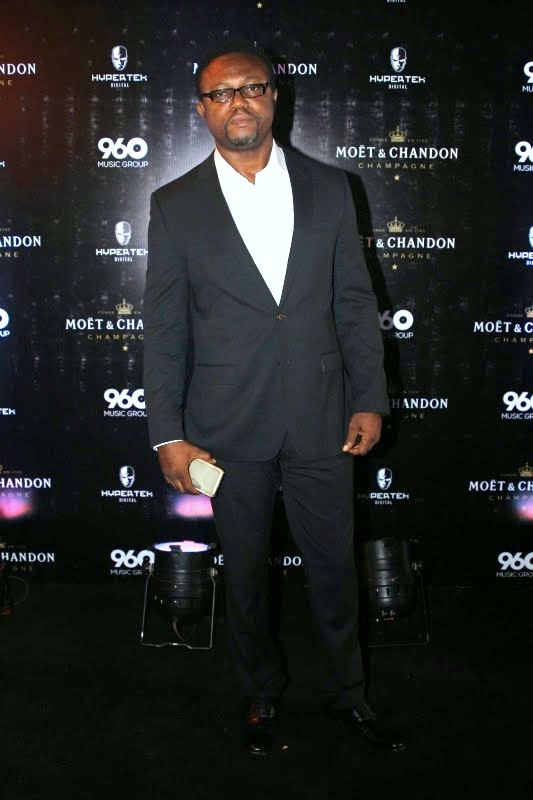
On the 25th of February, 2015, I was in my elements – playing my favourite sport – listening to those who know better (the experts). The Music Day of the Social Media Week Lagos, hosted by Beat 99.9 FM at the SMW Lagos Campus afforded me this luxury at no cost.
The movers and shakers of Africa’s biggest music industry convoked to hold conversations on the way forward via digital revolution.
From the sessions scheduled, I could tell new ideas will be dispensed by thought leaders and alternatives to the current ‘anyhowness’ would be suggested. The discourse was hinged on issues bothering on the Use of Social Media, Touring, Financing Entertainment, Piracy and Distribution. I settled in to be informed and inspired.
Prior to the event, I always argued that the Nigerian music landscape – to a large degree – owes its successes to efforts of shrewd businessmen who latched on to opportunities inherent in an atmosphere where anything goes (‘anyhowness’). And, having attained these enviable heights, I reckon it is time an industry is forged and strengthened to play in the big league.
To thrive globally there must be an attempt to collectively address the peculiar challenges practitioners grapple with. That is what an industry is all about; where a group of people who deal in a particular kind of business or economic activity seek to better their lots. It is now a regime beyond individual interests.
With the recent proliferation of seminars and conferences, it is always a joy to see participants share insights on pressing issues. One of such moments at this conference was when Efe Omoregbe expressed strong opinions on the cheapening of music and how the Nigerian Telecommunications sector could help reduce free downloads and digital piracy. Other panelists opined that the revenue accruing from music sales could not be salvaged. They were more disposed to finding new business models that could make up for monies lost to free downloads and digital piracy. Such is the dilemma faced, in Nigeria, and globally.
In my estimation, the event was successful and some of the conversations were robust enough to stimulate introspection. The under listed are my takeaways on what represents our concerns as an industry:
- The social media affords talented individuals a lifetime opportunity of putting their best foot forward. It is a platform that is democratic and boundless in its reach. There are enough success stories that lend credence to this fact. Unlike the traditional media where Payola reigns supreme, musicians can consider this platform a worthy alternative to getting heard and seen (being discovered). At little or no cost careers can be built. Those wet around the ears must get the requisite information to masterfully utilize this tool. This information is somewhere on the Internet.
- After gaining traction online or social media relevance, it is important an artist transitions to making real-time impact offline. The mandatory legwork must match the efforts made online. The ears and eyes of would-be fans and industry gatekeepers must be courted strategically. This can be done by winning over traditional media, and delivering experiential performances people can’t forget in a hurry. This is also applicable to all music artists, regardless of their standing. Social media helps you to stay connected with your fan base, which can be maneuvered and monetized to your benefits.
- Music executives must present a common front in dealing with appropriate pricing of music, consumer behaviour and the culture of entitlement to free music in the Nigerian music space. This conversation has to hold. It begs the question: Should the industry shun sales of music as a product? If the answer is in the negative, what is the best option the industry can adopt?
- With the dominance attained by the telecommunications company, what partnership or infrastructure can be forged to effectively provide an answer to the distribution quagmire the industry is bedeviled with?
- Asides the media exposures, award ceremonies, talent marketing and the publicity Cable and Satellite TV provides, can performance royalties be a regular staple for musicians? Can artists earn income from airplay as it’s done in other climes?
- Can touring, live performances and merchandisings come alive anytime soon? Who can provide these services cross-country? Is this sustainable long-term?
- Can creative entrepreneurs run businesses in a proper manner? Can they incorporate businesses that can assume a life of their own? Can they be efficient at being transparent and keeping the books? Can they secure financing from Banks?
- There is also the need to deepen the understanding of brand partnership between entertainments, entertainment companies and marketing activations of corporate Nigeria. The authenticity in shared values must be rock solid and clear for all to see.
- Practitioners must also identify the solutions technology provides, and must be willing to utilize same to their advantage.
As I journeyed back home, these thoughts were impressed on my mind, and I hope more intellectuals, professionals, creative entrepreneurs and industry thought leaders identify with them and provide the much needed solutions. Our industry holds a lot of promise and rhetorics won’t effect the desired changes.
Surely, individuals and entities who help meet the needs of the industry will assume pole position in reaping economic benefits.


1 comment
I know you’re a lawyer and all, but it would have been nice to write this out in simple enough English for EVERYONE to understand.
Either way, I get what you’re trying to say. And it’s one thing to have an opinion on what needs to be done, but it is a whole new ball game in putting these opinions and ideas into effect.