


On Tuesday, June 1, 2021, Nigeria’s President, Muhammadu Buhari, posted a tweet threatening to treat those attacking government facilities in the southeast “in the language they understand”, referring to the 1967 Nigerian Civil War, which claimed an estimated three million Igbo people when it ended in 1970.
The tweet was taken down by Twitter a day after for violating its rules. On Friday, June 4, the Nigerian Government, via Twitter, announced that it would be suspending the social networking service indefinitely, citing that activities on the platform are “capable of undermining Nigeria’s corporate existence.”
During the #EndSARS protests in October 2020, Nigerians used Twitter to mobilise themselves to rallying points and drew the world’s attention to the extrajudicial killings and police brutality happening in the country. Back then, there were whispers of a social media bill becoming a possibility, with the Government censoring the use of social media in the country. Now, it seems to have become a reality.
As many Nigerians woke up unable to access the app on Saturday, June 5, 2021, they are now using virtual private networks (VPNs) to circumvent the ban. Besides the outrage at the Government’s effort to stifle freedom of speech, young Nigerians are crying out because the ban is hurting their livelihood.
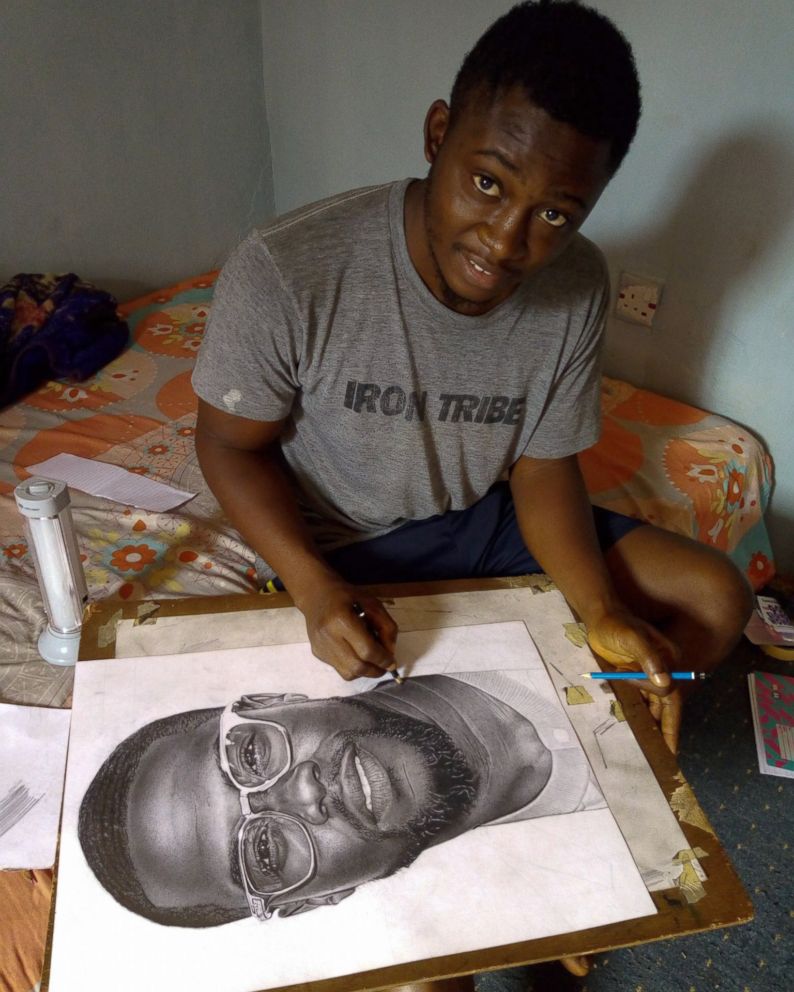
Twitter, over the years, has become a tool for promoting businesses. In 2019, 26-year-old Eli Waduba Yusuf, a local hyperrealism pencil artist, posted a drawing he had done of Kevin Hart. Through Twitter, he was able to catch the attention of the American comedian and actor. Hart commended his work, purchased the drawing and commissioned Yusuf to do three more. In August 2020, another artist, Emmanuel, got the attention of award-winning music producer DJ Khaled with a pencil illustration of the American artiste, who also shared it with his then 5 million followers.
Young entrepreneurs especially have relied on Twitter’s organised interface to reach more customers and sell their products. Large companies also joined this leeway and used Twitter influencers to promote their services.
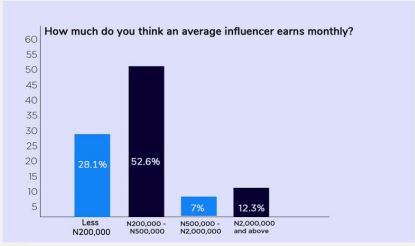
According to a survey by the Influencer Marketing Hub, brands earn above $5 for each dollar they spend engaging the services of an influencer. Plaqad’s 2020 Influencer Compensation Report revealed that 55.6% of brands spent between ₦10 million and ₦50 million on influencer marketing campaigns. The report also shows that 9.6% of influencers earned between ₦500,000 – ₦1 million, and 10% earned more than ₦1 million in 2019.
Influencers and brands are not the only ones affected by the ban; micro-businesses and many self-employed Nigerians have been significantly hit. With many already established customer bases on Twitter, the sudden ban will mean losing contacts and paying customers. As a result, they will face a significant income loss, leading to an increased unemployment rate, which already stands at 33.3%, the second-highest in the global space.
On a call with our correspondent, the media aide to the Minister of Justice, Dr Umar Gwandu, confirmed the Twitter ban and the Attorney General of the Federation Abubakar Malami’s directive to commence prosecution of offenders violating the ban. “Those who violate the Federal Government ban on the use of Twitter will be prosecuted. However, it is not within my jurisdiction to state the penalties they will face. It is the court that will decide.”
In response to the question of the courts still being on strike, the aide told our correspondent, “there will be ways of handling them.”
For many young Nigerian, this spells doom for their businesses. Adetilewa, a small-scale fashion retailer, told Netng that the ban would slow down business for her. “My business is mostly online,” she said. “I don’t have a store, so I sell everything on social media. The more platforms I can publish on, the more eyes see it and the more sales I make. With Twitter gone, one of the channels I put my wares on is gone. Now I have to find more ways to make more people on the other platforms see my goods. So business will be harder, and I will have fewer sales.”
A front end developer, Mazi Juls, wrote on Twitter that his work was already being affected by the ban, “What did these humans do for God’s sake? Block Twitter and thereby blocking every other domain that has Twitter’s APIs embedded in it? React native elements, UI kitten, my components libraries are not working. I can’t do my work. Wth is wrong with this country!”
Azeezat Yusuf told Netng that she had already incurred a big loss today with the Twiter ban in place. “Today has been a bad day for me,” she said. “I sell sneakers. I also seel dishwashing liquid and fruit juice. Earlier this week, a customer reached out to me on Twitter and ordered 6 packs of juice. I got his number, but I’ve been unable to reach him since the delivery went out today. I couldn’t even go back to Twitter to reach out to him because it’s cut off. So that’s a big loss for me already.”
“I also work as a social media manager. I haven’t been able to work all day. A client called today to get work done, and I haven’t been able to do that. Twitter has been one of the easiest ways to get across to my customers. And now it’s all gone. I don’t know what I’m going to do.”
For others, the Twitter ban is a loss of a lifeline. Through Twitter, many people have located lost loved ones, raised money for school tuitions, medical treatments and many more. Medical Doctor and social media influencer, Nonso Egemba popularly known as Aproko Doctor, said, “Twitter NG has raised over ₦15 million through @_The100kclub that has helped a lot of families in Nigeria pay for medical bills that they couldn’t afford. From heart surgeries to kidney surgeries, to prosthetics, to births, to blood transfusions.”
Quadri Rasheed, a wristwatch vendor, told Netng, “It’s affecting me already! Let’s say we have 20,000 Twitter users in Nigeria; about 80% of them are millennials and Gen Z, who make up my target audience. We get our customers from these people. Strangers from nowhere also see your products and message you. It is my means of livelihood; this is how I feed my family. Before, you can get the community to spread your tweet. But now, no one will do that. You could be perusing Twitter and see something you like and buy it. Everyone is a prospective customer, and you’re minus one. I’m a vendor; I sell wristwatches. With the little we can get, we feed ourselves, and now the Government is trying to pull it down. You’re not providing jobs, so how do you want us to survive?”
In response to the ban, Twitter said, “We are deeply concerned by the blocking of Twitter in Nigeria. Access to the free and #OpenInternet is an essential human right in modern society. We will work to restore access for all those in Nigeria who rely on Twitter to communicate and connect with the world. #KeepitOn”
The hashtag #KeepitOn has garnered over 247,000 tweets since the social networking service first introduced it. With government officials like the Oyo State Governor, Seyi Makinde, openly condemning the ban, Nigerians hope that the Government will rescind their decision and restore freedom of speech in the country.

