By Adedayo Odulaja
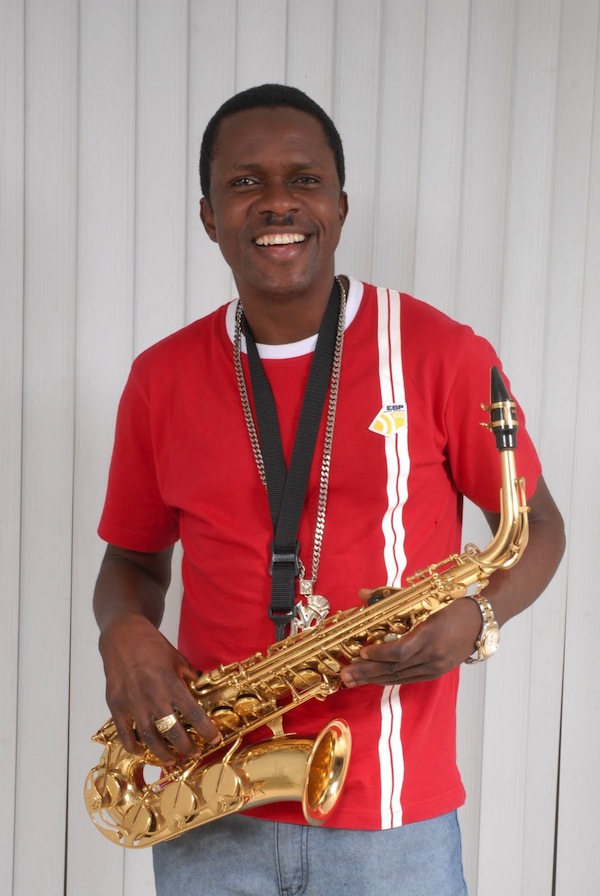
After his major hit, ‘Ko gb’oge wa,’ exceptional Juju music act, Yinka Best, who reigned supreme in the early 2000s has been quiet on the music scene. Nigerian Entertainment Today recently caught up with the singer, who opens up on challenges, evolution and decision to release a new album before the end of 2014.
You pioneered a kind of music, you didn’t pioneer high life, but your flavour got everyone dancing, aside your humorous part. All of a sudden you left, why did you take the break?
I didn’t leave, what happened is that entertainment in Nigeria now most especially for those of us who have been releasing full album as Juju, Fuji musicians, the problem we are facing is not an easy one. You release an album and a lot of people are living off that album, most people can’t compose but latch on your album, no one wants to go to the studio to go and release songs.
For example, I released my last album three years ago, a lot of people have been calling me, specially the so-called artistes, asking baba when are you going to release again? And what they are asking in essence is for me to release another for them to rip off again. That has kept me silent, to check the industry and know the area to come in. It’s not an easy thing to go to the studio to record and you give it to marketers who will start giving you stories from here and there because none of them wants to remit money to you. It’s not an easy thing to go into the studio, pay to do everything yourself, not that they would sponsor you but they want you to go to the studio and bring it for them so they can eat, it’s not convenient for one to continue like that.
Are you saying this is a situation way different from piracy but of total imitation?
Exactly, where people will perform your song at events or shows without giving you credit. In fact there are lot of them out there in the other southwest states.
Don’t you think it’s because you gave them space to do that because you travelled out?
No, I don’t stay long whenever I travel, I don’t stay more than one month or two months and I would be back here because of my career. But they derive joy in it and I will be asking myself: can’t these people compose, can’t they do their own thing? That’s part of the reason Juju music is dying.
Sometimes we find it difficult to differentiate the voices of your colleagues like Wale Thompson, Dele Taiwo from yours but what is your relationship with them?
They are my very good friends, Wale Thompson and I are always on the plane together most times; Dele Taiwo is also my friend.
How long do you intend to study the terrain before coming out with another album eventually?
I am coming out with another album by December or January by the grace of God.
Do you have a title for the album yet?
No, not yet.
Regarding the album, if you don’t want people to use your material freely without credit, have you really done anything concrete about that?
Yeah, I have done something about it, I have done some songs that are ready, and they will go out track by track, but I am not ready to release them now, maybe by December or January.
You seem to have a special connection to King Sunny Ade (KSA), what is your relationship with him?
He is my father, he is the best person I have ever met in my life as far as the music industry is concerned and my prayer for him is that he will live long, because he has done well for us, the younger ones.
What exactly did he teach you and how did he make an impact on your life?
He is a great man because there are some people that are behind him, that have not gotten to where he has who will see the younger ones but by their actions, you would notice they don’t want them to grow. We were together in London, I was present at his rehearsals but other artistes would say ‘E ma je ko wole o, ko ma wa gbo nkan ti mo fe ko’ (they should not allow him to come in so he won’t know my new songs). He welcomed me wholeheartedly and introduced me to his promoter even as a colleague, not as a son. He told his promoter, this is my colleague, and he sings good music the way I do, in fact better than I do. He surprised me with that, and we were together on stage, he penciled my name down at the gate, I and my wife went there and we got there without stress, they just checked for our names and we entered. King Sunny Ade is one in a million.
How formidable is the association of Juju musicians now. Will you say it’s the same or will you say it’s a divided house?
Right now I can’t say anything about that, if you asked me last year I might have had an answer, but right now I don’t know what is going on there really.
Some of your colleagues tried to stay abroad to popularise juju, why have you not decided to explore that avenue?
I can’t stay abroad, and that’s the fact. This is the source of my music, my roots and if I relocate abroad, only a handful of people will listen to me there because it is a closed market. The way I am going and coming is where the prestige is. The way I am based here is better, because then they will respect you abroad but when you are based abroad no one will respect you, after two weeks, you are something else to them.
You are one of those few musicians who can play instruments very well, when you started singing, was it for the love of the arts or the lure of money?
There is no business you will set out to do, even if you love the business, you will need money to forge ahead, so there is no way you will live without money in music but it was more for the love.
But then how did get involved in music?
I attended Emmanuel Primary School, Ado-Ekiti, then Christ’s School Ado-Ekiti where I started my music career before going to the north, Kano to be precise. Back at Christ’s School, I played Triangle with the Brigade and from there I started playing trumpet. When I got to Kano, in my church there, I saw a saxophone and I started playing it without anybody putting me through.
What year was that?
1983/1984, then I was going to Kano back and forth before I settled in Kano in 1987. In Kano, I played for the Sudanese band, then I went to a school of music where I learnt music proper, after my learning, I went back to the Sudanese band and they were surprised that I could play their music without understanding their language. We performed on stage together many times, we even went to Sudan then I came back to Kano and a church wanted to do a recording, so they beckoned on me to come and produce for them, so the music brought me down to Ibadan, that was in 1990. While at the studio, I was recording and producing then, after recording, I went to play my saxophone and the chairman of the studio, Chief Francis Aiyegbeni heard the tune of the saxophone so he asked, who is this saxophonist? He then stopped the recording and the people that brought me from Kano were angry, they were wondering what was happening, he then said he wants me to follow him to the hotel, he hijacked me from there and since then I think I only went to Kano two years ago.
What has the man been doing with you since then?
I became his band leader, released albums, played shows round. Then our band was the best Juju band in Nigeria, no one could stand us then, we had the equipment, the talent, and it was so great to the glory of God. I left the band for my band and my chairman, up till now, still says that the only person he misses on his band is Yinka Best, that he can not forget him in his life – that he is so good – but it is not me, it is God. He called me back and I told him, ‘sir I have started my own band.’
There is universal thing about musicians, they always have women flocking around them and I know your story won’t be different. So how where you handling it at the time when the encomium was really loud?
The Bible says women are the salt of life, so we need them in our lives and can’t do without them. To the glory of God, God controlled them for me, not me controlling them.
Let’s talk about family, how did you meet your wife, how long has it been and how many children do you have?
I love my wife, and I have four beautiful children that God has given to me.
How is she coping with jealousy?
She is coping; God gave her to me so she is coping.
Earlier you mentioned being hijacked Chief Aiyegbeni who is very well known but how did the part of Kennis Music signing you come into the story?
Immediately I left Ibadan, I came to Lagos and I met Chief Kola Kuforiji and Chief Taiwo Kolapo who took me to a place in Lagos where the big boys always come to enjoy.
Where was that?
Sabo, they call it Hot shop, I play there every Friday, that was where Wasiu saw me play saxophone before he inserted Saxophone into his music, he said it that night that he loved this and will introduce it to his band and he did, I was playing there, the owner of the place is Niyi Onibudo, he also owns the famous Lekki Peninssula, I was playing there before God lifted me and I met a lot of people.
Was that also how you got signed?
That was how I started in Lagos, before I did a demo and took it to Kennis Music. Immediately Kenny Ogungbe heard it, he said wow, this is music and didn’t even waste time but started working on the music from there.
Between you and Wale Thompson, who was the first to get signed to Kennis Music?
It was Wale.
If you had a second chance in life, what will you like to do differently?
I think I will stay away from women more, and I intend to try and make sure my children don’t marry wrong women. if I could rewind and edit, I will edit women in my life because some of them purposely came to cause setback in my life but I thank God for everything.
What exactly do you do when you travel abroad?
Right now, I’m working internationally both In America and U.K, currently working with a promoter in America, Busayo Daramola Oluomo Promotions, he has been a very good guy to me, he loves me and my music, By the end of this month, I would be in U.K to perform. I thank God that he has transformed me to an international artiste today.