Veteran musician and actress, Onyeka Onwenu will release her autobiography, My Father’s Daughter on October 1, 2020. In a very rare move, the award-winning entertainer shares intimate details about her life. She talks about growing up, getting married, building a career in journalism, and her contributions to the Nigerian music industry.
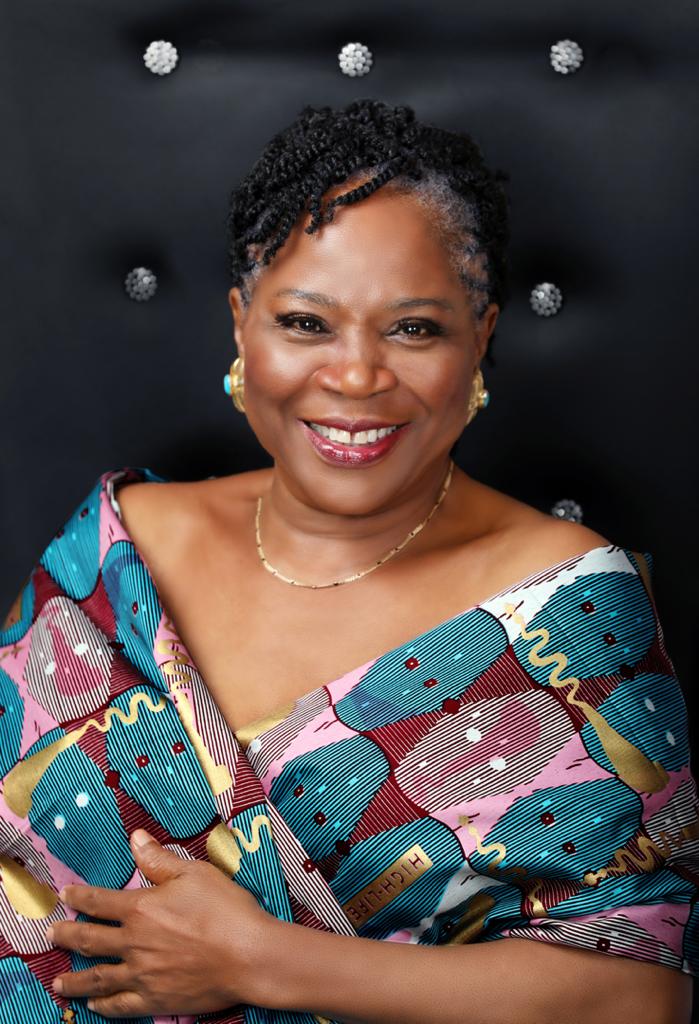
In the book, she explores some heavy themes that have contributed to moulding her life the way it is now. Some of those themes include:
1. Feminism: She delves into what it means to be a woman who is unwilling to shrink herself to accommodate anyone’s ideas of how she should live. Onwenu believes that no woman should have to struggle between shrinking to fit the ideas of a man, or staying true to herself.
She tells Netng, ‘Women should never have to make such choices because we are all God’s children and we all have our purpose in life. Men and women should complement one another, appreciate and support one another, to attain their God-given goals’.
2. Family: Onyeka Onwenu keeps a tight lid on her family life and keeps her private history hidden. For the first time, she’s opening up completely about her life and family. In the book, she talks about her father and how his political philosophy laid the foundation for her political ideology. She also delves into her marriage to a Yoruba Muslim in 1984 and talks about her sons.
3. War: The veteran entertainer grew up during the civil war, surrounded by its rigours and nastiness. In her memoir, My Father’s Daughter, she reminisces on how the war scorched her teenage experience, its debilitating effects, and how her family remained bound amidst the chaos. She shares her experiences as a young woman and the paranoia that the war deeply planted in her.
Speaking with Netng, she describes the war as traumatic, saying that it dislocated her in every way. She says, ‘There was instability, there was war and all that it entailed – death, bloodshed, hunger and deprivation, disease and sickness. My family lost every material comfort and possession. Fortunately, we had land on which to grow food. The war front was just a short distance off. We saw death and suffering around us. But God spared our lives’.
4. Nigerian Politics: Onwenu has been involved in Nigerian politics at different points in her career. She started her political career by running for chairmanship in Ideato North Local Government Council of Imo State. She ran on the platform of Peoples Democratic Party (PDP) in 2002 and 2010. She lost both times at the primaries.
The Imo State government appointed her as the Chairperson for Arts and Culture in 2008. In 2013, Goodluck Jonathan appointed her as the Executive Director/Chief Executive Officer of the National Centre for Women Development (NCWD) Abuja. That position was abruptly terminated by President Muhammadu Buhari in 2016. She regarded the move as tribalistic and was very vocal about it.
In her book, she delves into her political journey and how her father laid the foundation for her political philosophy. She has not given up on Nigerian politics as she says she may still try for an elective position in future. She says, ‘Never say never. If God calls, I go!’
5. Activism: Onyeka Onwenu’s activism dates back to 1984 when she released a scathing documentary for BBC/NTA, ‘Nigeria: A Squandering of Riches’. She still speaks up and supports major societal issues. More recently, she sent a petition to President Muhammadu Buhari to hasten actions needed to release Leah Sharibu. She talks about these moments and more in her new book, ‘My Father’s Daughter’.