By Osagie Alonge
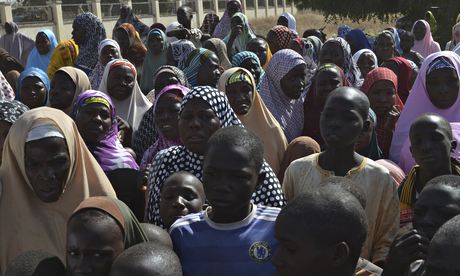
On April 14, 2014, about 230 schoolgirls were allegedly abducted by Boko Haram militants in the north-eastern Nigerian village of Chibok, Borno State. 18 days later, the search is still on for the location of these kids.
The young girls, reportedly between the ages of 16 and 18, were writing a physics paper, part of their final examinations at their school in Borno, when unidentified men from the Islamist extremist group Boko Haram arrived the venue and kidnapped the girls.
The abduction was done four days after a bomb blast went off in Nyanya, Abuja, killing 71 people and leaving hundreds injured. A few days after the blast, Boko Haram leader Abubakar Shekau, released a video claiming responsibility for the attack. ‘We are in your city but you don’t know where we are,’ he said in the recording. On Worker’s Day, May 1, 2014, another bomb went off in Nyanya.
Parents and siblings of the abducted girls have staged protests in several cities, including the nation’s capital Abuja, Kaduna, Lagos and of course Borno. Many Nigerians have also accused the Nigerian Government of neither being able to control the situation nor being able to find the location of the girls.
‘It’s unbearable. Our wives have grown bitter and cry all day. The abduction of our children and the news of them being married off is like hearing of the return of the slave trade,’ Yakubu Ubalala, whose 17 and 18-year-old daughters Kulu and Maimuna are among the disappeared told The Guardian UK.
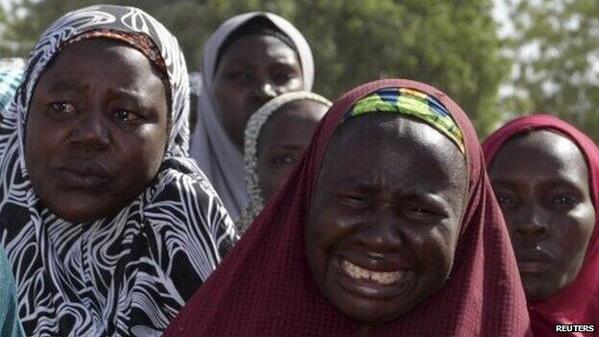
Reports say the desperate parents launched their own rescue attempts in the 60,000 sq km Sambisa forest where the girls were reportedly being held but all three attempts have been frustrated, with the FG not throwing their back behind the rescue operation.
The unfortunate situation has worsened, with reports saying that the abducted girls have been married off to Boko Haram militants.
Social media has become the largest talking point about the abduction, with the hashtag #BringBackOurGirls trending for days.
Tweets about “#BringBackOurGirls”
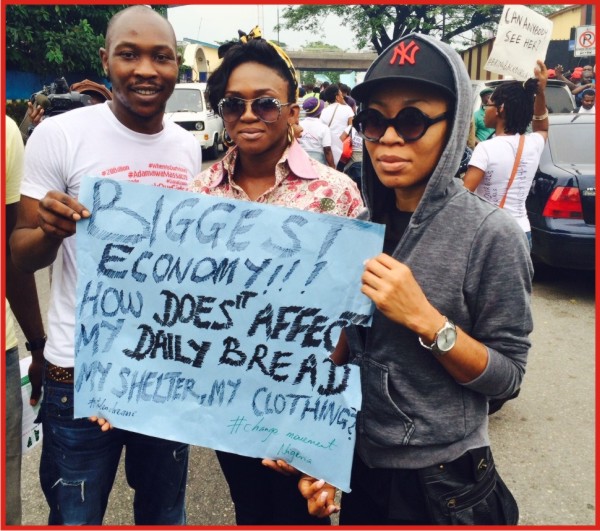
Popular personalities and entertainers have also joined in on the conversation, with some leading protests. Afrobeat singer Seun Kuti and R&B singer Waje were seen at the Lagos protest which took places on Worker’s Day.
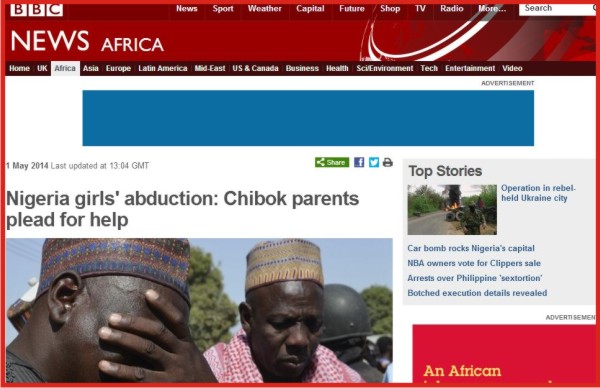
In the last 18 days, the sad development has also become a talking point in international media. CNN, BBC, Al Jazeera, The Guardian UK and blogger Nicole Bitchie have all reported the news.
International entertainers have also lent their voices, condemning Boko Haram’s actions. Some of them include Pop singer Keri Hilson, Chris Brown, Keke Palmer, TV host Piers Morgan and Def Jam boss Russell Simmons.
It’s been two weeks since the kidnapping of 234 Nigerian girls and they still aren’t home #bringbackourgirls pic.twitter.com/8OiC5GJPrc
— Mary J. Blige (@maryjblige) April 30, 2014
Nigerian girls ages 16-18 were kidnapped from their schools in Nigeria 2 weeks ago when an armed terrorist group broke into their (1/3)
— Chris Brown (@chrisbrown) May 1, 2014
school, shot the guards & kidnapped over 200 girls because they attended school. Lend a voice by asking authorities to (2/3)
— Chris Brown (@chrisbrown) May 1, 2014
#BringBackOurGirls (3/3) pic.twitter.com/Jc7OVehq6y
— Chris Brown (@chrisbrown) May 1, 2014
234 Nigerian girls have gone missing, and no one is talking about it… http://t.co/JLQxcExpyl PLEASE RT! #BringBackOurGirls
— Russell Simmons (@UncleRUSH) April 30, 2014
The Federal Government continues to reiterate its determination to clamp down on the Boko Haram sect, rescue the abducted girls and return them safely to their parents.