By Adedayo Showemimo
Being an entertainment journalist in Nigeria is getting increasingly difficult, exciting and nerdy (if there’s any word like this) all at once.
Gone are the days when people wait to read entertainment pages on newspapers over the weekend or wait till City People magazine drops every Monday to catch up with what’s going on in the lives of their favourite celebrities…Now, ‘levels don change‘.
The innocent and seemingly harmless revolution began with the advent of Facebook in February of 2004. Although it took us a while to warm up to it, when we eventually did, we all thought Facebook was Eldorado, nothing could be better, and then celebrities and fans alike began uploading pictures, sharing moments and dropping gist on their walls. It created some sort of online community and I recall very well that the phrase ‘The world is now a Global Village’ was on everyone’s lips. However, the glory of Facebook was short lived, with the birth of Twitter in 2006. Trust Nigerians, the rush to it was instant, but some stubborn people (like me) refused to flow with the trend, preferring our dearly beloved Facebook. Before long, Facebook was labelled ‘the public school in social media’ (for everybody and common people) while Twitter was ‘the private school’ (for the elite class). Till date, a lot of people still find it hard to navigate their way through Twitter, but as an entertainment journalist with an ear for news, it was imperative to be on it, learn it and be a master at it, and just like Facebook before it, celebrities would share all sorts of information; they would fart in their homes and tweet about it, they would tweet pictures of their breakfast, dinner, and wrist watches, and as an entertainment journalist, it was easy to scoop the juicy details and report asap and everything was fine.
Then, the growth of blogs went crazy; every one with a smart phone and access to the Internet owned a blog, and plagiarism (copy and paste) became the order of the day. Once any blogger broke some news, others would simply copy and paste it on their own sites, word for word. Initially, it seemed like a phase that would fade away, but we were wrong. It got worse when real and experienced journalists joined the bandwagon, lifting stories from blogs to publish. Journalists got lazy and the attitude and mentality of getting exclusive stories died a natural death. While editors and publishers were still trying to battle this new landscape of blogging, new media and what the growth of Internet was doing to traditional publishing, Instagram was born on October 6, 2010.
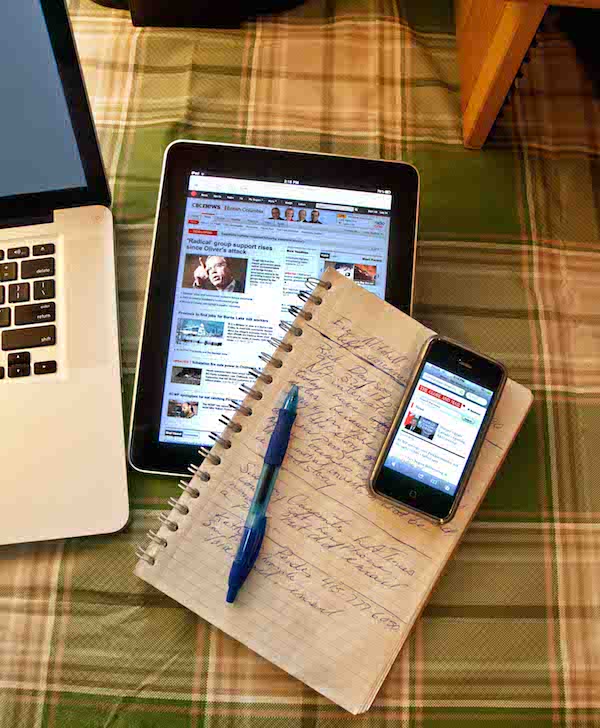
In the middle of all this online and Internet madness, we (journalists) still get the job done. It simply means that to survive and be relevant as a journalist in 2014, you need to throw away your biros, traditional tape recorders and pieces of papers that litter the office, and become a GEEK. You need to embrace new media, technology, smart phones, social media apps and more, otherwise, you’re out of the game.